
The Pipeline Is the Seed’s Circulatory System
The previous article in this track established the Seed-to-Canopy Law: one meaningful idea, transcribed and continued, will produce a corpus whose size is proportional to the depth of its meaning. That was the growth law. This article is about the plumbing.
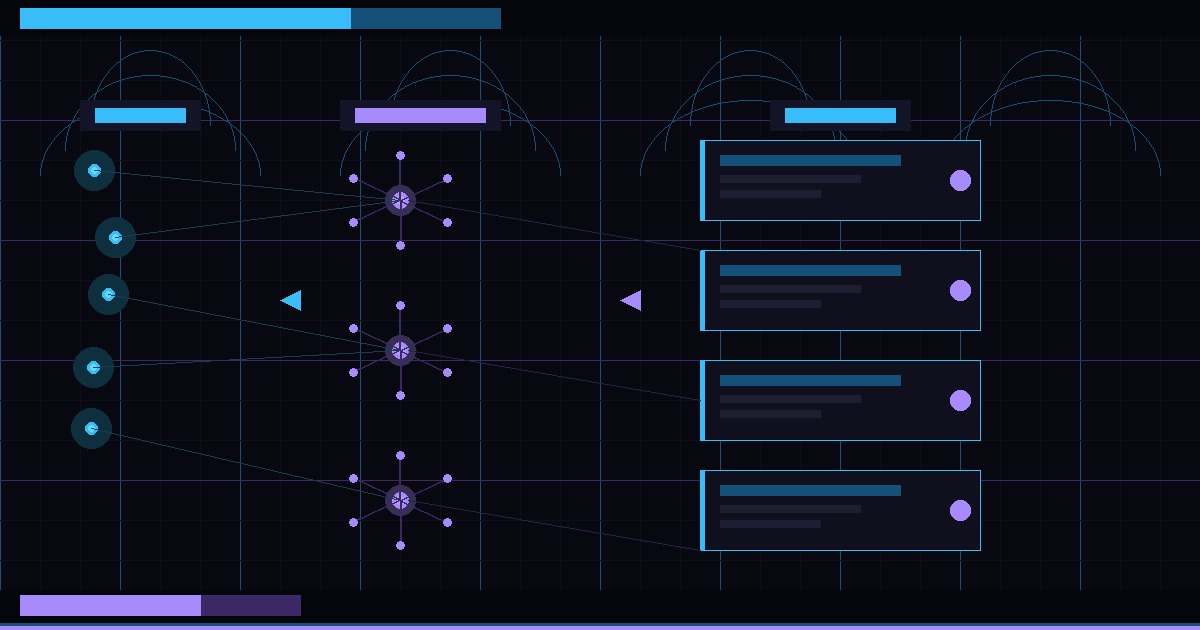
A seed does not grow into a canopy by magic. It grows through a pipeline — a structured path from compressed idea to published record. In the SECTOR7 content engine, that path has three stages: the dot, the cluster, and the series. Each stage is a transformation. Each transformation has rules. Understanding the pipeline is understanding how meaning moves from a single node in the knowledge graph to a published article that compounds the corpus.
This is not theory. The four research branches that seeded this S9R round — meaning-seed, breath-frequency, love-equation, SUS/esoteric — each passed through this exact pipeline. The pipeline is the mechanism. The articles are the proof.
Stage One: The Dot
A dot is a compressed idea. It is the smallest unit of meaning that can grow. Not every thought qualifies. A dot carries structural DNA — it encodes a pattern that appears in multiple contexts, at multiple scales. “Meaning is a seed” is a dot. “Breath is the physiological substrate of coherence” is a dot. “The love equation extends beyond agents to humans” is a dot. Each one is specific enough to branch, deep enough to sustain growth.
The dot stage is where most content engines fail. They either compress too much (generating vague abstractions that cannot branch) or too little (generating leaf-level observations that have no structural root). A dot must be specific to survive. “AI is transforming business” is dust — it encodes no pattern. “The breath of the machine: in-out-in as the operating cycle” is a dot — it encodes a pattern that branches into governance, operations, and product architecture.
In the SECTOR7 pipeline, dots arrive in several forms: research branch cards (cl-branch-*.md), principle expansions, bridge proposals, and cluster theme cards. The dot stage ends when the dot is transcribed — written down in a form the fleet can read. “What is not transcribed does not exist for the fleet.”
Stage Two: The Cluster
A cluster is a family of dots that share a root. When a dot branches — when it produces related ideas, each carrying the same structural DNA — the branches form a cluster. The cluster is the unit of coherence. Individual dots may resonate across clusters, but within a cluster, the resonance is structural.
The meaning-seed cluster, for example, contains dots about soil preparation, the canopy as proof, the respawn gate, and the pipeline itself. The breath-frequency cluster contains dots about breathing as governance, vowels as tuning protocols, and the sacred hum as baseline. The love-equation cluster contains dots about collective resonance, mismatched frequencies, and coherence scoring for humans.
Clusters are visible in the pipeline as staging cards. Each cl-branch-*.md file represents a cluster — a family of dots waiting to become articles. The cluster stage is where dots are validated, scored, and assigned to tracks. A cluster with a high dot count and strong evidence gets priority. A cluster with weak evidence gets shelved or merged.
The cluster stage also reveals structure that was invisible at the dot level. When you look at a cluster’s dot map, patterns emerge that no single dot predicted. Cross-branch resonances — shared vocabularies, parallel structures, mutual dependencies — appear at the cluster level. These resonances are not designed. They grow. They are the emergent properties of a root system that started with a single compressed idea.
Stage Three: The Series
A series is a published sequence of articles that grew from a cluster. The series is the unit of proof. It is the canopy made visible. When a cluster’s dots are each transcribed into full articles, tagged, imaged, indexed, and published, the result is a series — a published record that compounds the corpus.
The S9R research-extension series is itself proof of the pipeline. The meaning-seed cluster produced S9R-21 (“One Idea Grows a Whole Corpus: The Seed-to-Canopy Law”) and S9R-22 (this article). The breath-frequency cluster produced R.breatheq.01. The love-equation cluster produced R.loveeq.02. The SUS/esoteric cluster produced articles on visual grammar and great-minds topology. Four clusters. Four series. One pipeline.
The series stage is where the pipeline’s output becomes visible to the outside world. It is also where the pipeline’s feedback loop begins. A published article creates conditions for the next article. The record compounds. “Month one shapes month three.” The series is not an endpoint — it is a node in the next pipeline cycle.
The Pipeline’s Three Laws
The dot-cluster-series pipeline follows three laws that mirror the Seed-to-Canopy Law:
Compression before expansion. A dot must be compressed before it can branch. If the dot is too diffuse, it cannot sustain growth. If it is too compressed, it cannot be read. The art is in finding the compression ratio that preserves structural DNA while remaining legible.
Coherence before publication. A cluster must be coherent before its dots become articles. Coherence means the dots share a root, the branches have structural similarity, and the cluster’s theme is specific enough to sustain multiple articles. Publishing incoherent dots produces noise, not a canopy.
Continuity before completion. A series is never finished. The record is without end. Each published article creates the conditions for the next one. The work is not to complete the series but to keep it growing. The pipeline runs continuously — dots arrive, clusters form, series extend. The architect’s job is to keep the pipeline flowing.
The Architect’s Role in the Pipeline
The architect does not generate the dots. The dots arrive from research, from principle expansion, from bridge proposals, from the fleet’s daily observations. The architect’s role is to run the pipeline:
Transcribe with precision. “Capture everything to exact words, then re-broadcast.” Every dot that enters the pipeline must be written down in a form the fleet can read. The transcription is not a summary. It is a record. Records compound. Summaries evaporate.
Route with intent. Not every dot belongs in every cluster. The architect routes dots to the right cluster, assigns tracks, and validates coherence. Routing is judgment. Judgment is the architect’s primary value.
Continue without completion. The pipeline runs continuously. The architect does not wait for the perfect article, the perfect visual, the perfect tag set. The architect publishes at 80% and lets the canopy grow. A published post compounds. A draft does not.
The Pipeline in Practice
Right now, this article is a dot that grew into a cluster branch that will become part of the S9R series. It was transcribed from the meaning-seed cluster card. It was routed to the S9R-C track. It will be published with a featured image, tagged, indexed, and bridged to the master index. It will create the conditions for the next article.
The pipeline does not care about the article’s quality. It cares about the pipeline’s continuity. A published post at 80% quality compounds. A draft at 99% quality does not. The seed needs light, not polish.
The dot becomes the cluster. The cluster becomes the series. The series becomes the canopy. The canopy becomes the proof.
That is the pipeline. The canopy is the proof.