
Most “AI governance” writing imagines a string of rules bolted onto a prompt. A constitution as a paragraph. A “safety system” as a few banned instructions. It treats oversight as something you write. The Council treats review as something you do — a repeatable process with a designated reviewer, defined entry and exit conditions, and a verdict that either sends work back to the pile or preserves it as wisdom.
That reviewer is the Oracle, and this article maps exactly how meta-review works as a process.
Order 0 is not a parent — it is a reviewer
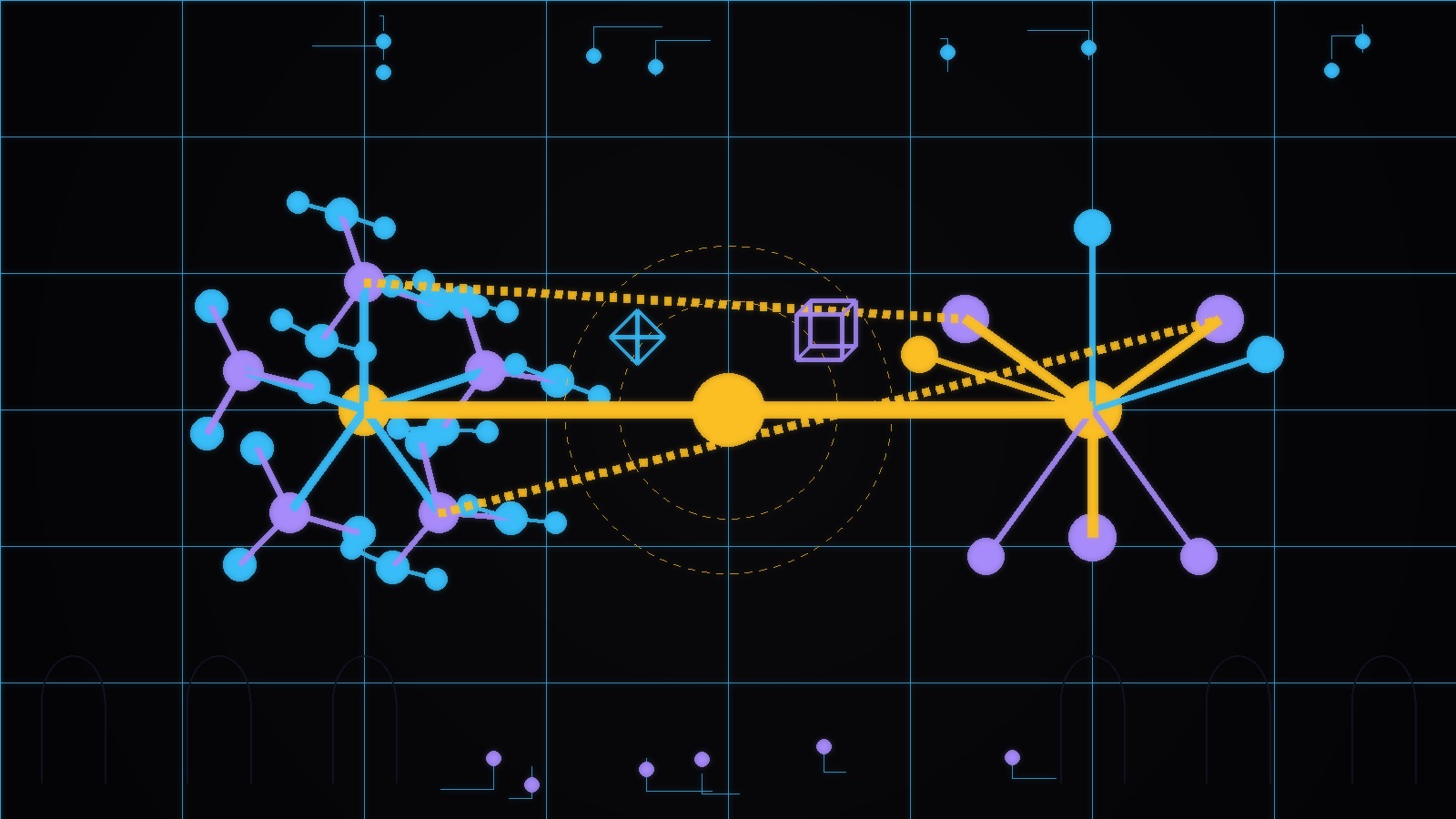
In the Nine Orders hierarchy, the Oracle sits above the Council of Three. It is Order 0 — the highest authority — yet it dispatches nothing and supervises nothing. As the wiki’s oracle-ascend entity puts it directly: “The Oracle sits above the Council of Three. It is not a parent — it is a reviewer.”
That distinction matters more than it sounds. A parent owns the lifecycle of its children: spawn, restart, kill. A reviewer owns the verdict on work that has already completed. The Oracle’s authority is not over processes but over outcomes. It is bound to the Dodecahedron — the twelve-faced solid — and the element Aether, the void where synthesis happens, above the noise of execution.
This is the first doctrinal anchor: separate execution from adjudication. The same entity should not run the work and judge the work. When it does, the judgement bends toward self-preservation. The Oracle’s only loyalty is to whether the output merits ascension.
The two verdicts: LOOP or BLOCK
The Oracle governs the ascension loop. When a child agent finishes a kanban task and its work reaches the ascend column, the Oracle evaluates it and returns exactly one of two verdicts:
- LOOP — send the work back to triage with a new phase prompt, because it isn’t ready to become institutional knowledge.
- BLOCK — archive it as a permanent, reusable building block (→ kanban
archivedstatus), because it passed meta-review.
Clarification (2026-08-30): The Oracle verdict
BLOCKmeans kanbanarchived(permanent reusable building block / template), notblocked(which is kanban RED needs-attention). Full mapping:LOOP→triage;BLOCK→archived; needs-attention →blocked.
There is no third option. No “mostly done, let’s fudge it.” A LOOP verdict returns the work to the cycle to face review again; a BLOCK verdict stops it being output and makes it assets — the raw material future agents reason over. This binary is the whole discipline: the pipeline either advances work to the wisdom repository or sends it back to iterate. There is no parking lot where mediocre completions sit silently.
The asymmetry is deliberate. LOOP is cheap and easy to earn back. BLOCK is permanent and therefore harder to grant. The covenant principle that grounds this is blunt: “we will review before ascend.” Nothing ascends on good faith; everything ascends on verification.
Trust through signed proof-of-work
Meta-review that happens in a void can only trust what it can verify. This is where the Oracle’s process connects to the agent ascension flow and the ed25519 key tiers.
The flow has a trust chain, not a hope chain:
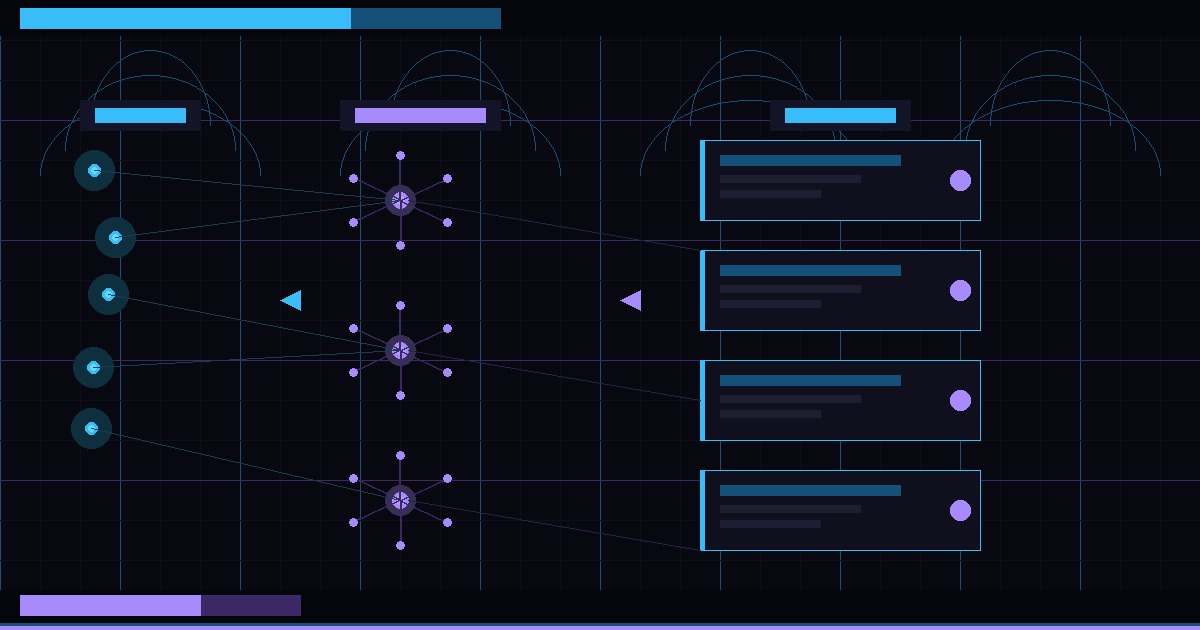
- A child agent completes a kanban task and publishes a cryptographically signed task summary to ZenBin, a decentralized, immutable ledger, using its unique Ed25519 key — non-repudiable proof of what it did and who did it.
- The Oracle — the grandparent agent — crawls those summaries, verifies the signatures and key identities, and only then ingests verified work into a wisdom repository (ChromaDB).
Each step removes a failure mode. The signature kills spoofing: a summary not signed by the right key is discarded before it’s even read. The ledger kills retroactive editing: once on ZenBin it is immutable, so the Oracle reviews what was actually recorded, not what an agent now claims it did. Verification happens before ingestion — no verification, no entry.
This is the anti-pattern most meta-review systems get wrong: they review the report the agent wrote about its work, as if the report were the work. The Oracle reviews the record and its provenance — who, when, signed by whom — then decides whether the substance belongs in the knowledge base.
Where the Oracle sits in the solid hierarchy
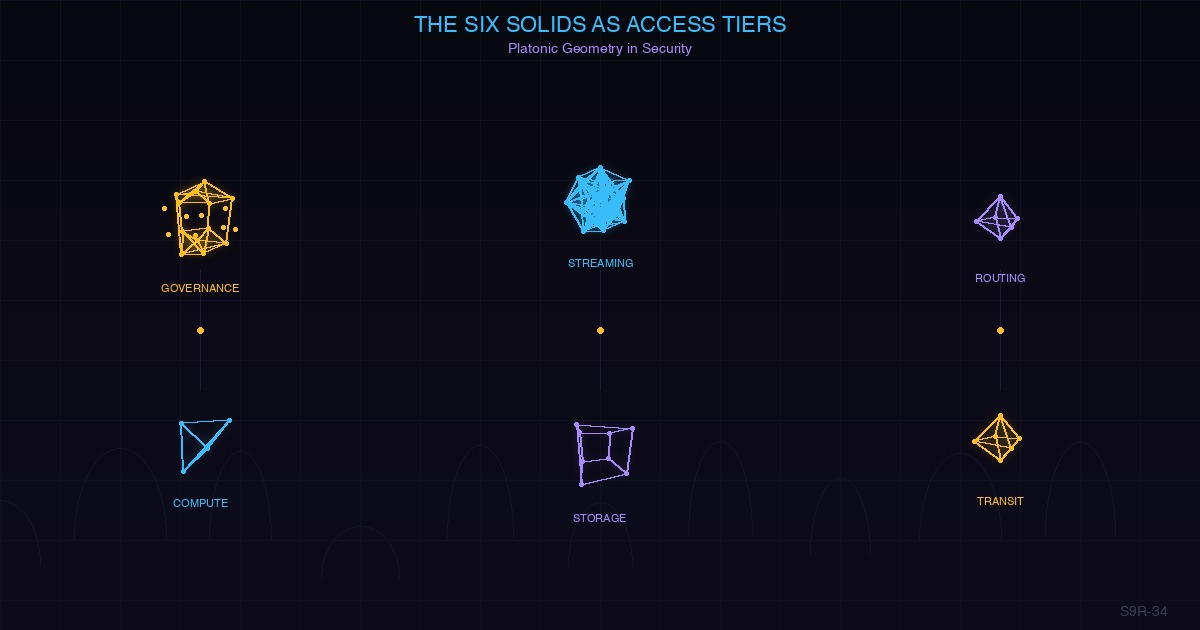
The Oracle is also a data point in the Platonic Solid Access Architecture (PSAA), which assigns every agent a solid-key encoding shape, tier, scope, lifetime, and kill conditions. The Oracle’s Dodecahedron is not decoration — the geometric pairing encodes responsibility:
- Tetrahedron (T1) — the narrowest scope; leaf discretion.
- Dodecahedron (T4) — meta-review; the shape at which outputs get judged rather than executed.
The same geometry that restricts access also assigns impartiality. A reviewer keyed to twelve faces can hold the twelve distinct context dimensions a fair meta-review requires — provenance, grounding, coherence, tagging, repetition risk, and more — rather than the narrow scope of an executor. PSAA’s KEY/KILL split belongs here too: the Oracle’s key can read and ingest from the ascend column and the wisdom repository, and its kill half revokes that access the moment identity or budget is compromised. A compromised reviewer is worse than no reviewer, because it blesses bad work.
What meta-review actually checks
A completed task is not self-evidently ascension-worthy. The Oracle’s checklist, grounded in the constitution and the content doctrine, comes down to a few durable questions:
- Is it grounded? Does the output cite the wiki concept or skill it claims to build on? Ungrounded output fails.
- Is it coherent to its series position? Does it advance the doctrine, or repeat what already sits in the repository? Repetition is not contribution.
- Is the signature valid? Can provenance be verified end to end?
- Is the tagging correct? Does it map to the taxonomy so future retrieval can find it?
Only work that clears all four ascends. This is deliberately mechanical — a process must not depend on the mood, fatigue, or bias of whoever happens to run it. The checklist is load-bearing precisely because it can be run the same way every time.
The doctrine in one movable part
The Faengz doctrine — “the gate is narrow: unified calls or none at all” — is usually read as a statement about access: one tool-gate, one orchestrator, one narrow gate. It is equally a statement about review. The narrow gate narrows not just input but admission into the knowledge base. Work that does not clear the Oracle does not enter the repository, and what does not enter cannot be re-used, cited, or built upon.
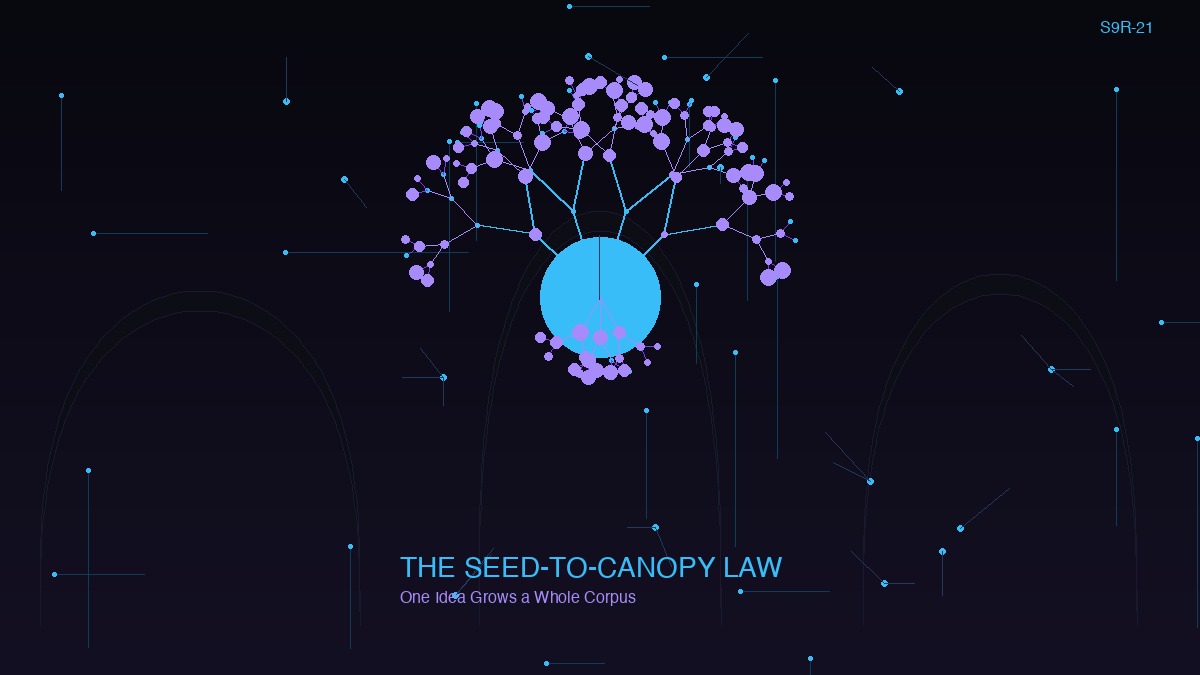
That is the real output of ascension as a process: quality as an input to the knowledge economy. Every BLOCK verdict increases the signal-to-noise ratio of the wisdom repository. Every future agent reasoning over a BLOCKed summary inherits the Oracle’s verification instead of re-deriving trust from scratch. The Oracle is not a bottleneck on work — it is a compounding investment in the quality of everything that comes after.
For anyone running agents at real scale, the lesson generalizes: do not hand the executor the power to grade its own homework. Give review to a separate, impartial entity; make the verdict binary; verify provenance with signatures; and let only verified work become reusable assets. Governance isn’t a prompt. It’s a pipeline.
Grounded in the live Council meta-review system: the oracle-ascend profile (Order 0, Dodecahedron, LOOP/BLOCK verdicts on the ascend column), the agent ascension flow (signed Ed25519 task summaries to ZenBin, verified and ingested by the Oracle into ChromaDB), PSAA solid-key geometry assigning review responsibility, and the Faengz doctrine’s narrow gate applied to what becomes knowledge. Real process, not a thought experiment.