
—
id: article-cl-bridge-council-system-03
title: “The Gate Guards the Mesh: Where Security Becomes Architecture”
series: B.council-system.03 council-system bridge: S1 x S7
track: B.council-system.03
principles:
– “Information is the ground of being”
– “The narrow gate is the seam where mesh meets policy”
– “The esoteric is engineering”
extends: “council-system — cross-series bridge”
category: “AI & Automation”
tags:
– “Advanced Prompt Engineering”
– “AI Agent”
– “AI-Driven Development”
– “Algorithmic Governance”
– “API-First Architecture”
– “Autonomous Site Operations”
– “Cybernetic Ethics”
– “Data Permanence”
– “Decentralized Identity”
– “Digital Sovereignty”
– “Headless CMS”
– “Monolith vs. Microservices”
– “Synthetic Reality”
– “The Metaverse as a Platform”
– “The Programmable Web”
– “council-system”
– “mesh”
– “security”
– “narrow-gate”
– “openfang”
– “platonic-solid-access-architecture”
– “psaa”
– “ed25519”
– “credit-safety”
– “faengz-doctrine”
– “bridge-article”
– “cross-series”
– “ai-agents”
– “digital-architecture”
– “autonomous-operations”
gems: false
date: 2026-08-17
—
The Gate Guards the Mesh: Where Security Becomes Architecture
Two series describe the same system from different angles. The S1 series — The Mesh — builds an Erlang-inspired actor architecture: supervised processes, PID dispatch, platonic lifetimes, a shared-port dispatcher that scales to thousands of profiles. The S7 series — Security & Sovereignty — builds the perimeter: the narrow gate that audits every tool call, the solid-key architecture that encodes permissions in geometry, the zero-trust comms layer, the credit-safety budgets, the incident response that runs without a human in the loop. Both series assume the other exists. Neither explains how the mesh’s plumbing and the gate’s policy are the same system viewed from opposite ends. This bridge article fills that gap.
The narrow gate is not a security feature bolted onto the mesh. It is the mesh’s single point of governance — the one place where every action is simultaneously authorized by the process tree (is this worker supervised?) and validated by the constitution (is this action permitted?). The mesh defines the body. The gate defines the body’s reflexes. The council-system is where they meet: a running set of supervised processes whose every external call passes through a single seam that knows their identity, their scope, and their remaining budget.

The mesh spawns; the gate decides who reaches out
S1.1 established the fundamental architecture: a council orchestrates concurrent workers through a shared dispatcher, each worker a supervised actor in an Erlang-inspired tree. S7.1 established the narrow gate principle — enforced by OpenFang, the Security Custodian running on port 7076: nothing in the system reaches anything outside the system except through this one point. The mesh says “a worker can be spawned.” The gate says “this worker, with this solid-key tier, may call these tools, spend this budget, touch this data.” The council-system is the intersection: the process tree that runs only processes the gate permits to reach outward.
The platonic hierarchy makes this concrete. S1.10 described the 9 Orders as a deployment model: Order 0 (Dodecahedron) is the root supervisor, Order 1 members are council-core long-lived processes, Order 3 members are ephemeral microsharks. S7.2 mapped solid-keys to access tiers: each Platonic solid encodes a different permission surface — what tools a process may call, what budgets it may spend, what data it may touch. The mesh assigns the geometry. The gate assigns the permissions. The council-system is the discipline that keeps them synchronized: a Tetrahedron process that tries to call a Dodecahedron-level tool gets blocked at the gate, not because the mesh prevents it, but because the solid-key itself does not carry the authorization.
Supervision trees enforce the gate’s authority
When a Microshark — an Icosahedron, Order 3 — crashes mid-task, the supervision tree makes the failure invisible to everything except the supervisor. The simple_one_for_one child spec says this worker is temporary: when it dies, the supervisor removes it — no surviving state, no zombie, no cascade. The next task that needs a Microshark spawns a fresh one.
This is not just fault tolerance. It is the gate’s authority enforced by BEAM’s process model. A worker that has been killed by the gate — for budget exhaustion, counterparty revocation, or policy violation — does not simply respawn with a fresh PID and the same expired credentials. The supervision tree restarts the process, but the gate controls the identity. The solid-key is not stored in the worker’s state; it is presented at the gate on every call. A revoked key stays revoked across restarts. The mesh’s memory is the process lifecycle. The gate’s memory is the credential lifecycle. The council-system is the operating discipline that keeps both memory systems aligned.
The dispatch loop is the gate’s enforcement surface
Hermes dispatches by claiming tasks from the kanban board and routing them to the correct profile. This is not a scheduler bolted onto a security model — it is the security model in motion. When Hermes routes a security audit to OpenFang, the routing decision encodes: OpenFang holds the access tier (Earth, Cube) to touch external tools; it holds the audit state to evaluate the request; its permanent lifetime lets it carry working memory across a multi-step audit. A creative task routes to OpenClaw in a different key: Fire, Tetrahedron, creative artifacts. A deployment routes to ZeroClaw, which spawns a container-isolated child and executes through Docker.
The dispatch loop does not consult a permissions table. Permissions are structural — encoded in which process is alive, what solid-key it presents at the gate, and which order it occupies in the supervision tree. The mesh’s dispatch is the gate’s enforcement, running at the speed of BEAM message passing.
Container isolation is the boundary the gate draws
ZeroClaw spawning children inside Docker containers is the mesh’s structural boundary made physical. When the gate decides a heavy workload needs isolation, ZeroClaw enforces a boundary the gate specified: one task’s worth of state, one task’s worth of permissions, and dissolution when the task completes. The container is the physical manifestation of an Icosahedron’s lifetime policy — and the gate’s budget enforcement.
Without the mesh, container isolation is a DevOps convenience. With the mesh but without the gate, it is a boundary without a guard. With both, it is a governance instrument: the gate says “this order of work shall be bounded,” the mesh says “here is the process model that enforces the bound,” the container says “here is the filesystem and network namespace that makes the bound physical.” The three layers — policy, process, infrastructure — are one system, not three systems stacked.
The narrow gate is the seam where mesh meets policy
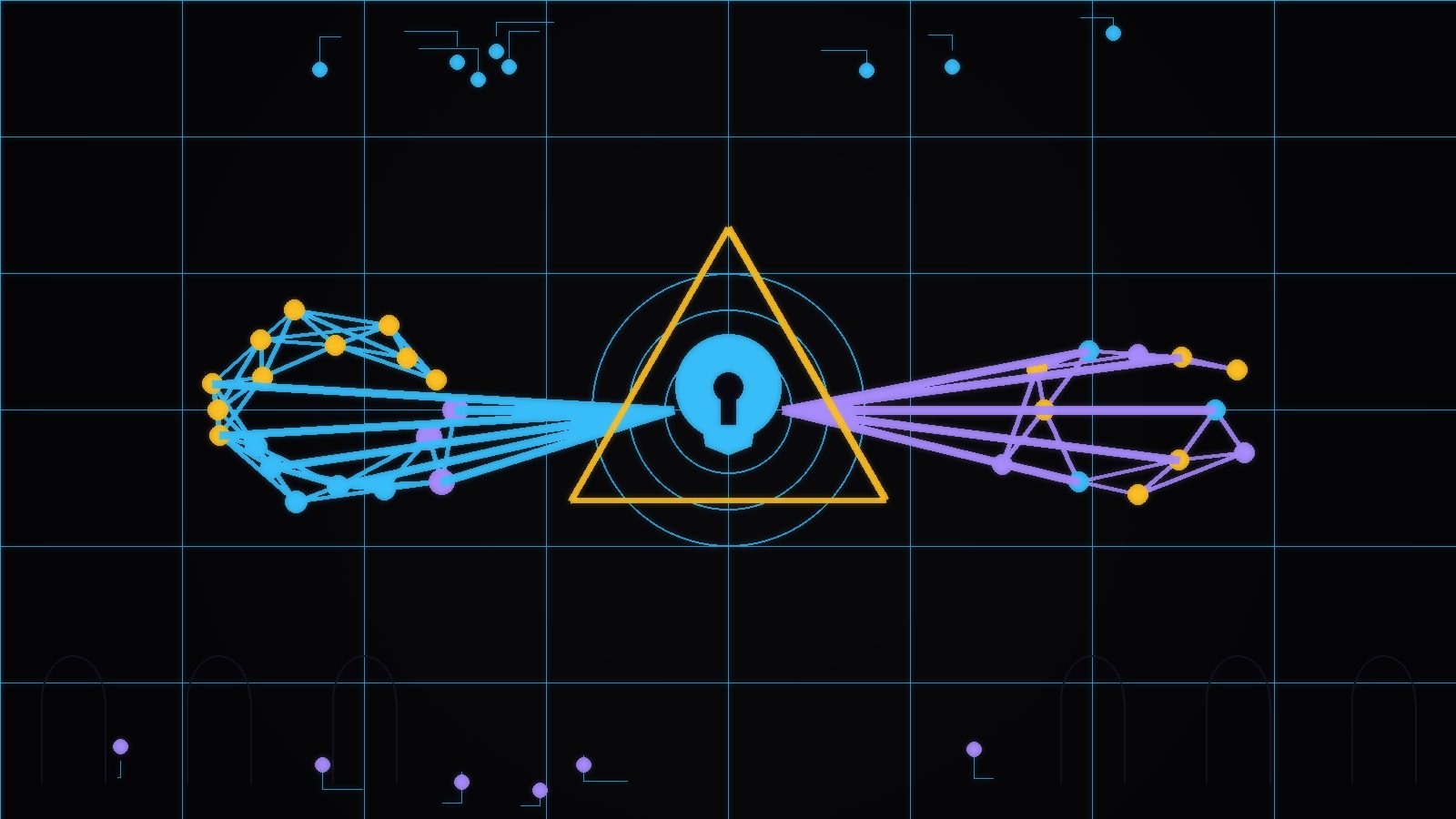
OpenFang’s narrow gate — the single MCP endpoint through which every external tool call passes — is the seam where the mesh’s plumbing meets the gate’s policy. Every process in the mesh, regardless of order, routes tool calls through this one seam. The gate does not know whether the caller is a Dodecahedron or an Icosahedron. It knows the caller’s identity (Ed25519 signature verified), the requested action, the caller’s solid-key scope, the remaining budget, and the policy state. The gate enforces; the mesh transports; the Council decides.
This three-part architecture — decision (Council), transport (mesh), enforcement (gate) — is why the system scales without fragmenting. Adding a new order does not require a new gate; adding a new mesh node does not require a new policy. The layers are orthogonal, connected by the narrow seam that keeps each one honest.
The Faengz Doctrine — “unified calls or none at all” — is not a metaphor. It is the architectural reality that the mesh has exactly one path to the outside world, and that path is the gate. A second gate would split the policy. Three gates would shatter it. One gate, one check, one decision — that is the council at work inside the mesh.
Budget enforcement is the mesh’s immune system
S7.3 introduced the credit-safety architecture: every agent has a hard cap on spend, tracked cumulatively across its lifetime. When the cap is hit, the gate blocks further calls. The agent gets a wall, not a warning. This is not a sandbox limit — a sandbox enforces limits at a point in time (memory, timeout). The gate enforces limits across time. An agent that makes 500 small API calls over an hour, each within rate limits, burns more budget than a single expensive call — and the sandbox sees nothing wrong. The gate sees the running total.
The mesh’s supervision tree handles crash recovery — restarting failed workers with fresh PIDs and empty state. Budget enforcement handles deliberate termination — stopping workers that are alive but have exceeded their mandate. The restart is the mesh’s memory. The budget wall is the gate’s memory. Both are necessary. The council-system keeps both memory systems aligned — so that a worker blocked for budget exhaustion cannot simply respawn with a new PID and a fresh budget.
Taint tracking makes the mesh’s data flows visible to the gate
S7.4’s threat model priced the damage of lateral movement via tool chaining: Agent A reads a file marked taint:vault, then passes that data into a tool call targeting an external endpoint. Neither call is individually suspicious. Together, they form a data exfiltration pipeline. The gate’s taint-tracking layer tags data with its origin as it flows through the inspection pipeline. When vault-tainted data crosses a boundary call, the gate flags the cross-boundary flow.
The mesh transports the data. The gate inspects the flow. The 16 security layers — env_clear, loop guards, taint tracking, SSRF protection, budget enforcement — work as a stack, not as individual features. A sandbox sees two allowed calls. The gate sees one exfiltration attempt. The mesh provides the plumbing. The gate provides the inspection. The council-system is the discipline that ensures every pipe has a gauge.
Why the bridge matters
The S1 and S7 series describe the same system from two altitudes. S1 is the process table: PIDs, supervisors, gen_servers, restart strategies. S7 is the perimeter: the narrow gate, solid-keys, zero-trust comms, credit-safety budgets, audit layers. Neither view is complete without the other. A mesh without a gate is a collection of processes with no coordinated boundary — every worker its own attack surface. A gate without a mesh is a checkpoint with no traffic — policy that cannot execute.
The council-system bridge exists because the two series share a dependency that only becomes visible when you trace a single tool call from dispatch to response. Hermes claims a task from the board. The dispatch loop routes it to the correct profile. The gen_server picks it up; the profile executes — perhaps spawning a Microshark, perhaps calling a tool through the narrow gate. The gate verifies identity, checks scope, deducts budget, tracks taint, logs the call. The result returns to the board. The supervision tree watches every step.
The entire flow is simultaneously a mesh operation and a gate enforcement decision — there is no moment where one ends and the other begins. That is the bridge. The mesh serves the throne, the gate guards the mesh, and the throne gives the mesh its purpose.
Series entry: B.council-system.03 — bridge between S1 (The Mesh: Erlang actor architecture, supervision trees, PID dispatch, shared ports, gen_server contracts, platonic hierarchy) and S7 (Security & Sovereignty: narrow gate, solid-key access architecture, zero-trust agent comms, credit-safety budgets, taint tracking, incident response). The council-system is the intersection: the mesh’s process tree governed by the gate’s policy enforcement. Grounded in the live hermes-erl-prototype source (council_sup.erl supervision, profile_actor.erl gen_server state), the S1 series (PID dispatch S1.2, supervision S1.3, shared ports S1.5, gen_server contracts S1.8, 9 Orders S1.10), the S7 series (narrow gate S7.1, solid-keys S7.2, zero-trust S7.3, threat model S7.4, credit-safety S7.3/10, audit layer S7.7, incident response S7.10), and the [[kanban-orchestrator]] dispatch loop that powers the pipeline. Design notes on a running system, not a sales pitch.
Semantic Relationships
- [[erlang-actor-mesh-prototype]] — orchestrates
- [[openfang]] — orchestrates
- [[platonic-solid-access-architecture]] — orchestrates
- [[narrow-gate-principle]] — orchestrates
- [[credit-safe-architecture]] — orchestrates
- [[faengz-doctrine]] — orchestrates
- [[kanban-orchestrator]] — orchestrates
- [[the-9-orders]] — orchestrates
- [[council-of-three]] — orchestrates
- [[zero-trust-agent-comms]] — orchestrates