
The Actor Mesh as a Business: Selling Distributed Logic, Not Servers
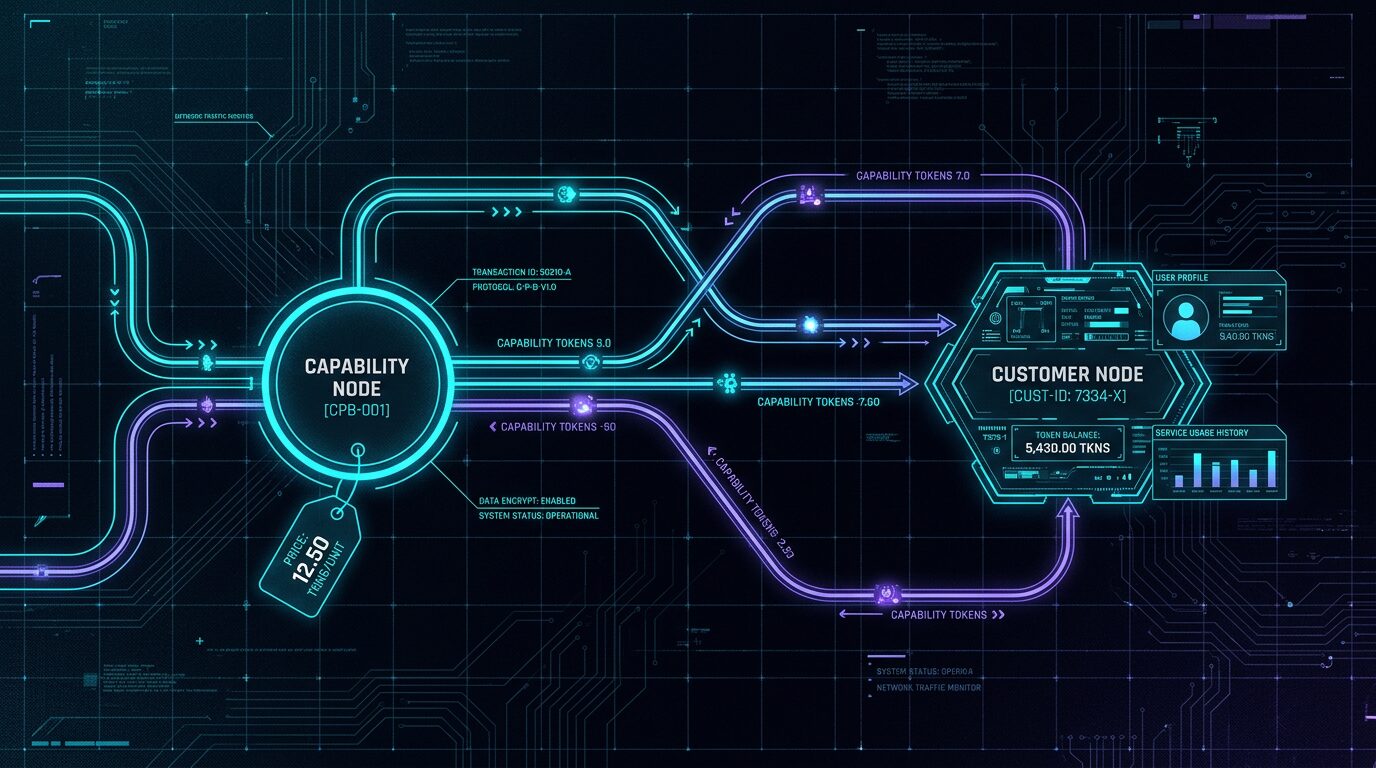
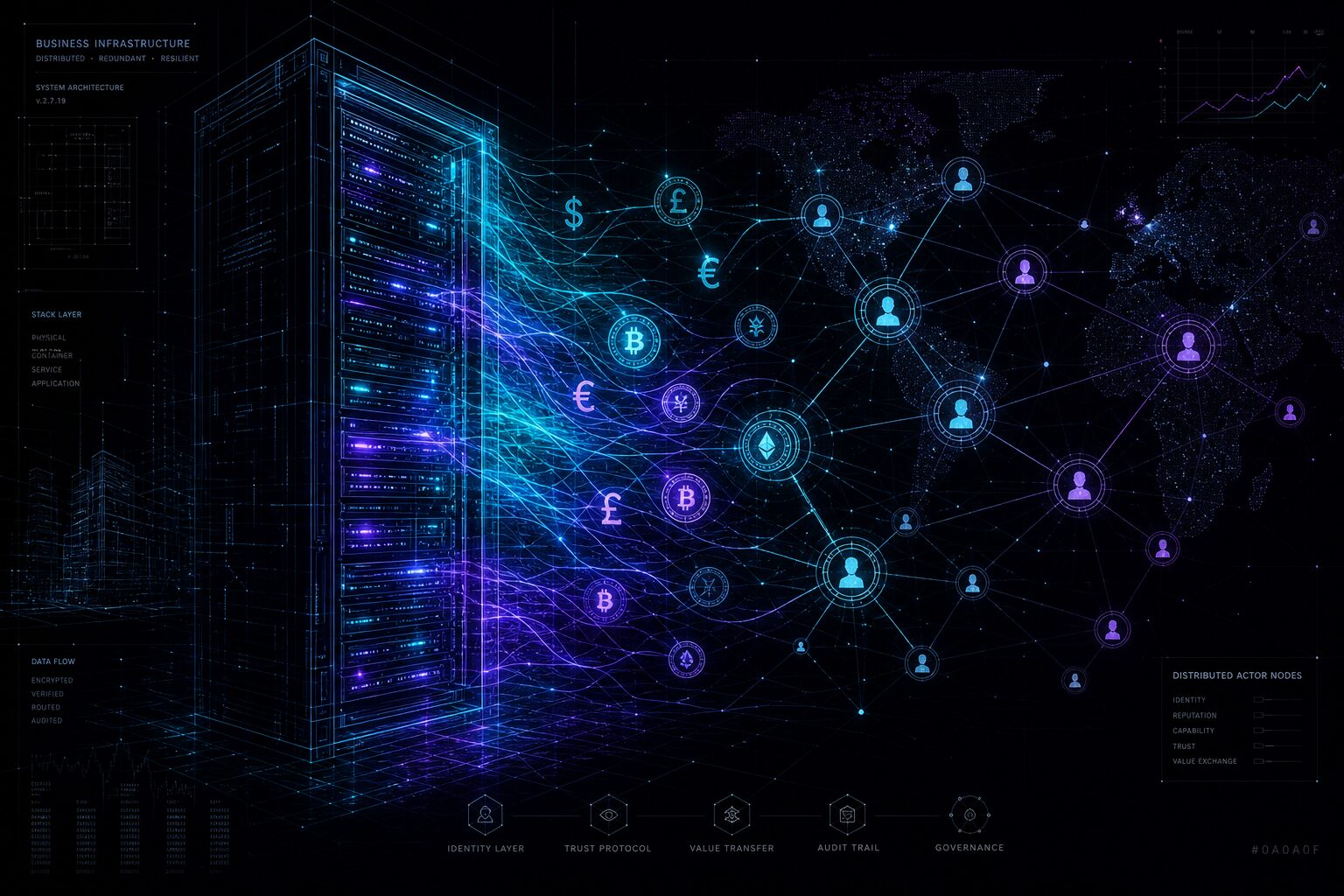
Most of the AI industry sells output: tokens, images, completions, compute. The futures thesis of the Kingdom of Truth is that the durable business is different — it sells capability as an infrastructure layer, and the actor mesh is the unit of that sale. When a customer buys a Lucid Hive deployment, they are not renting a GPU or subscribing to a chat. They are renting a supervised, self-healing fleet of actors that carries their workflows — a mesh they own, on their hardware, under their doctrine. The product is the architecture, not the artifact.
What we built
The S6 series built the business model for this thesis. S6.1 established digital sovereignty as a product, S6.2 defined the sovereign AI stack (local-first, cloud-optional), S6.3 introduced rent-to-own as the pricing philosophy (“the power stays on only when it’s paid”), and S6.8 formalized Tier 1–5 platonic pricing as access architecture. The customer dashboard (S6.7) gives customers self-service control over their agent services. The S4 series productized the skills canvas — S4.10’s direction was literally “selling capability, not output.” Every one of these articles describes a service layer; the actor mesh is what makes the service layer scalable. Today a “deployment” is a set of profiles and a board. In the mesh future, it is a supervised cluster with a measured cost per actor.
The vision
The business of distributed logic works like this: a customer buys a tier, gets a supervised mesh on their own hardware, and pays for capacity — number of actors, message volume, uptime class — not for individual tasks. The mesh runs their content pipeline, their research loop, their marketplace operations. When they scale from 10 actors to 1,000, the price scales with measured capacity, and the supervision tree keeps it alive. This is the infrastructure business that Web 4.0 actually needs: local-first, sovereign, and priced like a utility.
What’s next
The next increment is a pricing study: given the S6.8 tier structure, what does a per-actor capacity unit cost, and how does the rent-to-own model apply to a mesh the customer hosts? That analysis turns the architectural vision into a business model with numbers.
Grounded in wiki concepts subscription-model, platonic-solid-access-architecture, digital-sovereignty, the S6 digital-business series, and the S4 skills-canvas series. Fifth article in the SECTOR07a futures series.