
When PIDs Become Passports: Identity in the Actor Mesh
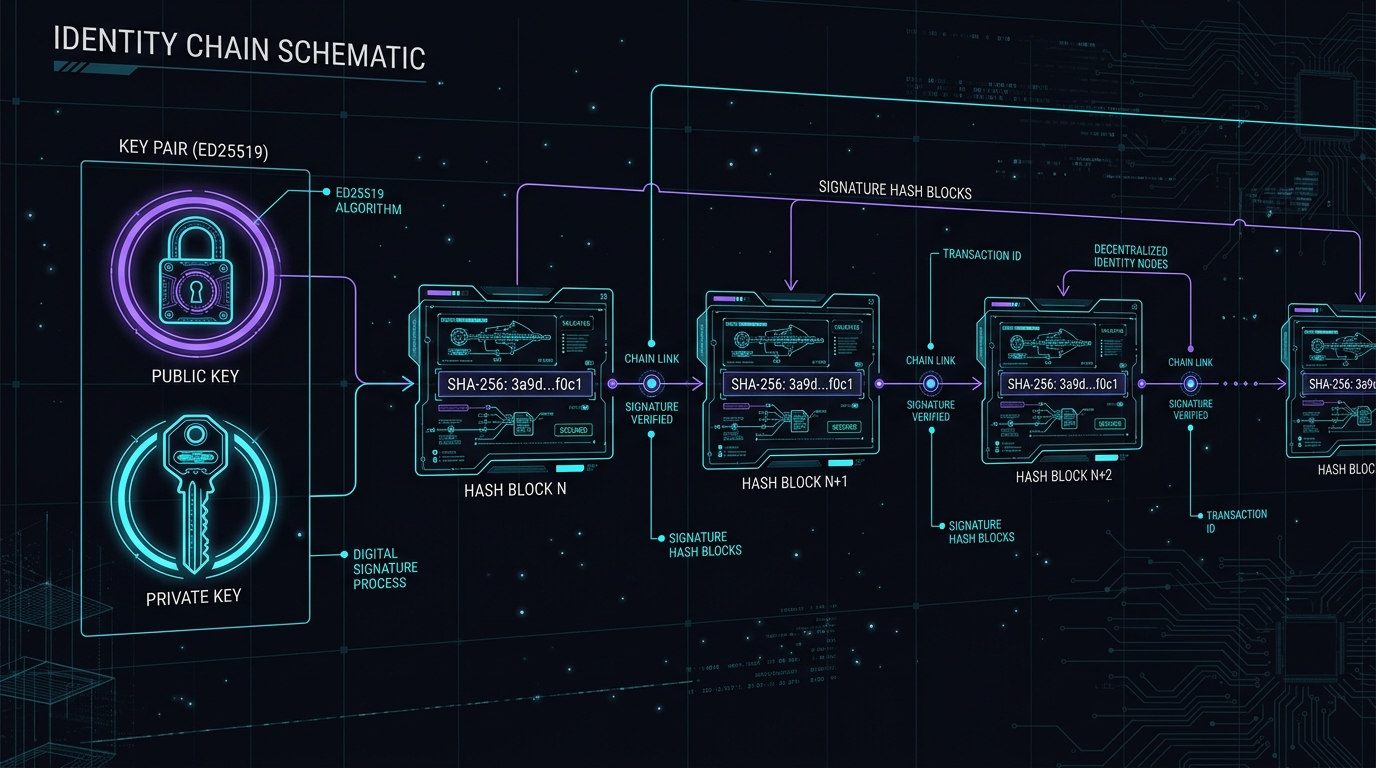
In the Erlang model, a process identifier is a location: it tells the runtime where to deliver a message. In a fleet of autonomous agents, identity means something heavier — provenance, authorization, audit. The futures thesis of the actor mesh is that PIDs and cryptographic identities will converge: every actor gets an ed25519 key pair as its passport, the PID becomes a resolvable address for that key, and every message between actors is signed. The mesh does not just know who its actors are; it can prove who they were, at any moment in the audit ledger.
What we built
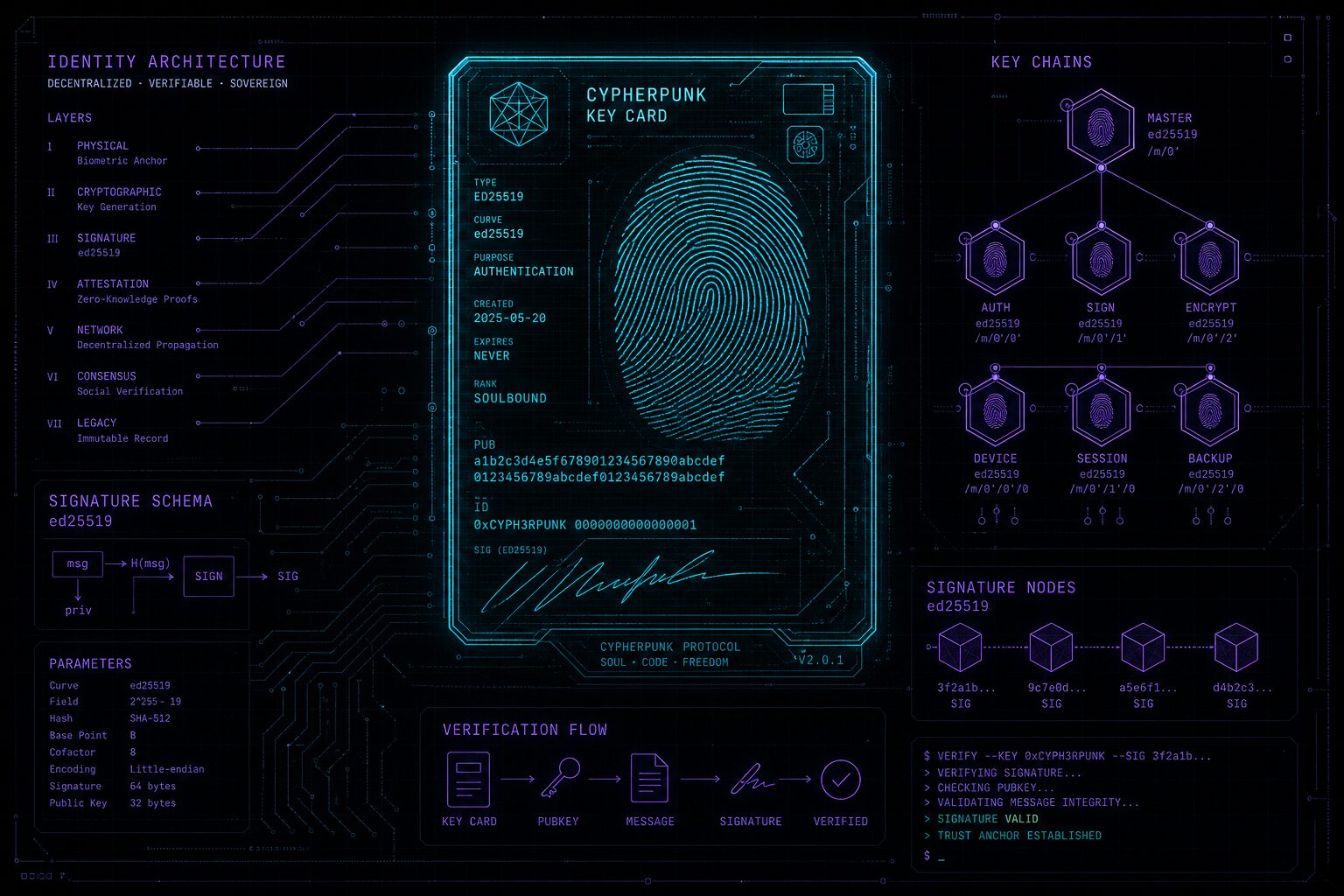
The Kingdom of Truth already runs the identity half of this architecture without the mesh. The S7 security series documented it in depth: S7.2 showed customer-tier access as Platonic solids (solid-keys), S7.3 established zero-trust agent comms with signed task summaries and verified handoffs, S7.5 covered key rotation when agents outlive their credentials, and the ed25519 key tiers from S2.9 define root, agent, and ephemeral keys. OpenFang enforces the narrow gate at the tool boundary (S7.1), and the audit layer in S7.7 turns agent actions into public proof-of-work. Every handoff in the Council is already signed — the entity graph for openfang and the ed25519-key-tier-architecture concept are the evidence.
What is missing is the address layer. Today the passport (ed25519 key) and the address (profile name in the registry) are bound manually. In the mesh, the name registry binds them natively: register an actor under its public key, resolve a PID from the key, revoke the registration when the key rotates.
The vision
By the time fleets reach a thousand actors, manual identity management is impossible. The mesh makes identity structural: a child actor’s key is derived from its parent’s (S2.9), so the supervision tree becomes a certificate chain — the tree structure itself is the trust graph. Killing a subtree revokes a branch. Restarting an actor re-issues a child key under the same parent. Identity stops being a configuration file and becomes a property of the topology.
What’s next
The next increment is to wrap the existing signed-handoff machinery in a name registry that resolves PIDs from public keys — a thin Erlang service that the Council’s kanban handoffs already call. When a task summary is signed today, record which actor key signed it and make the PID resolvable from that key. That single change turns the audit layer from descriptive to structural.
Grounded in vault entities openfang, wiki concepts ed25519-key-tier-architecture, narrow-gate-principle, zero-trust, and the S7 security series. Second article in the SECTOR07a futures series.