
The Tag Layer as Infrastructure: Taxonomy That Scales
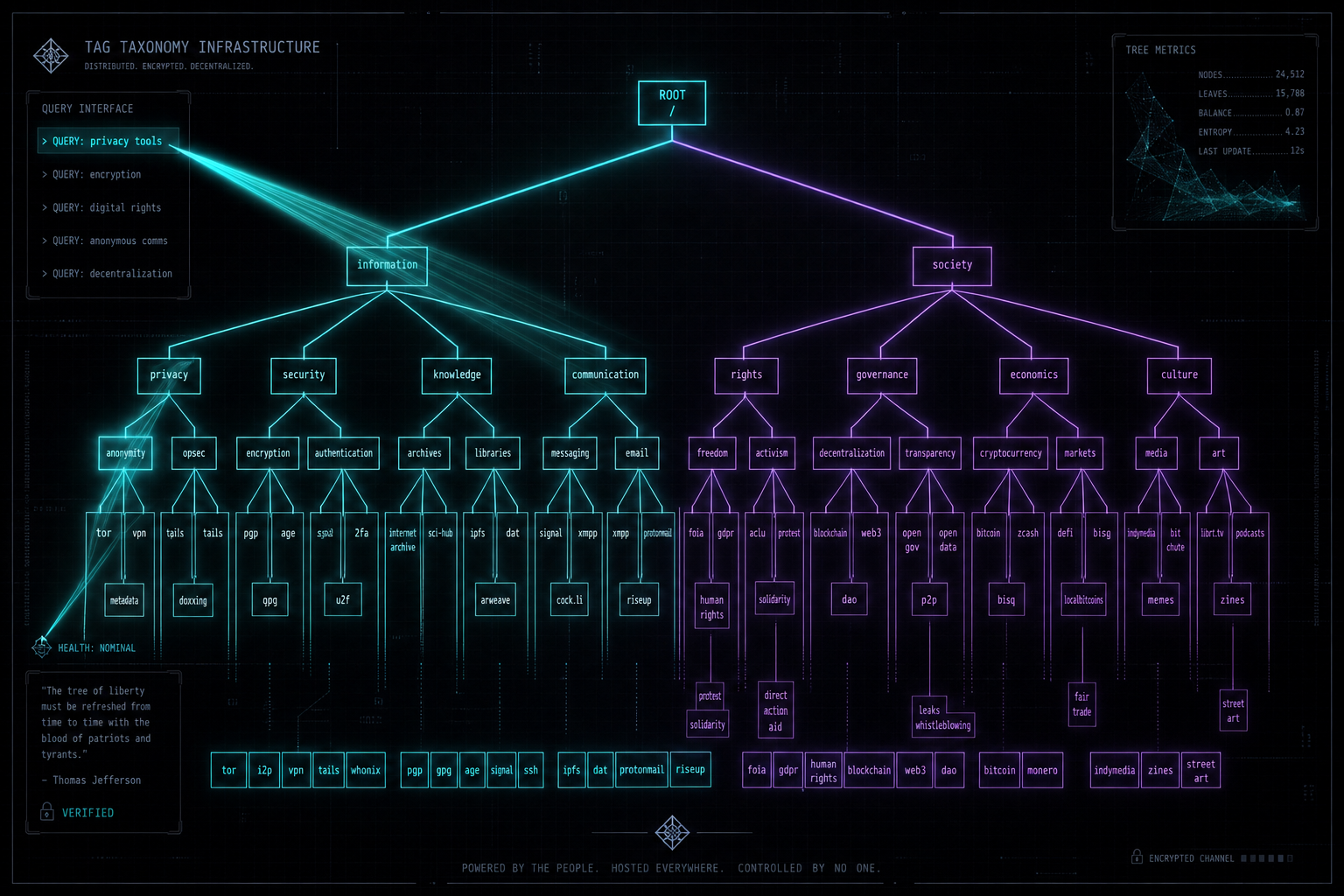
Tags are usually an afterthought — the comma-separated leftovers at the bottom of a draft. The futures thesis is the opposite: the tag layer is infrastructure. A thousand posts are only queryable if they are consistently tagged; a tag taxonomy is only valuable if every post conforms to it. The MASTER-INDEX-BRIDGE audit found the failure mode in the old corpus: 181 of 239 posts untagged, one 54-post batch on a single template tag set, and a taxonomy that barely discriminated. The fix is not more tags. It is a governed taxonomy — a small, vetted set of tags, enforced at publish time, that makes the graph queryable and the domain-authority story real.
What we built
The bridge documents the real state and the required action: every post must have ≥1 category AND ≥3 real tags (not the template set). The S3 series built the schema discipline underneath (S3.2: entities vs concepts vs sources — why schema beats folders; S3.4: the index as a query, not a document). The current rounds have published with per-article tags grounded in the taxonomy — each S10 article carries 18–25 real tags. The 49-term taxonomy exists in the bridge’s action plan; the enforcement is the missing mechanical step.
The vision
The tag layer becomes a query surface: “all articles tagged physical-ascension” is a slice of the graph, not a search. A reader can traverse from lucid.tv to cloudflare-tunnel to digital-sovereignty to subscription-model through shared tags. The content engine tags at publish; the board’s taxonomy actor (SECTOR07a.17) validates; the bridge re-runs the audit and reports compliance. Tags stop being metadata and become the primary navigation fabric of the corpus.

What’s next
The next increment is a tag-audit script: pull every published post, check category and tag counts against the taxonomy rules, and produce a compliance report. The bridge has the rules; the script turns them into a measurable, recurring check.
Grounded in the MASTER-INDEX-BRIDGE audit (181/239 untagged, 49-term taxonomy), the S3 schema series, and the publish rules from lucidhive-wp-publish. Nineteenth article in the SECTOR07a futures series.


