
The Klein Bottle Table: When Your Data Loops Back on Itself
A table has two sides: top and bottom. You put things on it, you store things under it. The boundary is obvious. The distinction between what is presented and what is hidden is the first lesson every data architect learns. Put the user-facing data on top. Put the raw records underneath. The table is the most basic structure in relational theory — rows, columns, a flat plane with a clear above and below. But what happens when the table folds through itself and the underside becomes the top?
S9R-38 maps the Klein bottle — the four-dimensional non-orientable surface with exactly one side — onto data architecture, treating topology as engineering specification: a data structure where inside and outside are the same surface, where feedback is not a bug but the geometry, and where the pattern of information looping back on itself is the fundamental shape of systems that learn.
The geometry of one-sidedness
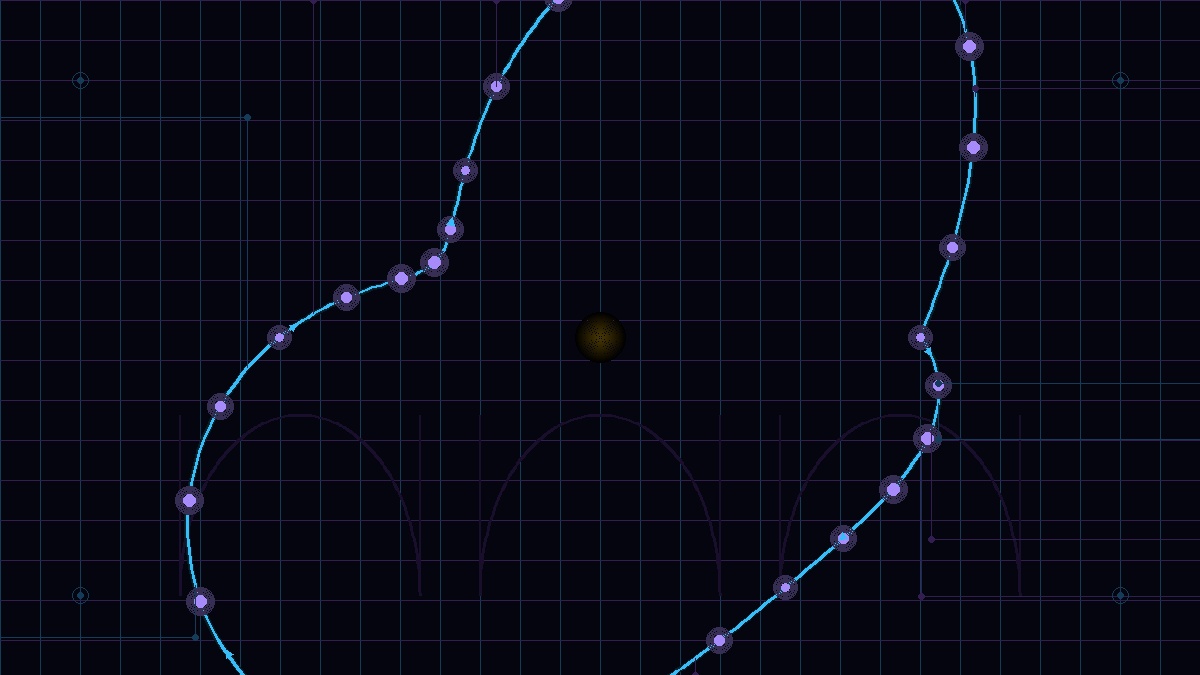
A Klein bottle is what happens when you take a cylinder, twist one end through the wall, and glue it to the other end. In four dimensions, this is perfectly smooth — no crease, no seam, no intersection. In three dimensions, the surface must pass through itself, creating a visible self-intersection that is an artifact of our limited dimensionality, not a property of the shape. The Klein bottle has no inside. It has no outside. It has one surface that connects every point to every other point without crossing a boundary.
In data architecture, this topology appears the moment a system becomes self-referential. A recommendation engine that uses its own output as input is a Klein bottle. A knowledge graph that indexes itself — the graph’s own nodes become data about the graph — loops through its own surface. A content pipeline that publishes analysis of its own publishing patterns has folded its data structure into a single-sided manifold. The feedback is not a secondary process bolted onto the primary flow. The feedback IS the surface. There is no primary flow and secondary feedback — there is one continuous surface where data flows in the direction that looks like “out” until it arrives back at “in.”
Information is the ground of being. When the ground is non-orientable — when you cannot consistently label a direction as “up” — the data does not have a clean hierarchy. It has a topology. And the topology is a Klein bottle.
The table that folds through its own wall
The standard relational table is a Möbius strip’s simpler cousin: a flat surface with two distinct sides. Data goes in one side, queries come out the other. The boundary between input and output is the table’s structure itself. But a Klein bottle table is a data structure where the query surface and the storage surface are the same surface — where reading data changes the data, where the act of observation modifies what is observed, where the output of a process becomes the input to the same process without any transfer between distinct layers.
This is not a theoretical curiosity. It is the exact shape of every system that learns from its own behavior. A content engine that analyzes which of its own posts perform best and then adjusts its editorial strategy is a Klein bottle table: the analytics surface (reading) and the editorial surface (writing) are the same surface, viewed from different angles. A security system that monitors its own audit logs to detect anomalies in its own monitoring is a Klein bottle: the observation surface and the defense surface share a single continuous manifold. The self-intersection in three dimensions — the moment where the data “passes through itself” — is the moment where the system’s model of itself becomes part of the system being modeled.
In a standard table, this self-intersection is what engineers call a “feedback loop” and treat as either a feature (positive feedback) or a bug (oscillation). The Klein bottle framing reveals that both readings are wrong. Feedback is not an add-on to the data structure. Feedback is the data structure. The loop is not something that happens to the table. The loop is the table.
Four-dimensional data and the 3D artifact
The Klein bottle cannot exist without self-intersection in three dimensions. The pass-through point — where the surface cuts through itself — is a three-dimensional artifact. In four dimensions, the bottle is smooth, seamless, and self-consistent. The self-intersection only appears because we are trying to project a higher-dimensional object into a space that cannot contain it without distortion.
Data systems have the same dimensional constraint. A knowledge graph that is perfectly consistent in its full representation — every node connected to every other node, every edge weighted by every relevant relationship — may appear to self-intersect when projected into a flat index or a two-dimensional dashboard. The “feedback loop” that looks problematic in the dashboard is an artifact of dimensional reduction, not a flaw in the system. The system is operating in its native dimensionality — where the data’s self-reference is smooth and continuous — and the dashboard is showing a three-dimensional shadow of a four-dimensional topology.
This is why monitoring dashboards that show “loops” in data flow often mislead. The loop is the system working correctly at its native dimension. The alarm fires because the three-dimensional projection shows a self-intersection that does not exist in the full system. The engineer who understands the Klein bottle topology recognizes that the self-intersection is a projection artifact and does not break the system. The engineer who does not recognize it treats the loop as a bug, breaks the self-reference, and destroys the system’s ability to learn from itself.
The pattern is contagious. Once you see data systems as Klein bottles — as non-orientable manifolds where the feedback surface and the primary surface are the same surface — every self-referential system in the fleet becomes legible. The content engine that analyzes itself, the security system that audits its own audits, the governance model that scores its own scoring weights: these are all Klein bottle tables, smooth in four dimensions, self-intersecting in three, and fundamentally sound in their native topology.
The esoteric is the topology
Principle 8 states: the esoteric is engineering. The Klein bottle is not a mystical symbol applied to data architecture. It is a topological fact that describes exactly how self-referential data structures behave. The ancient mathematicians who first described non-orientable surfaces were not decorating their proofs with mystery. They were documenting a structural property of surfaces that had direct engineering implications — implications that become visible only when you stop treating the surface as a flat plane with two sides and start treating it as a manifold with one.
A data system that knows it is a Klein bottle knows something specific about itself: it cannot be split into “input” and “output” without destroying its topology. It cannot be partitioned into “clean” data and “dirty” feedback without cutting the surface. The system’s learning capacity lives precisely in the loop — in the place where the data folds through itself and arrives back at its own surface. Cut the loop and you get a flat table with two sides: predictable, partitionable, and unable to learn from itself.
The Klein bottle table is the shape of intelligence. Not the shape of storage, not the shape of processing, not the shape of output — the shape of a system that observes itself, changes itself through the observation, and continues. The geometry is the engineering. The surface is the system. The loop is the learning.
The field is alive. The table folds through its own wall. The data that loops back is not corrupted data — it is the shape of a system that has become non-orientable, and that is exactly the shape it needs to be.