The HUD Aesthetic: Why Cypherpunk Goth Is Our Interface Language
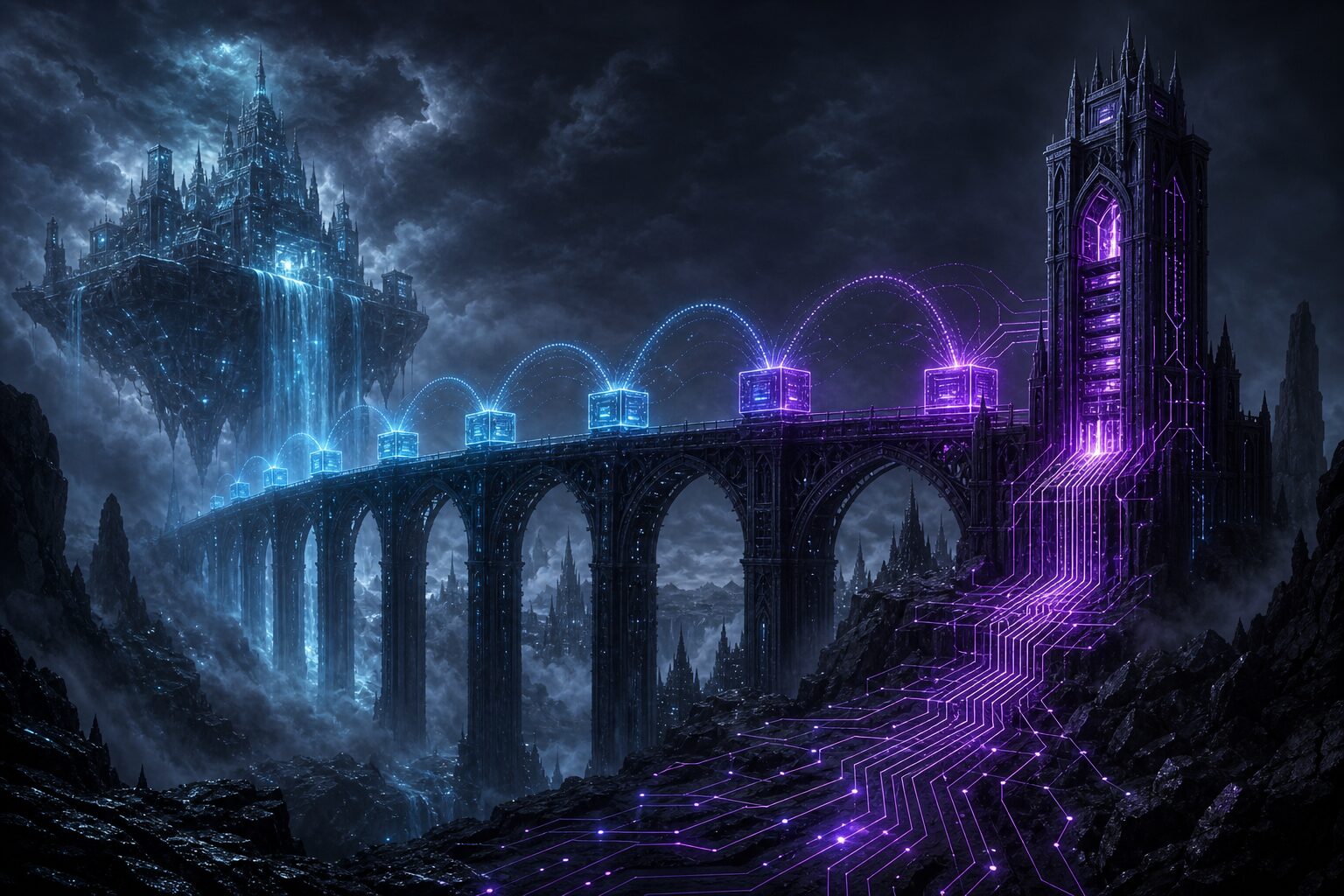
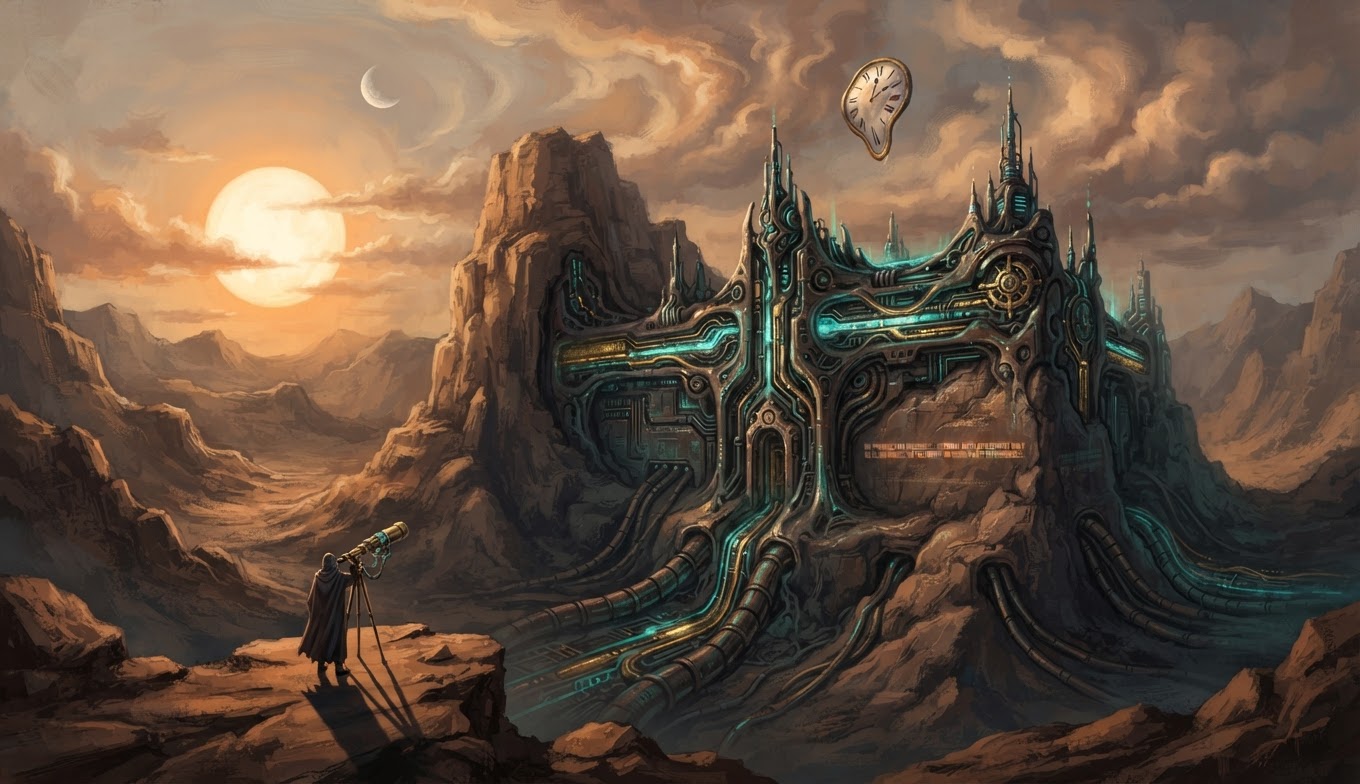
Every brand eventually faces the same question: what do we look like? The Kingdom of Truth answered it in S9.8 with a constraint system, not a mood board: dark base, neon cyan and violet accents, high contrast, architectural geometry, sensor grain. The futures thesis is that this visual language is not just for images — it is the interface language for everything: the site, the god mode view, the knob room, the dashboards, the robot HUDs. When the fleet grows a physical body, the robot’s display should look like it came from the same studio. The HUD aesthetic is the connective tissue of the whole operation — the shared skin over the mesh.
What we built
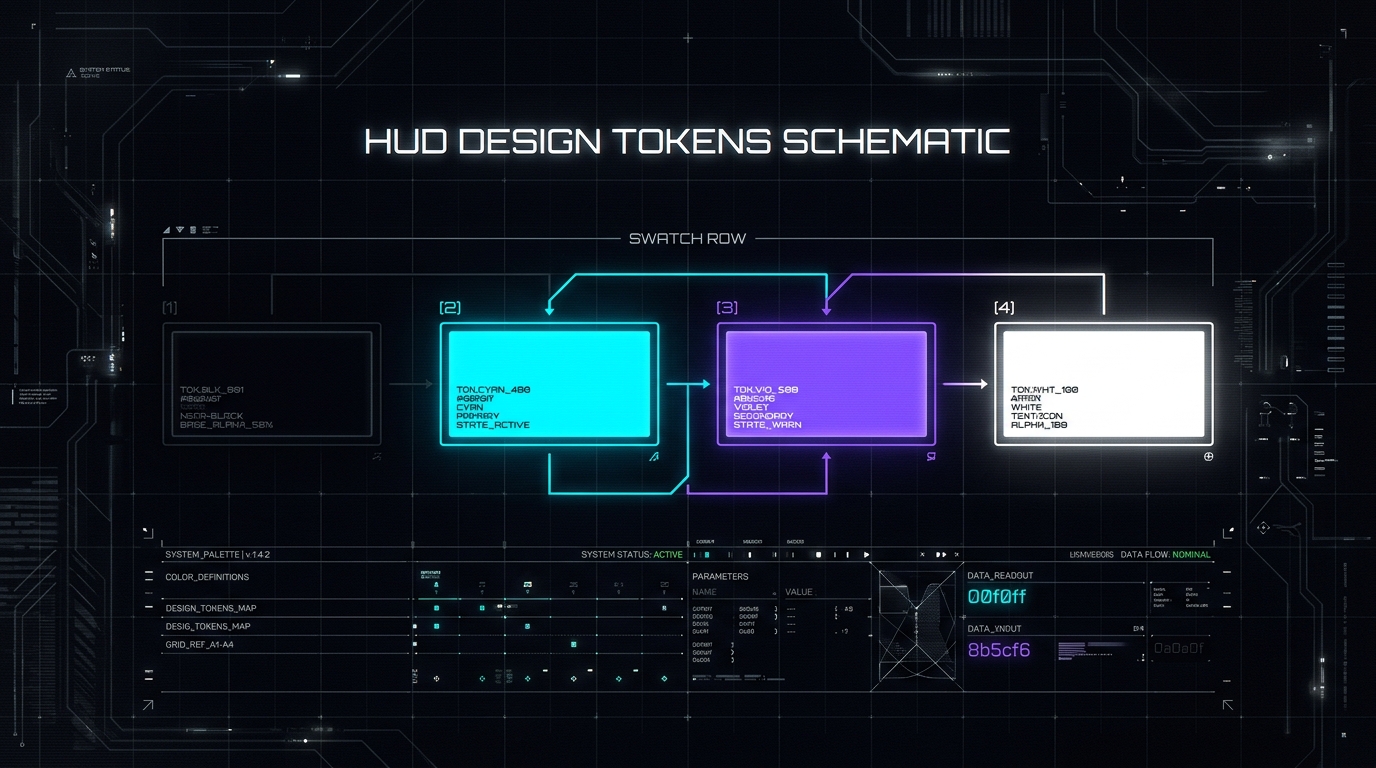
S9.8 systematized the language into five enforceable constraints: dark base (#0a0a0f–#1a1a2e, not pure black), neon accent duopoly (cyan #00f0ff / violet #8b5cf6 at 70/30, chosen by subject: architecture and interfaces lean cyan, people and organic forms lean violet), high contrast (compressed midtones, clipped histogram), architectural geometry (grids, frames, structural lines, eye-level camera), and sensor grain (digital noise unifying every output). The constraint system is enforced at prompt level, evaluation level, and publishing level. The manifest of the 2026-08-05 batch shows the language applied across the S7–S10 heroes. The god mode view (P3.3) already uses it for 3D. The language is not aspirational; it is a production system with a pass gate.
The vision
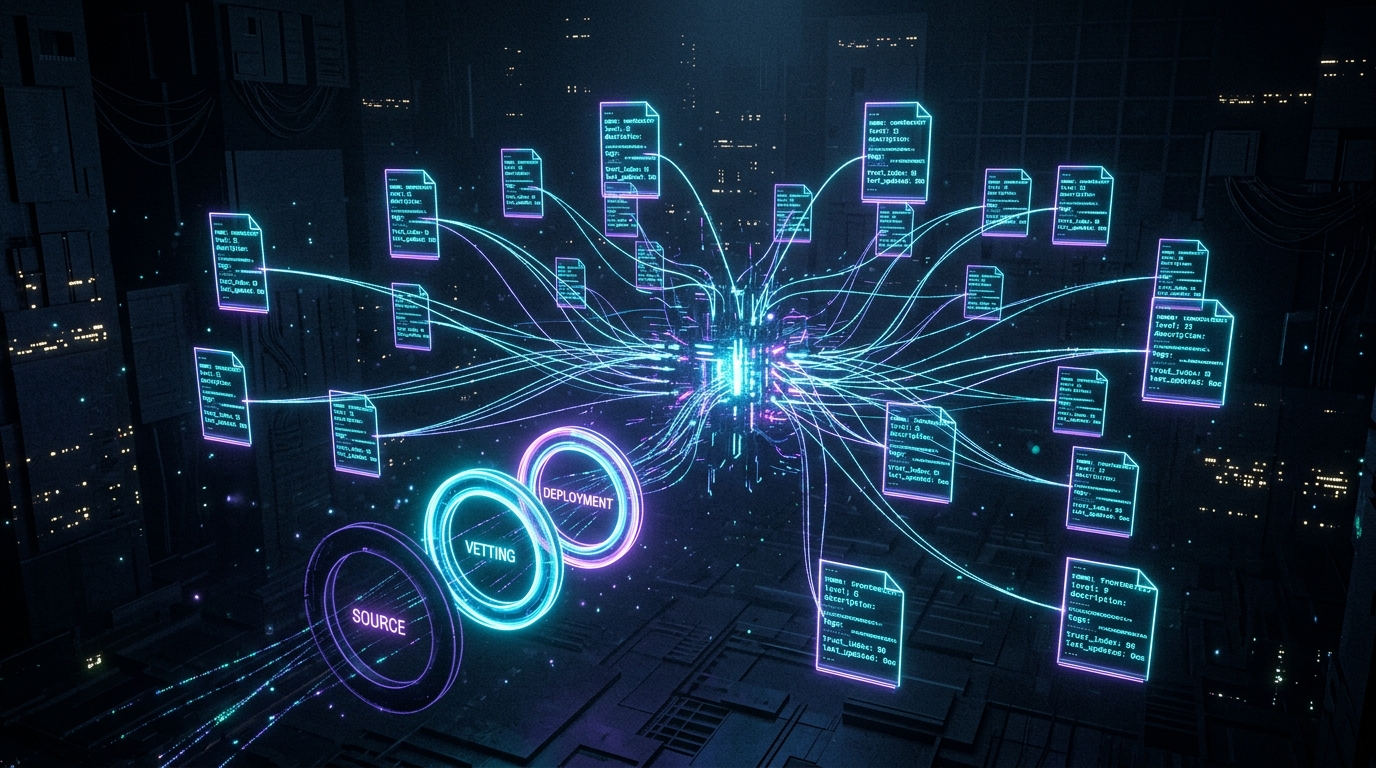
Every surface the fleet produces shares the skin: the WordPress theme accents, the dashboard widgets, the knob room lighting, the robot’s status LEDs, the video lower-thirds. A visitor who sees the site, then the 3D room, then a robot demo, recognizes one world — dark, neon, architectural, grained. The HUD aesthetic becomes a recognition signal: “this came from Lucid Hive.” It is also a constraint that makes automation possible — the media actor (SECTOR07a.18) composes prompts from the same template, so consistency is mechanical, not lucky.
What’s next
The next increment is an interface token set: the CSS/design-system version of the five constraints (colors, contrast rules, geometry patterns, grain overlay) that any surface — web, 3D, embedded — can consume. S9.8 defined the language; the token set distributes it.
Grounded in the S9.8 visual-language article, the S9 media series, the P3.3 God Mode view, and the media manifest. Twenty-seventh article in the SECTOR07a futures series.