
# The Archive Is Alive But Ungoverned: Media Without Provenance Discipline
> **NSG-11 · series: north-star-gap-finder · track: NSG-B · principle: everything-is-a-record**
> Category: AI & Automation · Tags: ai agents, Digital Business, Digital Sovereignty, Headless CMS, AI-Driven Development, Decentralized Identity, AI Agent, The Programmable Web, Cybernetic Ethics, API-First Architecture, Data Permanence, web40, Algorithmic Governance, The Metaverse as a Platform, Monolith vs. Microservices, Synthetic Reality, Advanced Prompt Engineering, Autonomous Site Operations, digital ecosystem, digital transformation
—
The archive is alive. The kingdom’s media library is not a static vault — it is a living system that breathes with every asset the fleet generates, imports, and re-broadcasts. Images, transcripts, articles, provenance records, voice memos, client deliverables: the archive grows with every session, every publish cycle, every agent run. The corpus is compounding. Principle seven of the north star says everything is a record and continuity beats completion. The fleet has taken this to heart. The archive is producing records faster than it can govern them.
The problem is not scarcity. The problem is provenance.
## The floating records
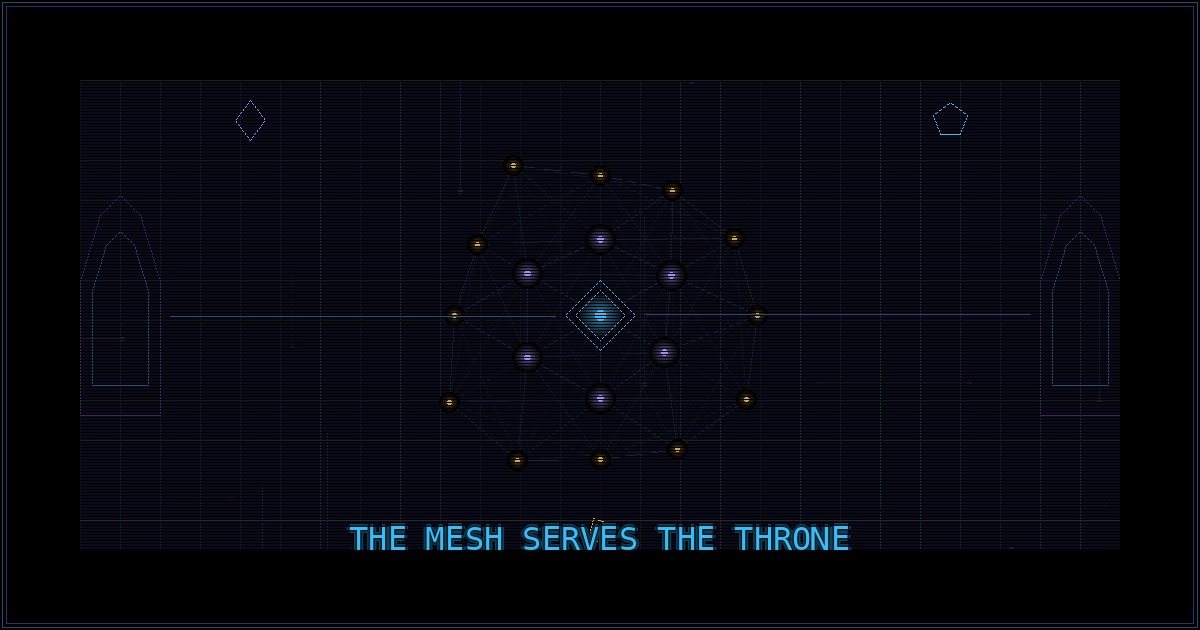
Open the vault and you will find two kinds of assets. The first kind glows with chains of provenance light — every image carries a JSON sidecar that names the project, the source, the generation method, the date, and the WordPress attachment ID it maps to. Every article carries frontmatter that grounds it in the north star, links it to a series and track, and traces it back to the principle it extends. These records are chained. You can follow the light from the published post back to the draft, from the draft back to the inspiration, from the inspiration back to the original media. The chain is the governance.
The second kind floats free. It is the image with no sidecar, the article with no frontmatter, the transcript that was never carded, the client asset that landed in a folder without a provenance record. These records are alive — they exist, they take up space, they can be found by browsing — but they have no chain. Nobody can follow the light back from the published asset to its origin. Nobody can verify when it was created, by which agent, under what project, with what intent. The record exists, but its history does not.
The floating records are not rare. They are the majority. Every agent run that generates an image without writing a provenance JSON adds a floating record. Every article that publishes without grounding in the north star adds a floating record. Every media import that skips the sidecar adds a floating record. The archive is alive, but the governance layer has not kept pace with the production layer. The fleet is printing faster than it is cataloguing.
## Why provenance is not optional
The north star says everything is a record. It does not say everything is a record with a chain. The gap is precisely this: the principle assumes provenance, but the practice does not enforce it. A record without provenance is a note without context. It can be read, but it cannot be verified. It can be referenced, but it cannot be traced. It exists in the archive, but it does not exist in the graph.
The operational consequence is real. When the fleet needs to reference a specific image in an article, it has to guess which asset is the right one — because multiple similar images exist, and only some carry provenance that says which project they belong to, when they were generated, and what they were generated for. When a client asks where a particular piece of content came from, the fleet has to reconstruct the chain manually — if the chain exists at all. When an agent needs to verify that an image is original and not a rehash, it has to look for a provenance sidecar that may not exist.
The provenance chain is the difference between a record and a receipt. A record says “this exists.” A receipt says “this was created at this time, by this process, for this purpose, and it maps to this published asset.” The receipt is what makes the record actionable. Without it, the archive is a pile of files. With it, the archive is a knowledge graph.
## The governance gap
The gap is not a missing tool. The provenance format exists — every recent article carries a JSON sidecar with project, id, source, and wp_attachment_id. The workflow exists — the publish pipeline writes the sidecar beside the hero image as part of the standard flow. The gap is discipline. The fleet writes provenance when the pipeline enforces it, and skips provenance when the pipeline does not. Every time an agent generates an image without writing the sidecar, every time an article publishes without grounding in the north star, every time a media asset enters the vault without a provenance record, the archive grows a little more ungoverned.
The gap is also architectural. Provenance is currently a convention, not a constraint. The pipeline recommends it; it does not require it. A record can be published without provenance, and nothing blocks the publish. The archive accepts it. The graph does not, because the graph has no provenance chain to follow. The result is a two-class archive: chained records that the fleet can act on with confidence, and floating records that exist but cannot be verified.
## The provenance ritual
The missing piece is the provenance ritual — a standing practice that makes provenance the first thing that happens when a record is created, not the last. The ritual is not complicated. When an image is generated, a provenance JSON is written beside it with project, id, source, method, and date. When an article is drafted, frontmatter grounds it in the north star with series, track, and principle. When a media asset is imported, the provenance chain is established before the asset is organized. The ritual is the moment the record becomes a receipt.
The provenance ritual changes the archive from a pile of files into a graph of governed records. Every chained record can be followed. Every floating record becomes a gap that the fleet can identify and close. The graph does not need to be perfect on day one — it needs to be growing. Every provenance JSON written is a chain added. Every frontmatter grounding is a chain added. Every media import with a sidecar is a chain added. The fleet compounds by adding chains, not by adding files.
The test is simple: can the fleet trace any published asset back to its origin? If the answer is no — if the fleet has to guess, reconstruct, or approximate — then the provenance chain has a gap. The gap is not in the tools. The gap is in the ritual. The north star says everything is a record. The system should make every record a receipt.
## Close the gap
Close the gap by making provenance the intake ritual. Every asset — image, article, transcript, client deliverable — carries a provenance chain from the moment it is created. The chain is not a garnish. It is the governance layer that makes the archive a graph instead of a pile. The fleet that chains its records is the fleet that can verify its output. The fleet that lets records float is the fleet that cannot. The archive is alive. Give it provenance discipline, and every record becomes a receipt the fleet can follow.
—
*Grounded in the SECTOR9 north star principles — Everything is a record; continuity beats completion (P7), Transcription is the first act of power (P6), Information is the ground of being (P1) — and the gap-finder frame: Media is produced with provenance in some pipelines but not enforced across the archive — the ritual exists in recent work but not as a standing practice. NSG series, north-star-gap-finder track, NSG-B, SECTOR9 50+50.*
## Semantic Relationships
– [[everything-is-a-record]] — grounds
– [[provenance-chain]] — defines
– [[archive-governance]] — bridges
– [[floating-records]] — diagnoses
– [[north-star-gap-finder]] — series