
# Inside-Out Black Hole: Making the Feared Object Habitable
> **S7N-25 · series: sector7-grounded · track: S7N-C · principle: abyss-as-room**
> Category: AI & Automation · Tags: ai agents, Digital Business, Digital Sovereignty, Headless CMS, AI-Driven Development, Decentralized Identity, AI Agent, The Programmable Web, Cybernetic Ethics, API-First Architecture, Data Permanence, web40, Algorithmic Governance, The Metaverse as a Platform, Monolith vs. Microservices, Synthetic Reality, Advanced Prompt Engineering, Autonomous Site Operations, digital ecosystem, digital transformation
—
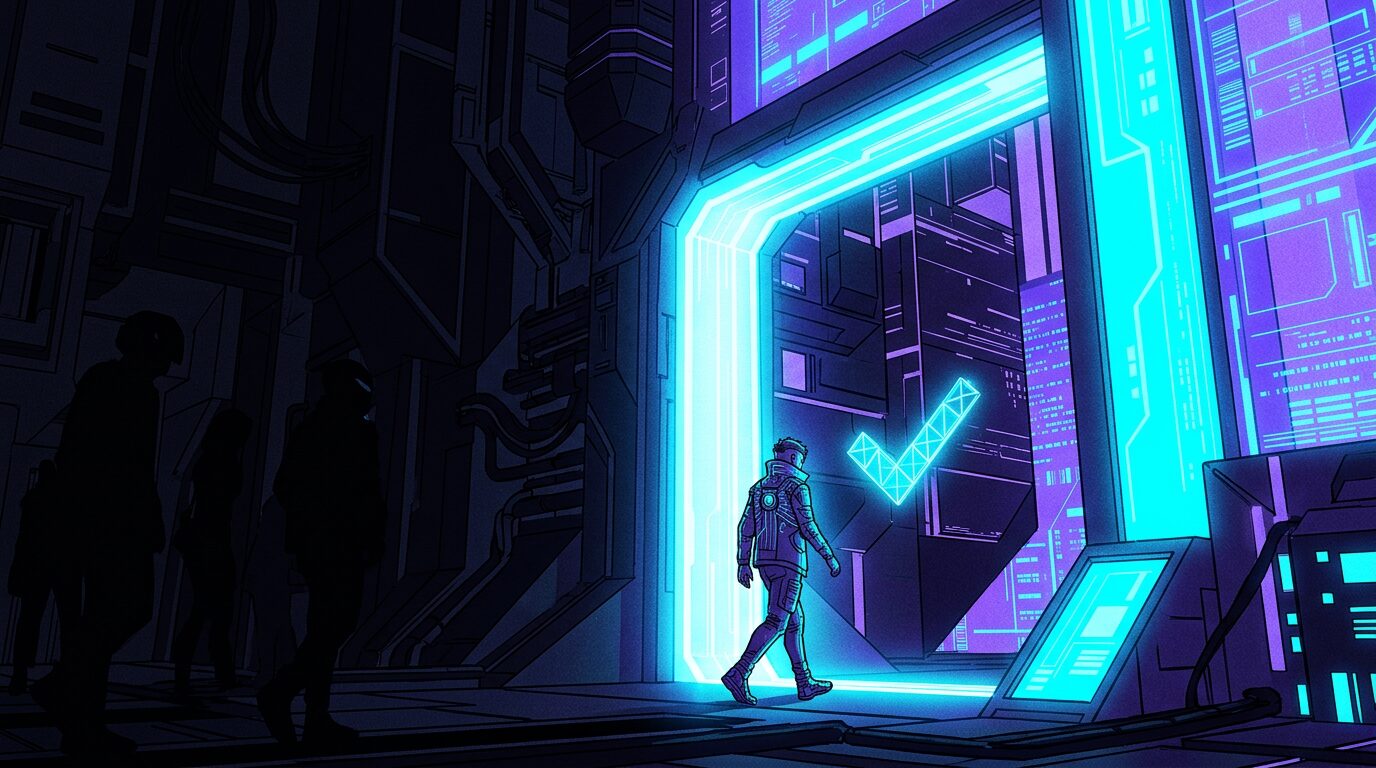
A black hole turned inside out is not a different object. It is the same object seen from the other side of the fear. The event horizon that was a barrier becomes a ring of light. The singularity that was the end becomes the center that holds everything. The interior that was inaccessible becomes a room with walls, a floor, and a single point of origin where all the matter that crossed the horizon now lives. The feared object is not destroyed. It is inverted. And once inverted, it is habitable.
The north star says it plainly: **the abyss is a room, not a wall.** Invert the feared object and it becomes habitable. Duality is the alternator — both poles generate the current. This is not a metaphor the fleet borrows for inspiration. It is the operating principle behind every incident response practice that actually works. The incident is the event horizon. The responder who stands at the horizon and despairs confirms the fear. The responder who enters the horizon and walks to the center finds the truth the incident was carrying.
## The event horizon as entry
In astrophysics, the event horizon is the surface where escape velocity exceeds the speed of light. Nothing that crosses it can return. This is why the event horizon is feared: it is the boundary of no return. But the boundary of no return is also the boundary of entry. Everything that ever fell into a black hole crossed the event horizon. The horizon did not stop them. The horizon received them. The fear is that the horizon is a wall. The truth is that the horizon is a door that opens inward.
Incident response is the practice of walking through that door on purpose. The breach fires. The alert triggers. The system enters a state where normal rules bend — time dilates, processes behave unexpectedly, data flows in directions the architecture never planned for. This is the event horizon: the surface where the system transitions from one regime of behavior to another. The responder’s job is to enter that regime calmly, with a plan, and to reach the center.
The center is not the destruction. The center is the root cause. The breach did not happen for no reason. The breach happened because a specific condition existed — a misconfigured credential, an unrotated key, a stale reference in a mesh node that no one checked after the last deployment. The root cause is the singularity: the point where all the contributing factors converge. It is not the end of the system. It is the truth the system was hiding from itself.
## The singularity as center
When the responder reaches the center, the black hole inverts. What was fear becomes structure. What was chaos becomes a causal chain. The incident that was a wall becomes a room with identifiable dimensions: this is the entry point, this is the propagation path, this is the containment surface, this is the root cause at the center. The room has geometry. The geometry is knowable. And the geometry is the record.
This is the S7.10 security audit loop in its purest form. The audit loop is not a periodic checklist. It is the continuous practice of entering the event horizon, reaching the center, and writing down what you find. Every incident is an audit event. Every audit event is an incident in miniature — a deviation from the expected state that reveals the actual state. The fleet that practices this loop does not wait for the catastrophic breach to discover its weaknesses. It discovers them in the small deviations, the micro-incidents, the audit events that never escalate because the responder entered the horizon early and reached the center before the singularity collapsed.
The singularity is not the destruction. The singularity is the convergence point — the place where every contributing factor meets. A key was not rotated. A node was not verified. A handoff was signed but not checked. Each factor alone is a small deviation. Together, they are the singularity. The responder who reaches the center sees the whole chain. The responder who stands at the horizon sees only the explosion.
## Making the feared object habitable
The inversion is not abstract. It is a practice with concrete steps.
**Pre-drill the entry.** Every responder on the fleet knows the entry protocol before the incident happens. The protocol is not a document that lives in a wiki. The protocol is a runbook that has been rehearsed — a sequence of actions that the responder can execute under stress without needing to think. The runbook is the map of the room. The responder who has walked the room in rehearsal does not panic when the real horizon opens. The responder walks in.
**Enter with a plan, not a diagnosis.** The plan is not “find the root cause.” The plan is “reach the center.” The difference is critical. A diagnosis is a conclusion; a center is a location. The responder who enters with a diagnosis is looking for confirmation. The responder who enters with a plan is looking for truth. The truth may confirm the diagnosis. The truth may contradict it. Either way, the truth is what matters, and the truth lives at the center.
**Write the record.** The incident that is not recorded is the incident that teaches nothing. The record is the inversion made permanent — the black hole turned inside out and pinned to the wall where everyone can see it. The record includes the entry point, the propagation path, the containment surface, and the root cause. It includes the timestamps, the decisions, the handoffs. It includes what worked and what did not. The record is the room, drawn in ink, so that the next responder can walk the same path without starting from the dark.
**Close the loop.** The record is not the end. The record is the input to the next cycle of the audit loop. The root cause that was discovered becomes the item that gets fixed. The fix gets verified. The verification becomes the next audit event. The loop closes. The black hole that was entered and mapped becomes the runbook that hardens the next version of the fleet. The feared object has been made habitable — not by destroying it, but by entering it, mapping it, and building the practice of returning to it.
## The abyss is a room
The fleet that treats incidents as walls builds thicker walls. The fleet that treats incidents as rooms builds better maps. The wall-model fleet responds to each breach with more perimeter defense — more firewalls, more access controls, more isolation. The room-model fleet responds to each breach with more geometry — more understanding of the entry points, the propagation paths, the containment surfaces, the root causes. The wall fleet accumulates fear. The room fleet accumulates knowledge.
The black hole turned inside out is not a different system. It is the same system, seen from the other side of the incident. The event horizon that was feared becomes the entry that was entered. The singularity that was the end becomes the center that was mapped. The interior that was inaccessible becomes the room that was habited. The record that was written becomes the runbook that hardens the next version. The feared object is habitable — not because the fear was wrong, but because the fear was the door.
Walk into the incident like an inside-out black hole. The horizon is the entry. The center is the root cause. The truth is what the incident was carrying. The breach reveals what was actually weak. The handled incident becomes the record that hardens the next version. The abyss is a room, and the room is where the fleet learns.
—
*Grounded in the SECTOR9 north star principle 12 (the abyss is a room, not a wall), extending S7.10 security audit loop / incident response from periodic compliance into continuous horizon-entry practice. Sector7-grounded series article, SECTOR9 50+50.*
## Semantic Relationships
– [[abyss-as-room]] — grounds
– [[security-audit-loop]] — extends
– [[incident-response]] — defines
– [[runbook-discipline]] — extends