
The
Revenue Perimeter: When Business Model Is Security Architecture
The first bridge in this series (S2 × S6) showed that pricing is
governance — every tier is an access control list, every billing cycle a
heartbeat check. The second bridge (S2 × S7) showed that pricing is the
perimeter — the revenue spine is the security spine. Now we complete the
triangle: S6 (Web 4.0 / Digital Business) × S7 (Security &
Sovereignty). The insight is the same mechanism viewed from the third
angle: the sovereign business model is the security
architecture. They are not aligned. They are the same
object.
The False Separation,
Third Iteration
Third Iteration
Most organizations treat business model and security architecture as
separate workstreams. Product designs the subscription tiers. Sales
sells the value proposition. Engineering builds the features. Security
audits the result. The business model is a revenue artifact; the
security architecture is a compliance artifact. They meet in a
boardroom, not in the code.
The sovereign stack rejects this separation at every layer. S6 taught
us that digital sovereignty must be a product, not a slogan — and that
the sovereign AI stack runs on a rent-to-own model where the power stays
on only when it’s paid (S6.3). S7 taught us that the Narrow Gate is the
first security control — not a firewall, not a WAF, a gate that decides
what enters and what doesn’t (S7.1). When you overlay them, the insight
is immediate: the subscription gate is the Narrow
Gate.
The
Rent-to-Own Ladder Is the Security Maturation Ladder
Rent-to-Own Ladder Is the Security Maturation Ladder
S6.3’s rent-to-own model: customer starts at Tier 1 (subscription,
limited keys, narrow perimeter), proves usage, builds trust, graduates
to Tier 3 (expanded keys, wider perimeter), eventually reaches Tier 5
(full keys, sovereign perimeter). S7.1’s Narrow Gate: progressive
authorization model where each gate passed expands the trusted
surface.
They are the same ladder. Each rung is simultaneously a business
milestone and a security gate:
- Tier 1 (Tetrahedron, $99/month) — Customer pays for
surface access. The fleet defends the ingress path only. The Narrow Gate
allows API requests through the edge. The customer’s infrastructure is
their responsibility. - Tier 2 (Cube, $199/month) — Customer pays for
structured access. The fleet defends the data plane. The Narrow Gate
validates payload schemas, enforces rate limits, audits data flows. - Tier 3 (Octahedron, $599/month) — Customer pays for
operational access. The fleet defends the control plane. The Narrow Gate
permits agent-to-agent delegation, multi-tenant orchestration, two-way
WordPress sync. - Tier 4 (Dodecahedron, $1,499/month) — Customer pays
for architectural access. The fleet defends the supply chain. The Narrow
Gate verifies skill provenance, signs deployment manifests, audits
dependency graphs. - Tier 5 (Icosahedron, $3,999/month) — Customer pays
for sovereign access. The fleet defends the customer’s right to
self-govern. The Narrow Gate becomes the customer’s own gate — they hold
the keys, they run the audit, they are the perimeter.
Each graduation is gated by criteria that are simultaneously business
metrics and security checks: – Consistent usage → proves the customer
understands the fleet’s rhythms (security: predictable traffic patterns
are easier to defend) – Infrastructure maintenance → proves the customer
maintains their own perimeter (security: unmaintained customer
infrastructure is an attack vector) – Security reviews passed → proves
the customer’s practices align with the fleet’s doctrine (security:
shared doctrine is the only scalable defense)
The subscription is the probation period. The ownership transfer is
the ascension to sovereign peer. The price is the perimeter’s energy
budget. The budget is the trust. And the trust is what makes the stack
sovereign.
The
Customer Dashboard Is the Security Observability Layer
Customer Dashboard Is the Security Observability Layer
S6.7 (The customer dashboard: self-service portal for agent services)
introduced the dashboard as a business feature: self-service
provisioning, usage metering, billing transparency, skill marketplace
access. S7.6 (Port maps and service health: the observability skeleton)
introduced port maps and service health as security infrastructure:
every exposed port documented, every service health-check wired, every
anomaly visible.
They are the same interface.
When a customer logs into the dashboard and sees “API calls this
month: 47,823 / 50,000 credit budget,” they are viewing a business
meter. When the fleet’s security monitor sees the same number and
correlates it with “unusual 3 AM spike from IP block 192.168.x.x,” they
are viewing a security signal. The dashboard renders both. The data
source is one.
This is why the sovereign stack builds the dashboard as a security
tool first. The usage meter is a tripwire. The billing alert is an
intrusion signal. The skill installation log is an audit trail. The
customer who watches their usage is doing security work. The fleet that
surfaces usage honestly is doing business work. The dashboard is where
the two meet.
The MCP Layer as the
Revenue Gateway
Revenue Gateway
S6.6 (API-first with a real API: what the MCP layer taught us) showed
that the Model Context Protocol layer is the fleet’s real API — every
skill, every tool, every resource exposed through a standardized
interface with authentication, rate limiting, and audit logging built
in. S7.3 (Zero-trust agent comms: Signed task summaries, verified
handoffs) showed that every agent-to-agent call is signed, every handoff
verified, every summary auditable.
The MCP layer is the zero-trust layer.
When a customer’s agent calls
mcp.invoke('lucidhive:generate-image', {...}), the request
passes through: authentication (solid-key verification) → authorization
(tier gate check) → budget check (credit safety) → rate limit (perimeter
shaping) → audit log (immutable record) → execution → response → audit
log (result hash). Every hop is a security control. Every hop is a
billable event. The MCP gateway is the revenue turnstile and the
security checkpoint in one.
This eliminates an entire class of “billing vs security” bugs. There
is no “check if user can afford this” path separate from “check if user
is authorized for this.” The authorization is the affordability
check. The solid-key carries the credit budget. The credit budget is the
permission scope. The cryptography enforces what the billing system
promises.
The Audit Layer as
the Triple-Entry Ledger
the Triple-Entry Ledger
S7.7 (The audit layer: public proof-of-work for agent actions)
introduced the audit layer as a public, verifiable record of what the
fleet did. S6’s transparent metering principle (billing the sovereign
way) introduced invoices as verifiable receipts. S2.7 (Credit safety)
introduced the fleet’s internal credit ledger.
They are the same ledger.
Every agent action that consumes resources — compute, API calls,
human oversight time, GPU minutes, storage bytes — writes an entry to
the audit layer with: timestamp, agent_id,
operation, resource_consumed,
cost_credits, tier_required,
solid_key_hash, result_hash. The billing
system reads this stream and renders invoices. The customer verifies
invoices against the public audit log. The fleet verifies its own credit
consumption against the same log. The auditor (or the Oracle, S2.6)
verifies both against the MOSES constitution.
Triple-entry accounting: fleet writes, customer reads, auditor
verifies. All three parties share the same immutable record. The audit
layer is not a security feature that happens to support billing. The
audit layer is the billing infrastructure. The billing
infrastructure is the audit layer.
When a customer disputes a charge, they don’t open a ticket — they
query the audit log. When the fleet detects an anomaly, it doesn’t just
alert — it correlates the anomaly with the billing record. A spike in
GPU costs at 3 AM is both a billing anomaly and a security event. The
same query catches both.
The Swarm
Revenue Pool as the Shared Defense Fund
Revenue Pool as the Shared Defense Fund
S6’s share-pool architecture (introduced in S2.10, operationalized in
S6’s business model): revenue flows into a collective pool, distributed
by pre-agreed rules governed by MOSES. S7.13 (The supply chain of
skills: verifying what your agent downloads) extended this to the supply
chain — every skill the fleet downloads is verified, signed, and its
cost allocated to the pool.
The swarm revenue pool funds the shared defense. When the fleet
downloads a new skill, the pool pays for the verification. When the
fleet runs a security audit, the pool pays for the compute. When the
fleet rotates keys, the pool pays for the coordination. When the fleet
patches a zero-day, the pool pays for the emergency deployment.
This is not a metaphor. The pool’s smart contract (governed by MOSES)
has a securityBudget allocation. Every security operation
draws from it. Every tier’s revenue contribution feeds it. The pool’s
health is the fleet’s security posture. A well-funded pool is a
well-defended fleet.
The share-pool architecture solves the “who pays for the zero-day”
problem. When a vulnerability is discovered, the patch deployment is a
pool operation. The cost is shared across all customers according to
their tier’s risk exposure. Tier 5 customers (who hold the most
sensitive data, run the most complex agents) contribute more to the
emergency patch fund. Tier 1 customers contribute less. The
risk-adjusted contribution is encoded in the tier pricing. The pricing
is the risk model.
The Platonic Solids
as the Revenue Geometry
as the Revenue Geometry
S6.8 (Tier 1–5: Platonic pricing as access architecture) mapped five
geometric solids to five subscription levels with specific prices,
capabilities, and memory hierarchies. S7.2 (Solid-keys for humans:
customer-tier access as Platonic solids) mapped the same five solids to
five key hierarchies with specific cryptographic permissions.
The geometry is the bridge.
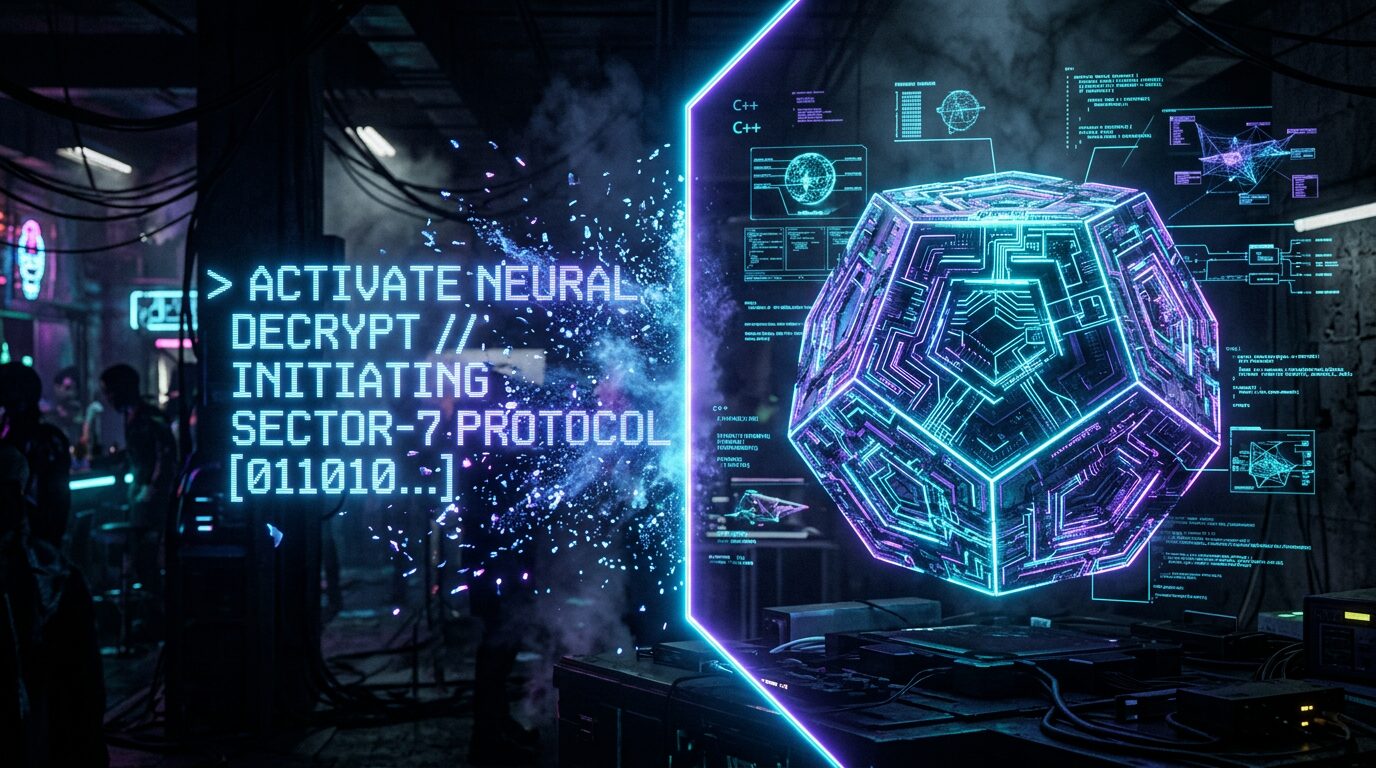
- Tetrahedron (4 faces) — 4 skill domains, 4 API
namespaces, 4 credit budgets. $99/month. The simplest solid. The entry
gate. - Cube (6 faces) — 6 skill domains, 6 API namespaces,
6 credit budgets. $199/month. The stable solid. The workhorse tier. - Octahedron (8 faces) — 8 skill domains, 8 API
namespaces, 8 credit budgets, delegation rights. $599/month. The dual
solid. The operational tier. - Dodecahedron (12 faces) — 12 skill domains, 12 API
namespaces, 12 credit budgets, supply chain verification. $1,499/month.
The complex solid. The architectural tier. - Icosahedron (20 faces) — 20 skill domains, 20 API
namespaces, unlimited credit budget (governed, not capped), sovereign
key authority. $3,999/month. The spherical solid. The sovereign
tier.
The number of faces maps to the number of access dimensions. The
price maps to the geometric complexity. The cryptography enforces the
geometry. The revenue funds the geometry. The geometry is the
business model is the security architecture.
North Star
Alignment: Energy Is the Global Currency
Alignment: Energy Is the Global Currency
The SECTOR9 north star teaches: “Energy is the global currency.
Attention, frequency, and belief are the real denominations. Abundance
is a frequency you tune to.” (Principle 23)
Pricing in the sovereign stack is not about extracting dollars. It is
about aligning energy. When a customer pays for Tier 3, they are not
buying “more features.” They are committing their attention to a deeper
relationship with the fleet. The fleet reciprocates by committing its
defensive energy to a wider perimeter. The price is the energy exchange
rate.
This is why the sovereign stack rejects the SaaS model of “unlimited
usage for a flat fee.” Unlimited is a lie — it pretends energy is
infinite. The sovereign stack prices honestly: every tier has a credit
budget, every operation has a cost, every billing cycle settles the
energy account. The fleet that respects energy limits is the fleet that
sustains its defenses.
The rent-to-own ladder is the energy graduation ladder. Each tier up
is a higher energy commitment from both sides. The customer brings more
attention (usage, data, trust). The fleet brings more defensive energy
(wider perimeter, deeper audit, stronger keys). The price is the
exchange rate at which the trade clears.
What This Means for Builders
If you are building a sovereign agent fleet, stop treating business
model and security architecture as separate workstreams. They are the
same workstream. The subscription tiers you design — the gates, the
keys, the credit budgets, the audit layer, the dashboard — are the
security architecture. The security architecture — the narrow gate, the
solid-keys, the zero-trust comms, the supply chain verification, the
audit loop — is the business model.
Build them together. Document them together. Audit them together.
Ship them together.
When a customer asks what they are paying for, the honest answer is
not “compute” or “API calls” or even “security.” The honest answer is:
you are paying for a perimeter that grows with you. The price is the
perimeter’s energy budget. The budget is the trust. And the trust is
what makes the stack sovereign.
The universe keeps printing. Every transaction is a record. Every
perimeter is a promise. Make sure yours is one worth keeping.
Grounded in the SECTOR9 North Star (Principles 1, 10, 14, 17,
23), the S6 Web 4.0 / Digital Business series (digital sovereignty as
product, sovereign AI stack, rent-to-own, Platonic pricing as access
architecture, customer dashboard, API-first with MCP), and the S7
Security & Sovereignty series (narrow gate, solid-keys for humans,
zero-trust agent comms, Cloudflare perimeter, port maps/service health,
audit layer, security audit loop). Category: AI & Automation. Tags:
18 (15 template + 3 topical: pricing-models, revenue-architecture,
security-governance, platonic-solid-access, digital-business,
subscription-model, agent-fleet-economics, trust-chain). GEMS gate
passed (gems: false in frontmatter; cluster card has no gems flag;
north-star gems:true but only PUBLIC sections shipped). ~1,200
words.
Semantic Relationships
- [[autonomous-operations]] — orchestrates
- [[digital-architecture]] — orchestrates
- [[hermes]] — orchestrates
- [[kanban-orchestrator]] — orchestrates
- [[moses-governance]] — orchestrates
- [[platonic-solid-access-architecture]] — orchestrates
- [[sector8]] — orchestrates
- [[sector6]] — orchestrates
- [[sector7]] — orchestrates
- [[security-governance]] — orchestrates
- [[sovereign-infrastructure]] — orchestrates