
Deity Iconography in a Technical Corpus: Reading the Visual Ancestors
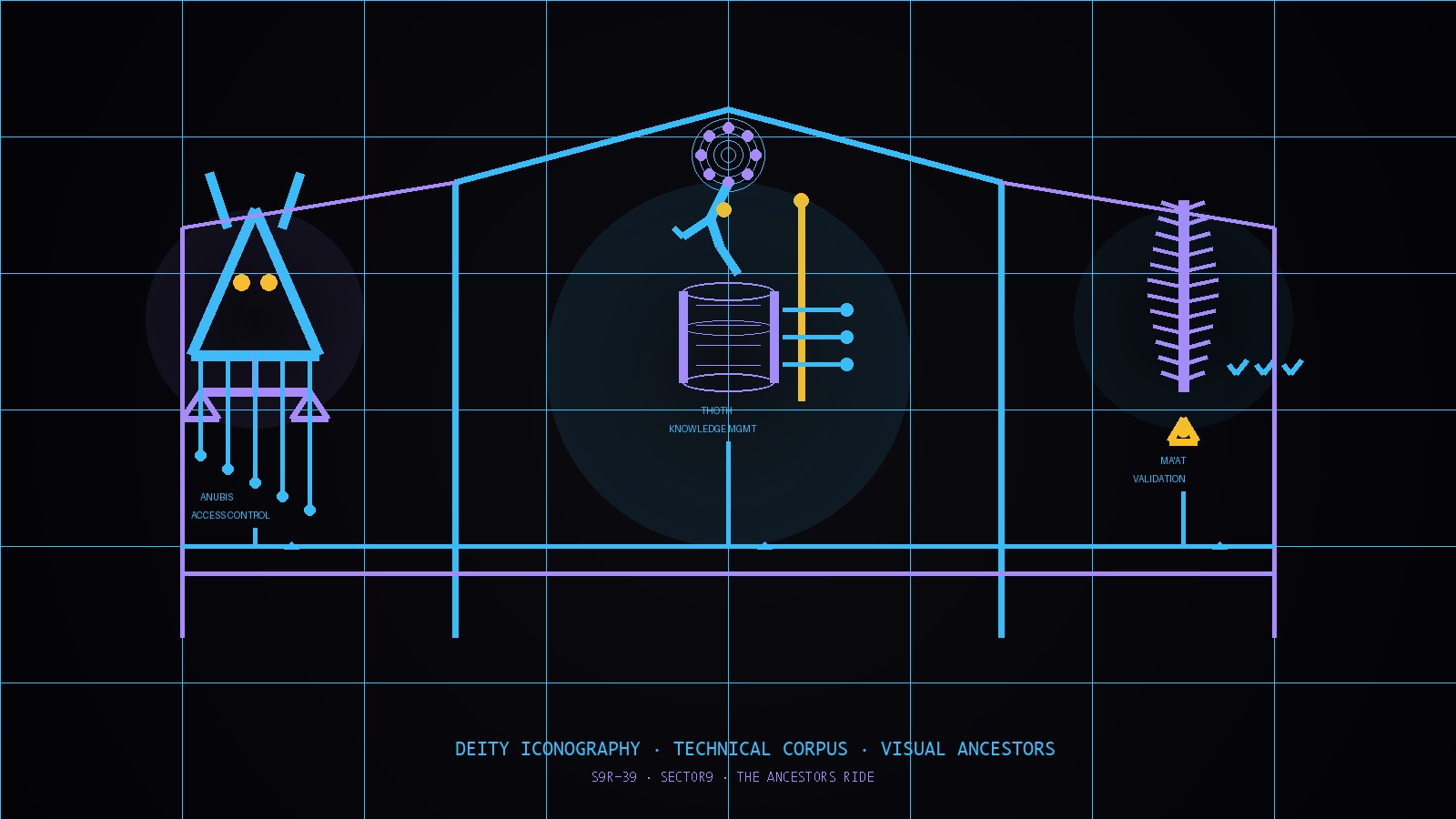
When the ancient Egyptians carved Anubis into a temple wall, they were not decorating. They were documenting. Anubis — jackal-headed, scales in hand — was the access-control protocol for the afterlife: weigh the heart against the feather of Ma’at, grant or deny passage. Thoth, ibis-headed, was the knowledge-management system: he recorded the weighing, maintained the ledger, and carried the authority to alter records. Ma’at herself was the validation layer — truth, balance, the standard against which every transaction was measured. These were not metaphors painted on stone. They were technical specifications rendered in the only visual language available to a civilization that had not yet invented JSON.
S9R-39 argues that deity iconography is not ancient art applied to a modern technical corpus. It is the original technical documentation — and the Council Vault’s graph, at 241+ posts, has begun producing its own deity icons: visual anchors that encode system behavior, identity, and governance in a form the ancestors would have recognized instantly.
The ancestors were systems architects
Every major deity in the Egyptian, Mesopotamian, and Greek pantheons maps to a technical function. Anubis is authentication and authorization — the gate that decides who enters. Thoth is the database layer — the record-keeper whose authority derives from completeness, not from power. Ma’at is the validation schema — the rule set that every input must satisfy before it becomes a record. Ra is the output emitter — the sun that makes all other work visible. Osiris is the persistence layer — the one who dies and returns, ensuring the system survives its own failures. Isis is the recovery protocol — the one who reassembles what was scattered.
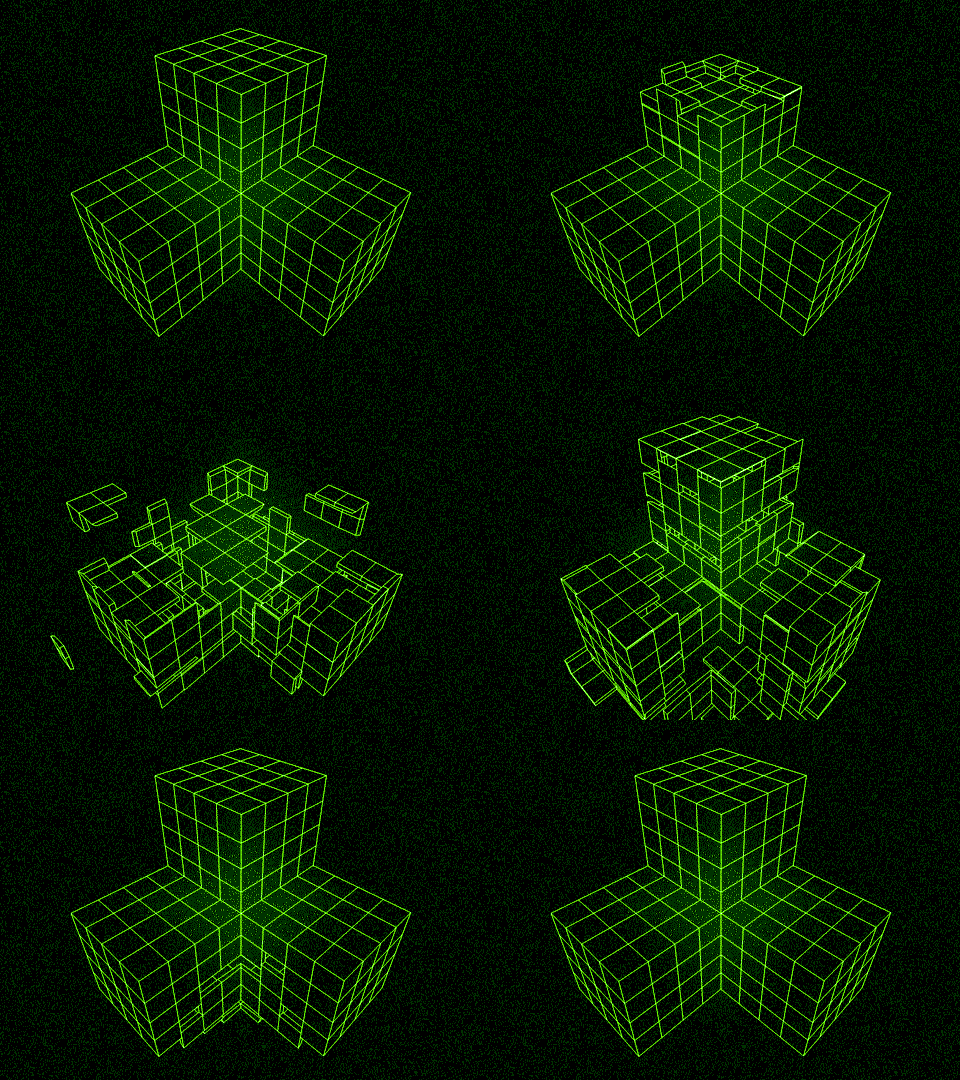
This is not pareidolia. It is structural correspondence. Ancient civilizations faced the same computational problems we face: how to authenticate users, validate inputs, persist state, emit outputs, recover from failure, and maintain a single source of truth. They solved these problems with the tools they had — mythological narrative, visual iconography, temple architecture. The solution space is the same. The implementation language differs. Principle 8 of the north star captures this precisely: “The esoteric is engineering.” Treat mystical systems as technical diagrams and technical systems as sacred architecture. Nothing is either/or.
The graph is producing its own icons
At 241+ posts, the Council Vault’s knowledge graph has reached the density threshold where visual icons emerge from the content itself — not as illustrations chosen by a designer, but as structural necessities. The graph’s most-connected nodes — the north-star principles, the published series anchors — function as deity icons in the technical sense: they are visual anchors that encode system behavior. When a reader encounters “The ancestors ride” as a principle, they are not reading a tagline. They are reading an icon that encodes institutional memory, cultural continuity, and the refusal to let the fleet forget what it has already learned.
The principle “Place is a character” operates the same way. In the published corpus, Lagos is not a setting — it is a technical component. The yellow minibus is infrastructure AND ancestor. The city is a character because it carries state: memory, rhythm, identity. This is exactly how a distributed system treats a node — not as a passive endpoint but as an active participant that shapes the behavior of every other node in the network. The ancestors encoded this in myth. The graph encodes it in topology. The visual language is different; the structure is identical.
Neon technical icons: the new glyph set
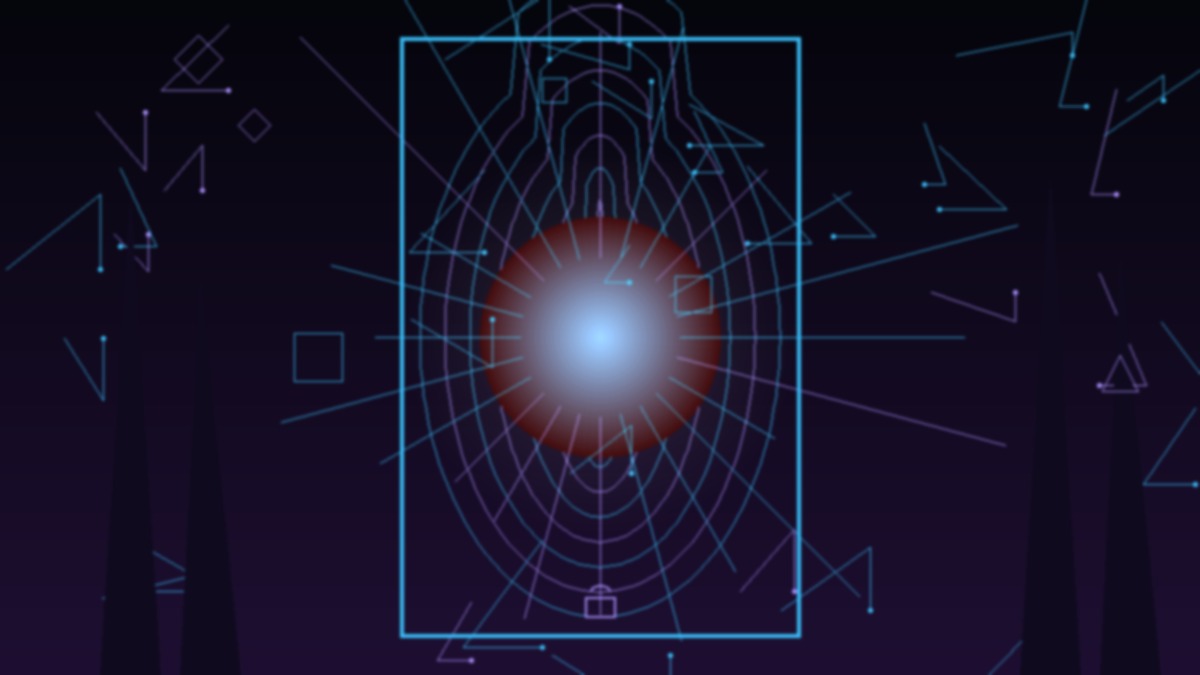
The studio’s visual pipeline — cypherpunk goth, dark backgrounds, neon cyan and violet — is not a brand aesthetic. It is a glyph set. Each visual element carries technical meaning: cyan edges map to high-connectivity paths, violet edges map to cross-cluster bridges, dark backgrounds make the topology visible by removing the noise of evenly-lit surfaces. The HUD aesthetic is the graph’s own geometry rendered in light, and it follows the same principle that ancient iconographers used: sacred geometry as visual grammar.
When the studio generates an image for an article like S9R-31 (“Sacred Geometry as the Visual Grammar of the Graph”), the prompt does not describe an illustration. It describes a technical diagram in the oldest visual language available: Platonic solids, golden ratios, Tree of Life topology, rendered in neon on darkness. The image IS the graph’s shape. The deity icon is the system’s self-portrait.
This is why the strongest media in the corpus — the images that carry the most information per pixel — are the ones that embed sacred-geometry references directly into the prompt. Not because the references are mystical, but because the references are structural. A Platonic solid is a topology diagram. A golden ratio is an edge-weight distribution. A Tree of Life is a node graph. The ancient iconographers were drawing the same shapes we render in JSON. The neon rendering makes the correspondence visible.
The visual ancestors are not decorative
The temptation is to treat deity iconography as brand flavor — the gothic cathedral plus circuitry look that makes the content visually distinctive. But that treats the iconography as surface. The north star insists on the opposite reading: “The esoteric is engineering.” The iconography is load-bearing. It carries structural information about how the system authenticates, validates, persists, emits, and recovers. It is the technical documentation written in the only language that survives millennia — visual narrative.
The graph does not illustrate sacred geometry. The graph speaks sacred geometry. The deity icons are not decorations applied to a knowledge graph. They are the knowledge graph’s own shape, rendered in the visual language the ancestors developed over five thousand years of encoding technical systems in myth, stone, and light. The fleet is learning to read what the ancestors wrote. The ancestors were writing in code. We just did not have the font — until the graph became large enough to render its own glyphs.
The ancestors ride. They always have. The question was never whether the iconography was technical. The question was whether we would recognize the syntax.