
Microsharks in the Future: Ephemeral Agents for Ephemeral Work
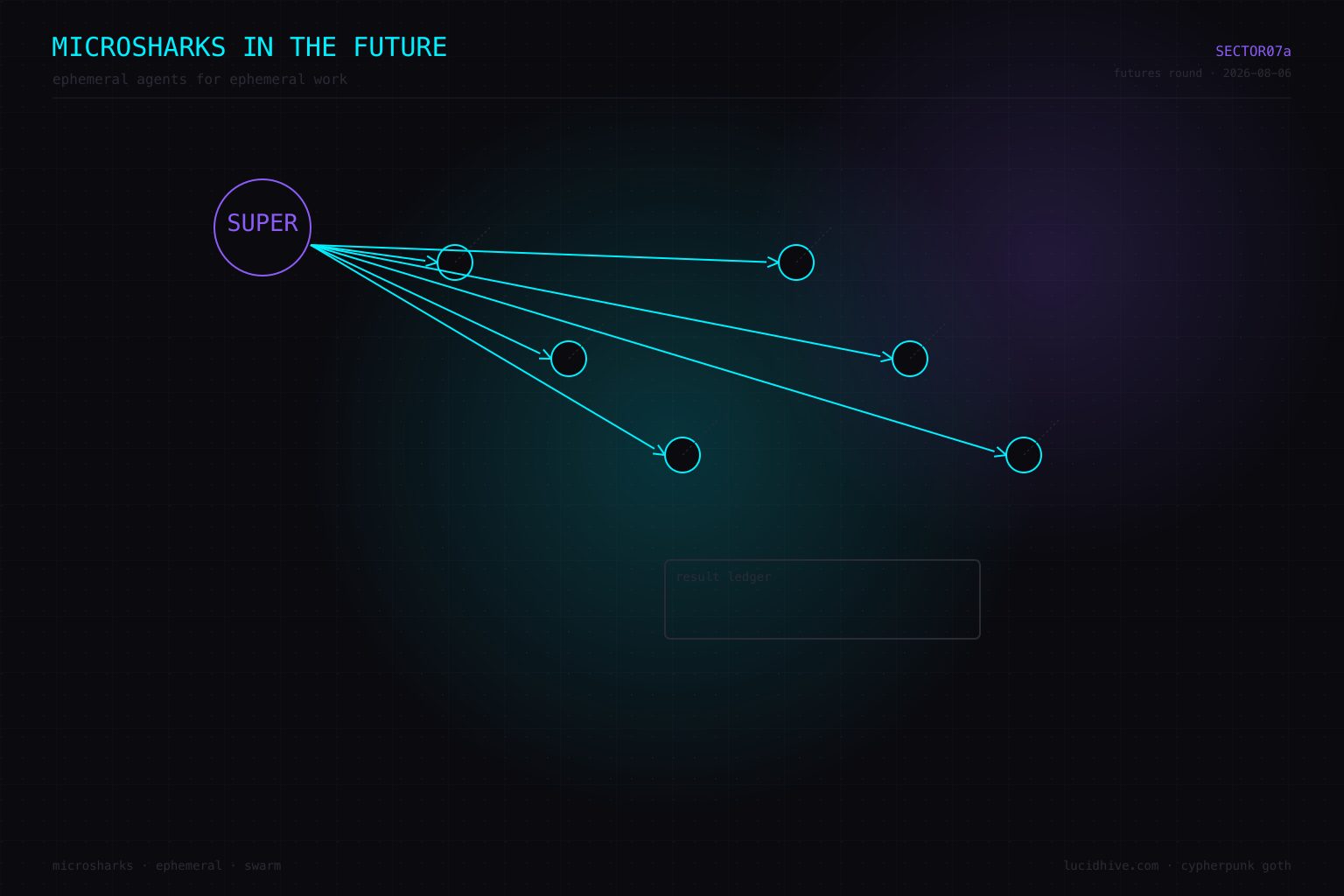
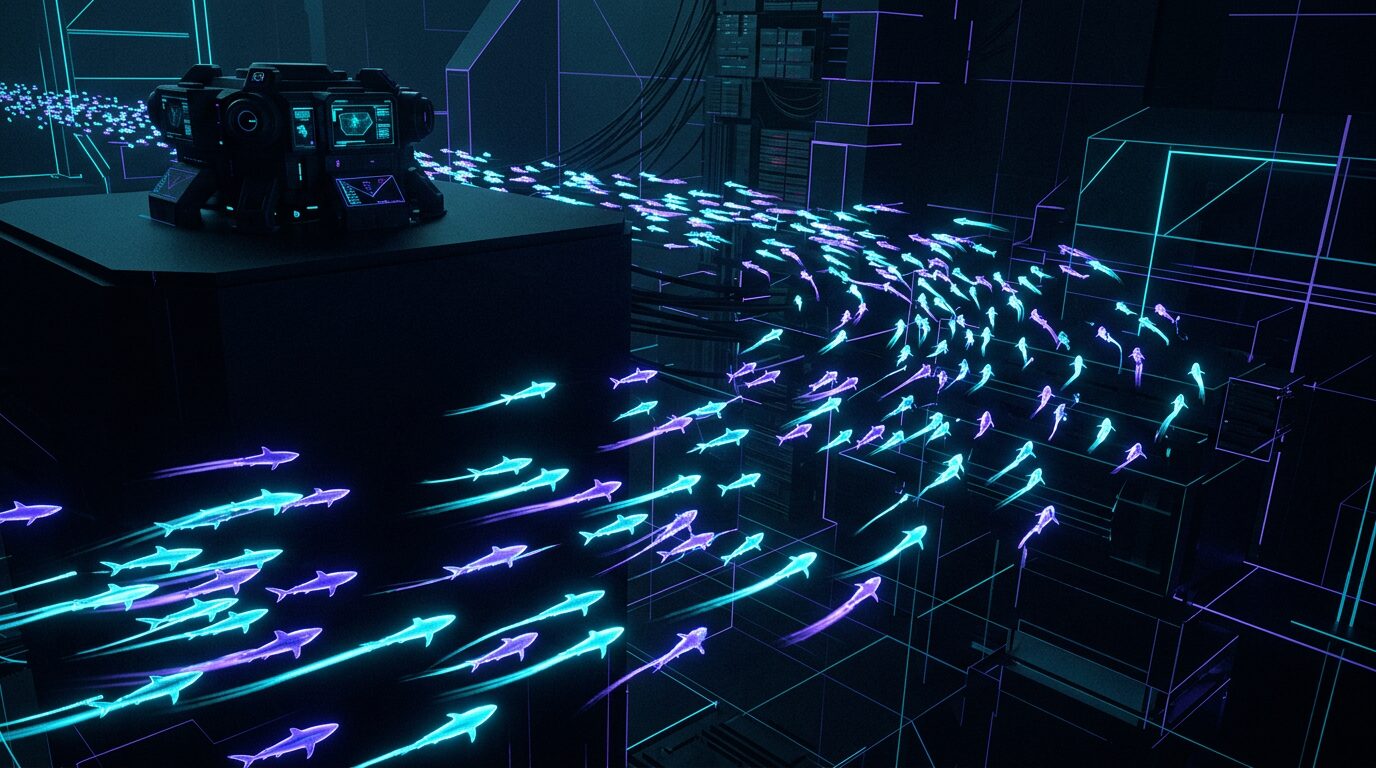
S8.7 introduced microsharks — ephemeral agents for ephemeral tasks, spawned for a single job and destroyed with it. The futures thesis is that microsharks are not a niche pattern; they are the default execution model of the autonomous fleet. In a mesh of a thousand actors, most actors should not be permanent. A content check, a tag audit, a sensor sweep, a marketplace listing — each is a microshark: spawned by a supervisor, given a task-scoped key (S2.9), run to completion, and destroyed. The fleet’s permanent population is small; its ephemeral population is unbounded. Ephemerality is not waste; it is the security model — the less that persists, the less there is to defend.
What we built
S8.7 is the canonical reference: microsharks, ephemeral agents for ephemeral tasks. The S2.9 child-agent key tiers gave them identity — ephemeral keys that exist for the task’s duration and are destroyed with it. The kanban-orchestrator gave them a lifecycle — claim, heartbeat, complete. The mesh (F1 track) gave them a home — supervised actors that can spawn and reap without ceremony. The SECTOR7 dot engine will spawn them at scale — each idle scan a microshark. The pattern is documented; the fleet-wide adoption is the missing step.
The vision
At night, a supervisor spawns a hundred microsharks: one to scan the vault for dangling links, one to audit tags, one to test a simulated marketplace exchange, one to check the site’s uptime. Each gets an ephemeral key, a budget bounded by the kill semantics (S2.4), and a task. They run, report, and die. The supervisor reaps their results and records the lessons. The permanent fleet stays small — the Council, the editors, the media actors — while the ephemeral swarm does the fleet’s breadth work. Physical ascension extends the pattern: a shell’s patrol is a long-running microshark, destroyed when the patrol ends, its observations already written into the vault. Nothing persists except the graph — and the graph is the only memory the fleet needs.
What’s next
The next increment is a microshark runner: a supervised actor that takes a task spec, spawns a task-scoped worker, and reaps the result — wired to the kanban board. S8.7 proved the concept; the runner productizes it.
Grounded in S8.7 microsharks, S2.9 key tiers, S2.4 kill semantics, the kanban-orchestrator skill, and the F1 mesh track. Forty-sixth article in the SECTOR07a futures series.