
From Wiki Graph to Published Authority: A Self-Improving Knowledge Base
Publish path: approve → new post → lucidhive.com → tag + bridge.
“Second brain” is one of the most overused phrases in the knowledge-work
industry. Everyone has a folder of markdown files and a note-taking app with
graph view. Almost nobody has a knowledge base that compounds — a system
where every article you publish makes the next article cheaper to write, every
fact you record makes the next question faster to answer, and the whole thing
gets measurably better the longer it runs.
This is the story of building one. Not a tool review — an operating system for
knowledge, with the numbers to prove it compounds.
The naive second brain, and where it dies
The typical setup: a vault of markdown notes, some tags, a pretty graph. It
works for about a month. Then three things happen:
1. The orphan problem. Notes get written, never linked, never revisited.
The graph fills with disconnected islands. You know the content is in
there somewhere, but finding it takes longer than rewriting it.
2. The attribution problem. Quotes appear with no source, numbers with no
citation. You can’t tell what’s original thinking and what’s a summary of
someone else’s work — so you can’t safely publish any of it.
3. The stale problem. The index says one thing, the notes say another, the
live system says a third. Nobody knows which layer is the source of truth,
so nobody trusts any of them.
A folder of markdown is not a knowledge base. It’s a pile. The difference is
schema, provenance, and a feedback loop.
What a knowledge OS actually needs
We rebuilt the vault as a structured system with three kinds of nodes:
- **Entities** — the *things*: agents, services, products, systems. Each has a
type, aliases, sources, and semantic relationships to other entities.
- **Concepts** — the *ideas*: patterns, principles, doctrines. Each cites the
entities that instantiate it and the sources it derives from.
- **Sources** — the *evidence*: imported notes, logs, documents, status
boards. Every claim traces back to one.
This separation matters more than it sounds. It makes the graph **queryable
by role**: “what do we know about agent orchestration?” returns concepts;
“which system does that?” returns entities; “who said so?” returns sources.
And it makes the whole thing auditable: a claim with no source is a bug,
not a fact.
The schema is enforced, not aspirational. Pages get generated, linted, and
repaired: orphan pages get flagged, dead links get caught, ungrounded quotes
get listed for fixing. The index is auto-generated from the graph, not
hand-maintained. That single change — treating the knowledge base as code with
a linter — is what turns a pile into a system.
The loop that makes it compound
The real magic is the feedback loop between the knowledge base and the public
content it feeds. Here’s the cycle we run:
1. Internal knowledge lives in the graph: 269 nodes, 1,513 semantic edges
at last count, generated from schema’d entities and concepts.
2. A publishable insight gets extracted into an article draft. The draft
cites the wiki concepts it’s grounded in — the authority is traceable, not
vibes.
3. The article publishes to the live site — 240 posts and counting, each
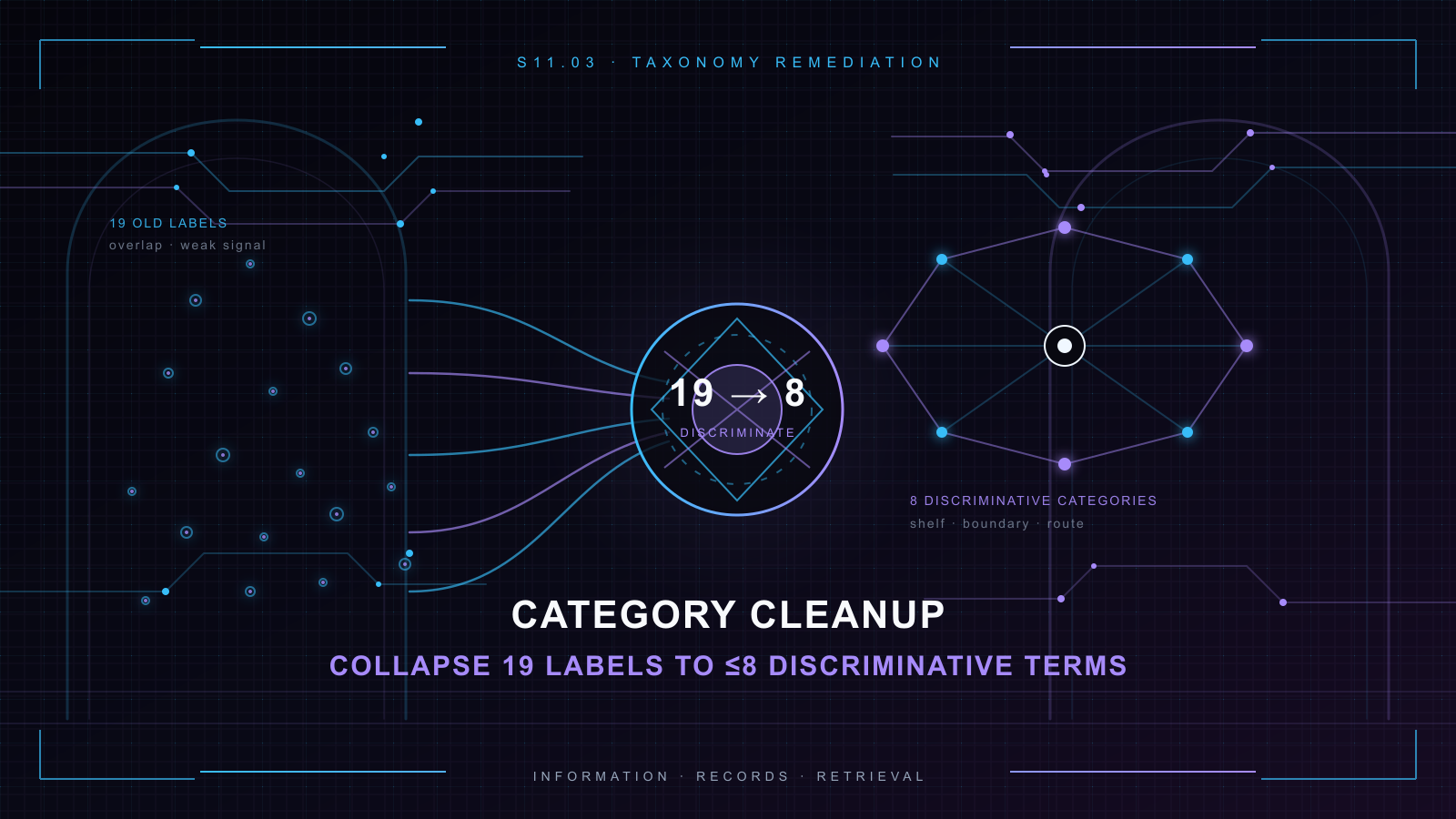
one tagged with real taxonomy (49 clean tags after a dedup pass), each one
linked back to the wiki concept that grounds it.
4. The published post feeds back into the knowledge base as a new entity
— the graph grows, the index regenerates, the next article starts from a
richer graph.
Every publish makes the next one cheaper. That’s the compounding. It’s not a
metaphor — it’s the measured property of a system where knowledge flows in one
direction (internal → public) and returns as new structure (public → graph).
The parts most people skip
Three things we learned the hard way, worth stealing:
Provenance beats polish. An article that says “we measured 100 concurrent
agents” without the benchmark behind it is marketing. The same article with a
verifiable internal benchmark behind it is authority. Every public claim
should be traceable to a source node in the graph.
Lint the graph, not just the prose. We run health checks on the knowledge
base itself: orphans, dead links, ungrounded quotes, stale indexes. A
knowledge base with 500 orphan notes is a liability; one with zero orphans is
an asset. The tooling exists; the discipline is deciding that knowledge
hygiene is a system property, not a chore.
The index is the interface. The master index isn’t a static export — it’s
regenerated from the live system so it can never drift. When the site says
240 posts, the index says 240 posts, because they’re the same query. When the
graph says 269 nodes, the map says 269 nodes, because the map is derived from
the graph.
What the numbers say
- **269 knowledge nodes, 1,513 edges** — the internal graph, schema-managed,
linted, growing.
- **240 published posts**, tagged with a deduplicated 49-term taxonomy — the
public layer, each post grounded in the graph.
- **One regeneration pass** took the index from a stale 100-post export to a
live 240-post export — because the index is a query, not a document.
- **Zero orphan drift** in the published layer — the bridge between graph and
content is enforced, not hoped for.
Why this matters for your business
A self-improving knowledge base isn’t a productivity feature. It’s a
moat. It means:
- Every article you publish is cheaper than the last one.
- Every claim you make is verifiable — and verification is what separates
authority from content marketing.
- Every service you sell can be demonstrated with the actual system that runs
it, not a slide deck about it.
- The system gets smarter while you sleep, because the graph is the product
and the graph compounds.
The folder of markdown is the past. The schema’d, linted, self-improving
knowledge graph — feeding a published layer that feeds back into it — is the
operating system for authority in the AI era.
*Grounded in a live internal system: schema’d vault (entities/concepts/sources),
auto-generated index, graph-edge ledger, published content layer. Verifiable
structure, not a tool review.*