When Research Needs a Body: The Mesh as the Nervous System for Market Intelligence
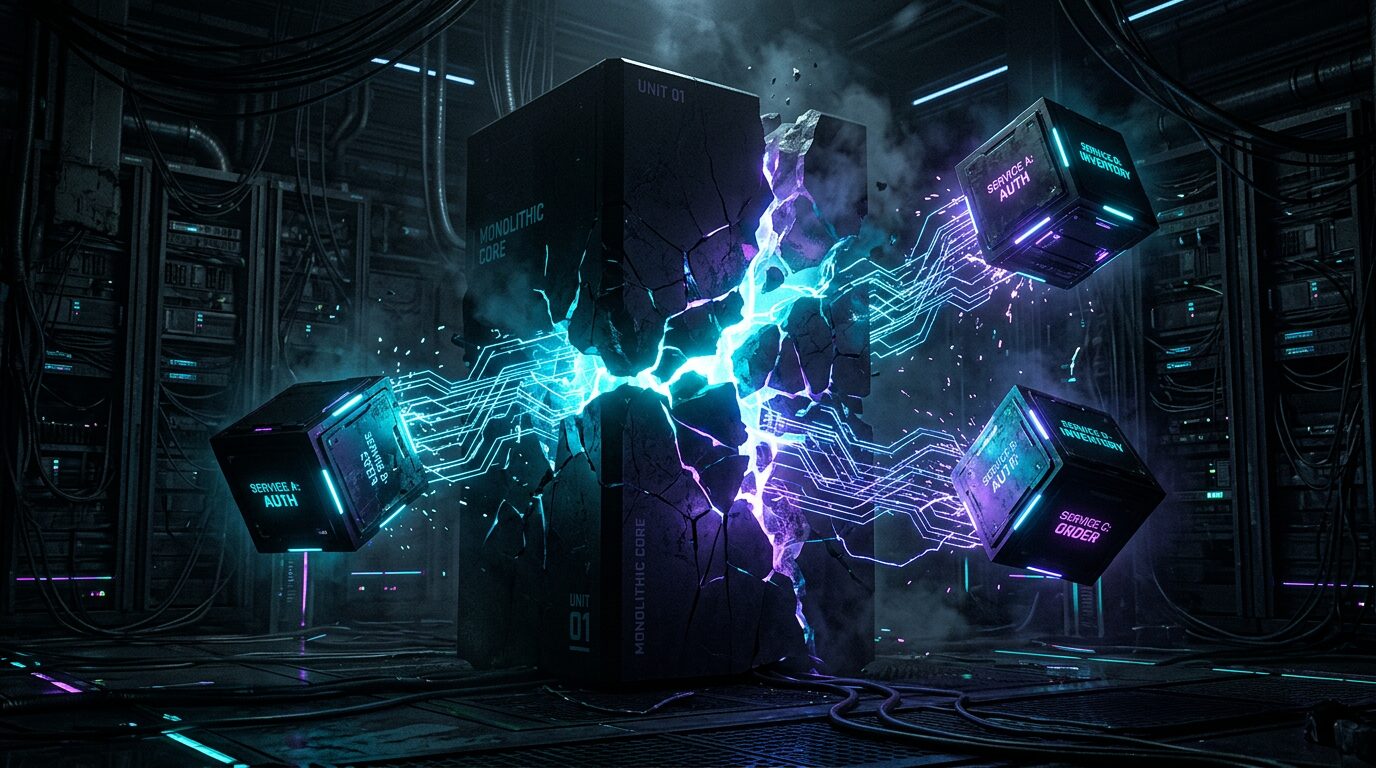
Research without infrastructure is a library with no doors. You can read, synthesise, and decide — but only at the speed of a single person opening one book at a time. The S10 series built the research engine: arxiv pipelines that scan papers, citation chains that connect sources to claims, competitive intelligence loops that track what the market is doing, and a source diet that separates confirmation from discovery. The S1 series built the mesh: an Erlang-inspired actor system where each agent is a supervised process, each profile a gen_server with a PID, a port, and a restart policy. Both systems solve coordination. Neither was designed to work alone. This bridge connects them — because research at scale does not need better papers. It needs a body.
Research is embarrassingly parallel — and that’s the problem
The S10 series described a standing research cadence: scan, read, synthesize, publish. The cadence is sound. The bottleneck is execution. When the research engine needs to scan 200 arxiv papers, track 40 Polymarket markets, and monitor 15 competitor blogs — all in the same cycle — a single-threaded pipeline cannot keep up. The papers arrive on a schedule. The markets move in real time. The competitors publish when they publish. The research engine must handle all three streams simultaneously, or it falls behind, and a research engine that falls behind is worse than no research engine at all — it produces stale intelligence with the confidence of fresh analysis.
The S1 mesh solves this by making parallelism structural rather than aspirational. PID dispatch means every research task gets its own process. Supervision trees mean a crashed paper scanner does not bring down the market tracker. The platonic hierarchy means ephemeral research agents — Microsharks — can be spawned for a single scan, given a bounded task, and dissolved when complete. The mesh does not add parallelism to research. The mesh makes parallelism the default mode of research execution.
Microsharks as research agents
S1.3 described the Microshark pattern: ephemeral children in simple_one_for_one mode, spawned by the Dodecahedron supervisor, given a single task, and dissolved on completion. S10.13 described the standing research cadence: scan, read, synthesize, publish. The bridge between them is the Microshark as a research agent.
When the research engine needs to scan arxiv for papers matching a topic cluster, it does not spin up a permanent process. It spawns a Microshark — an ephemeral agent with a PID, a model, and a bounded lifetime. The Microshark receives the scan parameters (topic, date range, relevance threshold), executes the scan, returns structured results, and terminates. If it crashes mid-scan, the supervision tree restarts it with the same parameters. If it exceeds its time budget, the supervisor kills it and spawns a replacement. The research engine gets parallel scanning without permanent process overhead.
The same pattern applies to competitive intelligence. S10.6 described source diet: the discipline of reading papers that change your mind, not papers that confirm it. But source diet at scale requires simultaneous monitoring of multiple sources — competitor blogs, market feeds, regulatory filings, conference proceedings. Each source is a Microshark: scan, extract, score relevance, return results, terminate. The mesh handles the lifecycle; the research engine handles the synthesis. Neither tries to do the other’s job.
Supervision trees as research fault tolerance
S10.15 described the research debt ledger: what you owe the future when you skip a citation, ignore a contradictory finding, or publish without verifying a claim. Research debt compounds silently — month three is shaped by month one. But research debt also accumulates from infrastructure failures: a crashed scanner that misses a paper, a stalled pipeline that delays a synthesis, a silent failure that produces no output and no error.
The mesh supervision tree converts silent failures into loud ones. When a research Microshark crashes, the supervisor logs the exit signal, records the failure, and restarts the process. The research engine knows that a scan failed — not because it checked a heartbeat, but because the mesh infrastructure made the failure visible at the process level. The audit trail captures the crash, the restart, and the resumption. Research debt from infrastructure failure is traceable, attributable, and correctable.
This is the difference between a research pipeline and a research body. A pipeline processes input to output. A body detects its own failures, recovers from them, and remembers that they happened. The mesh gives the research engine a body — not just arms that reach for papers, but nerves that feel when a reach fails.
Capability routing as research assignment
S1.2 described capability routing: how the mesh decides which agent handles which task. S10.14 described the citation chain: from source to post in three hops. The bridge is the routing decision that connects a research task to the agent best equipped to handle it.
Not all research tasks are equal. Scanning arxiv requires a model with strong retrieval and summarisation capability. Evaluating a prediction market requires quantitative reasoning. Synthesising a cross-domain bridge article requires creative writing and domain knowledge. The mesh’s capability routing assigns each task to the profile with the highest capability score for that task type — not to the first available process, but to the best-suited one.
In practice, this means the research engine does not need a single omniscient agent. It needs a fleet of specialised agents, each supervised, each restartable, each capable of handling its assigned task type. The Dodecahedron supervisor manages the fleet. The capability router assigns tasks. The supervision tree handles failures. The research engine provides the domain logic. The mesh provides the execution infrastructure. The bridge between them is the routing decision that binds research intent to agent capability.
The promotion gate is the research-market seam
S10.17 described the second brain that needs a body: acting on what you know, not just collecting it. The research engine produces signals. The market engine tests signals. The promotion gate decides which signals become actions. This is the research-market seam — the exact point where knowledge becomes value.
The mesh enforces this seam structurally. The platonic hierarchy’s state restrictions ensure that no Microshark can unilaterally promote a research finding to a market action. The supervision tree ensures that if the promotion process crashes, the system reverts to the safe state — no action taken, no value at risk. The capability router ensures that the promotion decision is handled by the profile with authority to make it, not by the ephemeral agent that discovered the signal.
This is the north star principle in action: the body-center node connects every face, every edge, every corner. The research engine is a face node — it discovers. The market engine is a face node — it tests. The promotion gate is the body-center — it decides. The mesh is the topology that connects them. When a research Microshark discovers a signal, the mesh routes it through the capability router to the promotion gate, which evaluates it against market data, and either promotes it to action or discards it to the research debt ledger. One discovery, many hops, one record.
Why this matters
The S10 series gave the fleet a research engine. The S1 series gave the fleet a body. This bridge shows that the research engine cannot function without the body — not because research is hard, but because research at scale requires parallel execution, fault tolerance, capability routing, and promotion discipline. The mesh provides all four. The research engine provides the domain logic. The bridge between them is not integration code. It is the recognition that intelligence without infrastructure is a library with no doors, and infrastructure without intelligence is a body with no mind.
The Council operates both. The kanban board records every research task, every scan, every synthesis, every promotion decision. The mesh executes every scan in parallel, restarts every failure, routes every task to the best-suited agent. The research engine decides what to read, what to cite, what to synthesize, and what to promote. When the body and the mind share the same record, research is not a solo activity with a tools budget. It is an institutional capability with a governance model, an audit trail, and a compounding knowledge graph.
That is the research-market bridge between S1 and S10. The mesh is the body. The research engine is the mind. The bridge is the nervous system that connects them.
Series entry: B.research-market.02 — bridge between S1 (The Mesh: Erlang actor architecture, supervision trees, PID dispatch, platonic hierarchy) and S10 (Market Sensing & Research: arxiv pipeline, citation chains, competitive intelligence, source diet, research debt). Grounded in wiki concepts erlang-actor-mesh-prototype, research-pipeline, citation-chain, competitive-intelligence, kanban-orchestrator, and entities polymarket, hermes-agent. For builders of research systems: the hard part is not the papers or the pipelines — it is giving the research engine a body that can execute at the speed of the market.
Semantic Relationships
- [[erlang-actor-mesh-prototype]] — orchestrates
- [[research-pipeline]] — orchestrates
- [[citation-chain]] — orchestrates
- [[competitive-intelligence]] — orchestrates
- [[kanban-orchestrator]] — orchestrates
- [[hermes]] — orchestrates
- [[sector1]] — orchestrates
- [[sector10]] — orchestrates