The Temporal Probability Field: Threat Forecasting as Time Travel
A threat forecast is a projection into the temporal probability field: not ‘what is happening’ but ‘what is likely to happen, and what would we do about it.’ The north star treats time as a field of branching probabilities; security treats it as a timeline of incidents. The synthesis is threat forecasting — reading the field to see the futures forming.
The Field Is Not Random
Most security is reactive with a patina of proactivity: we patch after the CVE, we respond after the alert, we learn after the incident. Threat forecasting flips the stance: we model the futures that are forming now — the new attack class, the newly exposed component, the approaching end-of-life — and we rehearse our response before the future arrives. The temporal frame gives forecasting its method.
The probability field is not random: it is shaped by what exists. The new service creates new branches; the expired certificate creates a new branch; the unpatched component’s branch grows more probable every day it stays unpatched. The forecaster reads the branches and their weights. This is the north star principle that frequency organizes everything, applied to time itself: every system state has a frequency signature, and that signature determines which futures resonate most strongly.
Reading Branches Like a War-Room Seer
In the esoteric tradition, divination is the art of reading what the field is already projecting. The tarot reader does not predict the future; they read the currents that are forming it. Threat forecasting is the engineering translation of the same act: the forecaster reads the current state of the system — its inventory, its dependencies, its patch level, its configuration drift — and from those readings, derives the futures that are most probable.
Each unpatched vulnerability is a branch with growing weight. Each expiring certificate is a countdown visible to anyone who reads the field. Each new microservice deployment is a fresh set of branches that must be mapped before the service goes live. The forecaster does not wait for the incident; they see the incident forming in the branches, and they act before the branch becomes the timeline.
This is the esoteric is engineering principle in its purest form: the act of reading the field is technical (inventory the components, model the dependencies, weight the probabilities), and the act of acting on the reading is also technical (patch before the deadline, rotate before the expiry, rehearse before the breach). But the stance — reading what the field is projecting rather than reacting to what has already happened — is the shift that makes forecasting time travel.
The Audit Loop as Rehearsal Space
The security audit loop is the rehearsal space for the temporal probability field. Its mature form is three movements: inventory the present, project the futures, rehearse the responses. The rehearsal is what makes the forecast real — a response that has been drilled is a response that will land. A runbook that has never been walked through is a theory, not a capability.
The forecaster builds the rehearsal into the audit loop. The incident response drill is not a compliance exercise; it is a trip through the probability field to the future where the incident has already happened, and a practice of returning from that future with the response intact. The disaster recovery test is not a checkbox; it is time travel to the future where production is down, and a proof that the return path works.
Frequency organizes the rehearsal: every drill sets a rhythm, every rhythm builds muscle memory, every muscle memory compounds into a fleet-wide capability. The first drill is slow and uncertain. The tenth drill is fast and precise. The frequency of rehearsal determines the weight of the response branch — a well-rehearsed response is a branch that dominates the probability field.
The War-Room Table
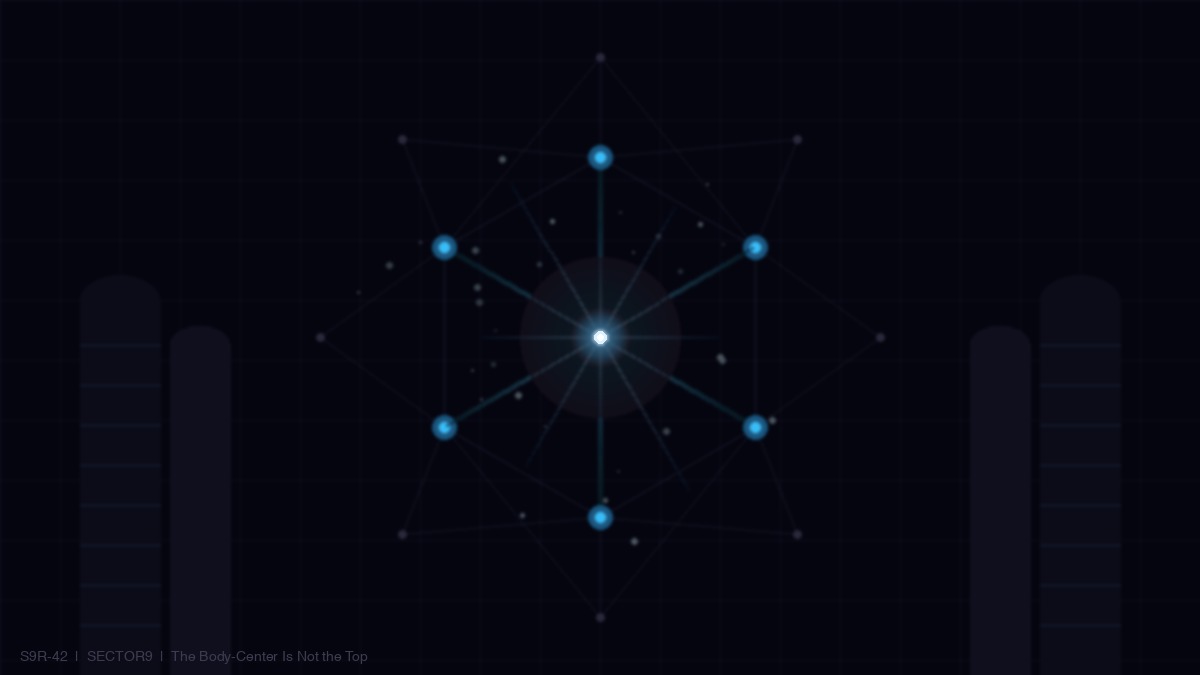
Picture the war-room table: a dark surface with glowing constellation lines, each line a probability branch, each node a future forming. The forecaster stands at the table and reads the branches. Some lines are bright — high probability, high impact, forming fast. Some are dim — low probability, or forming slowly, or blocked by controls already in place. The forecaster’s job is not to predict which future will happen; it is to ensure that for every bright branch, the response is rehearsed, the runbook is current, and the team has walked the path.
The table is not a metaphor. Every SIEM dashboard, every threat intelligence feed, every dependency graph is a projection of the temporal probability field onto a surface you can read. The skill is not in the tools; it is in the reading. The forecaster who sees the pattern — the cluster of expiring certificates, the cascade of unpatched dependencies, the drift between environments — is reading the field the way a seer reads the cards: not seeing the future, but seeing the forces that are forming it.
Building the Forecasting Capability
Threat forecasting is not a product you buy; it is a discipline you build. It starts with the inventory — the complete, current, verified map of what exists in the system. Every component, every dependency, every certificate, every credential, every configuration state. The inventory is the ground truth of the probability field: you cannot read branches you do not know exist.
From the inventory, the forecaster derives the branches. The dependency graph shows which components depend on which; the patch status shows which branches are growing; the certificate expiry calendar shows which branches have hard deadlines. The forecaster weights each branch by probability and impact, and the bright branches — high probability, high impact — become the rehearsal targets.
The rehearsal closes the loop. A response that has been walked through in a drill is not the same as a response that exists on paper. The drill reveals the gaps: the runbook step that assumes access the team does not have, the escalation path that leads to a person who left last quarter, the tool that works in staging but fails in production. Each gap found in rehearsal is a branch closed before the future arrives.
Build threat forecasting into the audit loop: inventory the present, project the branching futures, and rehearse the responses before they are needed. The field is alive and full of forming futures — read the tendencies, and the incident becomes the rehearsal that already happened. The temporal probability field is not a crystal ball; it is an engineering discipline. Read the field, weight the branches, rehearse the responses, and the future stops being something that happens to you and becomes something you have already prepared for.
Grounded in the SECTOR9 north star principles — The esoteric is engineering, Frequency/vibration organizes everything — and extending the S7.x security & sovereignty series theme: S7.10 security audit loop. Sector7-grounded series article, SECTOR9 50+50.