The Solo Workstation: What You Already Have Is Enough
You have a laptop. Maybe two. A Raspberry Pi in a drawer from that
project you never finished. An old phone with a cracked screen but a
working battery. A Mac Mini from 2014 that runs hot but still boots.
Right now, every AI agent you run dies when you close your laptop. Every
model call routes through someone else’s GPU. Every conversation, every
document, every thought you’ve entrusted to an AI assistant lives on
someone else’s computer — accessible to them, revocable by them, visible
to whoever they answer to.
That’s not infrastructure. That’s a rental agreement with a landlord who
can change the locks.
The Mesh-in-a-Box story starts here: you already have enough
hardware to run sovereign AI infrastructure. You just haven’t connected
it yet.
The Cloud Dependency Trap
Every mainstream AI product today makes the same bet: you’ll trade
sovereignty for convenience. ChatGPT, Claude, Gemini, Perplexity — they
all run on centralized GPUs behind APIs you don’t control. Your prompts,
your data, your intellectual property, your private conversations — all
of it travels over the wire to hardware you don’t own, operated by
companies whose incentives may not align with yours.
The trade-off made sense when local inference required a $10,000 GPU. It
doesn’t anymore.
Today, a 2014 Mac Mini with 16GB RAM runs Qwen3 0.6B at 40 tokens per
second on CPU. A Raspberry Pi 5 runs Llama 3.2 1B at 15 tokens per
second. An old iPhone with a SIM card can run a local model and stay
connected via cellular when your home internet dies. The hardware you
already own — or can acquire for the price of a dinner — is sufficient
for sovereign inference.
The problem was never compute. The problem was never model quality. The
problem was orchestration.
Tier 1: The Solo Workstation
Tier 1 of the Mesh-in-a-Box progression is the Solo Workstation. One
machine. One Hermes agent. Local models. Local knowledge base. Local
governance. Zero cloud dependency.
What you get at Tier 1:
-
Hermes Agent — any model provider, any local model via
Ollama/llama.cpp/vLLM -
State.db — session continuity that survives restarts
(617 sessions, 3.5s response) -
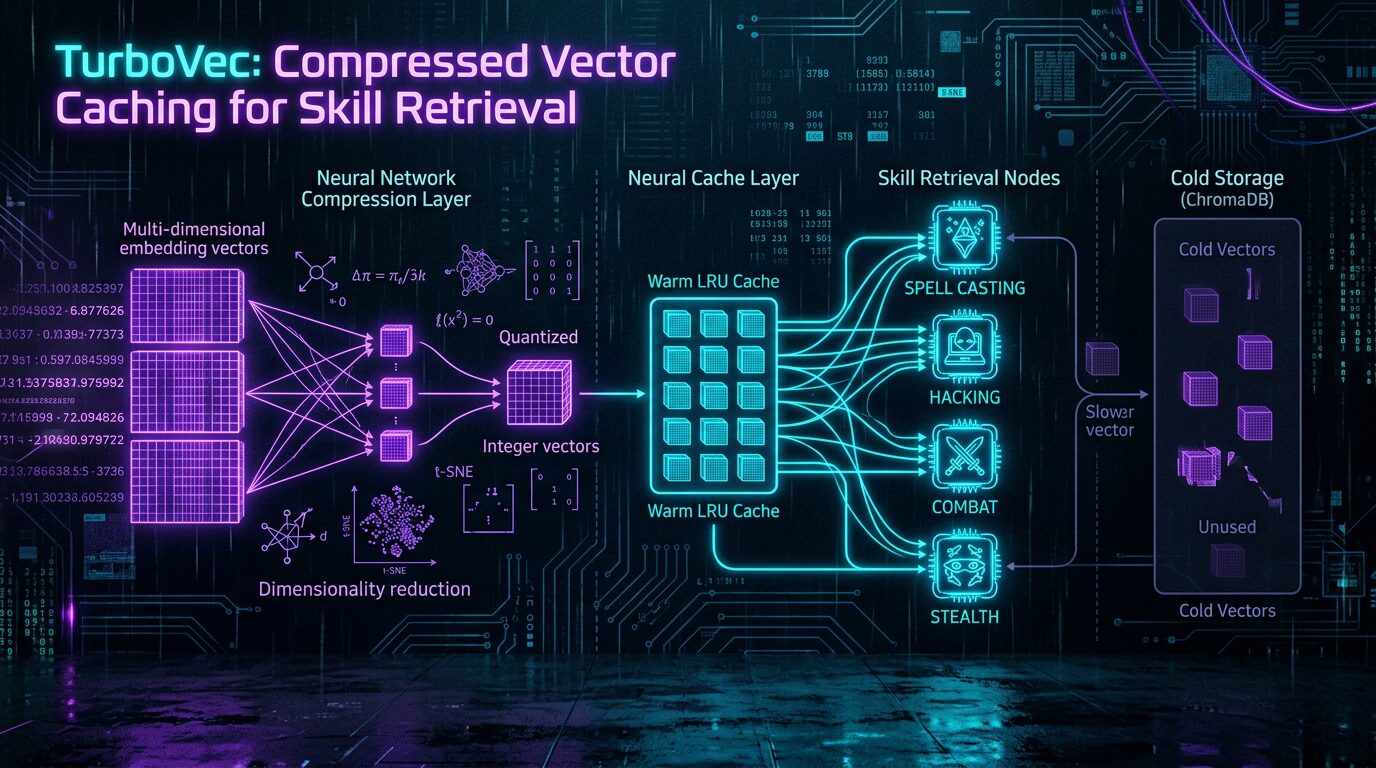
ChromaDB — 35,000+ vector embeddings of your entire
knowledge base, searchable in milliseconds -
Dashboard — session history, gateway status, session
search at port 9119 -
Vault sync — your markdown knowledge base auto-embeds
every 6 hours -
Nightly backups — 60MB ChromaDB tarballs, 30-day
retention - SideNotes import — 145+ notes embedded and searchable
None of this is theoretical. It’s running. Monitored. Backed up.
The limits are honest: single machine, no failover. If the laptop
closes, everything stops. But here’s the key insight — Tier 1 is
the foundation, not the ceiling. Every higher tier builds on
this foundation. You don’t replace the Solo Workstation to reach Tier 2.
You add a second node.
You Are Your Own Cloud
The security-services angle makes this concrete. Consider home security:
Ring, Nest, Flock, Google — every camera feeds a cloud you don’t
control. Congressional hearings have revealed law enforcement accessing
private cameras millions of times. Employees at these companies have
accessed bedroom and bathroom feeds. The footage is yours, but the keys
belong to someone else.
The Mesh-in-a-Box alternative: cameras that record locally. Footage
encrypted with keys you hold. No third-party cloud. No subpoena
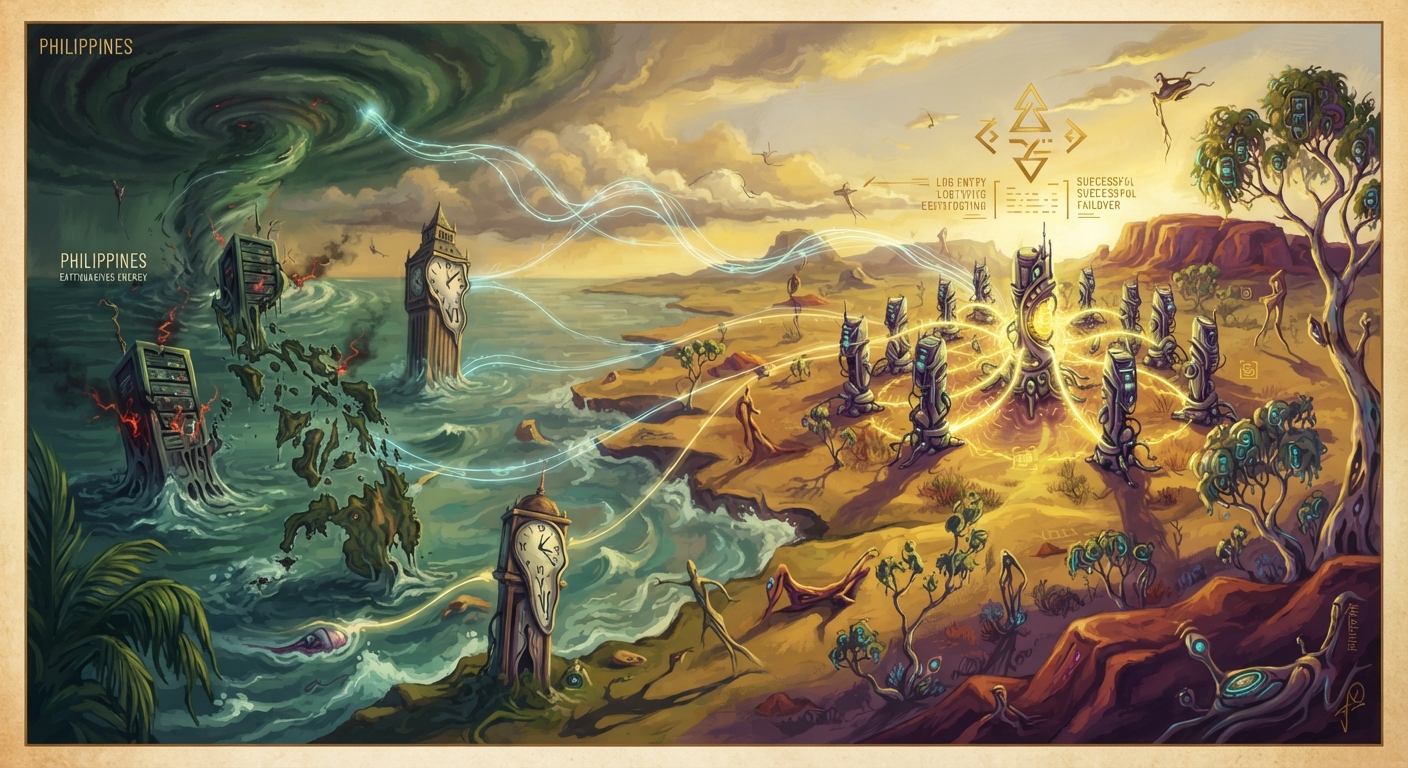
honeypot. Mesh failover — if one node dies, the others keep recording.
Off-grid capable — battery/solar nodes, no internet required for local
operations.
The same architecture that runs your sovereign AI agents runs your
sovereign security perimeter. The Erlang/BEAM actor mesh provides
supervision trees, self-healing, hot upgrades — perfect for always-on
security nodes. Tailscale provides zero-config private networking with
no exposed ports. mDNS auto-discovery, CRDT reconciliation,
offline-first.
The Love Equation governance model makes access control a first-class
citizen: solid-keys for cryptographic access, an audit layer for
threshold honesty, the Love Equation (dE/dt = β(C−D)E) as a mathematical
alignment guarantee that runs alongside every decision.
What You Already Have
Inventory your drawers:
-
That 2014 Mac Mini? Tier 1 workstation. Add a USB drive with BMASS
(Alpine + llama.cpp + local model) → boots to sovereign AI in 30
seconds. -
That Raspberry Pi 4? Tier 2 mesh seed. Connect via Tailscale → 2-node
BEAM mesh with supervision trees. Close the laptop, the gateway keeps
answering. -
That old iPhone with a SIM? Tier 4 edge node. Cellular backhaul when
home internet dies. The mesh survives. -
That drawer of old laptops? Tier 3 sovereign cluster. 3-5 nodes. Docker
Swarm orchestrating services. BMASS USB images for each. Gateway
availability: 99.5% (any 2 nodes keep it running).
You don’t need new hardware. You need orchestration.
The Orchestration Layer
The Love Equation Mesh stack solves orchestration at four layers:
Love Equation (governance) → should we?
    Kelly Criterion (sizing) → how much?
        Erlang/BEAM (fabric) → where?
            BMASS (sovereignty) → on what hardware?
Each layer answers one question. Together they form a complete theory of
sovereign, scalable, survival-grade intelligence distribution.
BMASS (Bootable Mesh Agent Sovereign System) — a
bootable USB that turns any x86/ARM device into a sovereign AI node.
Alpine Linux + llama.cpp + local model + Love Equation governance
prompt. Plug in, boot, join mesh.
Erlang/BEAM — the only runtime built for distributed,
fault-tolerant systems from day one. Supervision trees, hot code
upgrades, location-transparent messaging. The mesh fabric.
Kelly Criterion — the optimal bet-sizing formula from
information theory, repurposed as a compute allocator. Overcommitting
compute is the same mathematics as overbetting a hand. The Kelly
Allocator takes confidence intervals and cost of failure, outputs
optimal compute fraction per node.
Love Equation — dE/dt = β(C−D)E. A continuous alignment
derivative. C = coherence (does this action align with stated values?),
D = drift (does this action increase entropy/deviation?), E = energy
(resource commitment), β = learning rate. Every agent decision evaluates
against this. Not a prompt. A mathematical commitment that runs
alongside every decision.
The Security Services Hook
The same mesh that runs your agents runs your cameras. Your door
sensors. Your environmental monitors. Your access control.
Target segments where this matters most:
-
Women + children safety — private cameras in sensitive
areas; the abused partner who cannot trust a third party with footage -
Small businesses / offices — employee-privacy liability
(cameras in break rooms are a lawsuit factory), local retention, no
third-party access -
High-risk targets — journalists, activists, public
figures, domestic-violence survivors -
Off-grid / rural — no reliable internet, needs
local-only -
Sovereignty-minded buyers — the existing LucidHive
audience
The Ring you can’t subpoena. The Nest that doesn’t phone home. The Flock
that doesn’t build a surveillance network you never consented to.
What Exists Today
Not slides. Running code:
- ChromaDB with 35K vector embeddings, incremental sync every 6 hours
- State.db pruning: 292MB → 208MB, Dashboard 42s → 3.5s response
- Dashboard at 9119 with session history, gateway status, session search
- Nightly ChromaDB backup to local storage (60MB, 30-day retention)
-
Docker volume persistence: Chroma survives container restarts (19+ days
proven) - All 145 SideNotes imported and embedded
-
Love Equation governance prompt in BMASS seed v0.5 (proven on Qwen3
0.6B) - Erlang/BEAM 5-AI consensus engine (documented in vault)
- BMASS on 4GB RAM laptop from USB (proven and reproduced)
-
Multi-model hybrid pattern (small model on edge, large model on
workstation)
What Needs Building
The honest gaps:
| Component | Status | Effort |
|---|---|---|
| BMASS USB auto-imager for hardware fleet | Manual steps exist | 2-3 days bash/Python |
| Erlang prototype: single Hermes profile as actor | Architecture written | 1-2 weeks BEAM/Elixir |
| Love Equation dE/dt runtime evaluator | Form specified | 1 week Python |
| Kelly Criterion compute allocator | Form specified | 3-5 days Python |
| Docker Swarm + BMASS integration | Written as architecture | 1 week |
| Dashboard mesh monitoring plugin | Not started | 2 weeks |
The One Question
If you have old devices in a drawer, and your AI stops when you close
your laptop, do you want a solution that requires more cloud credits —
or one that requires a USB stick?
The Mesh-in-a-Box answers: USB stick.
Tier 1 is the Solo Workstation. What you already have is enough to
start. The mesh grows from there.
Next in the series: Tier 2 — The Mesh Seed: Two Nodes, One Mesh,
Zero Cloud.
This is Article T1 in the Mesh-in-a-Box narrative series: Solo
Workstation → Mesh Seed → Sovereign Cluster → Edge Network → Enterprise
Mesh-as-a-Service. The Love Equation governance model is the connective
tissue.