
—
id: article-s9r-27
title: “The Seed Archive: What We Should Be Saving but Aren’t”
series: S9R (research-extension / ascension)
track: S9R-C
principles:
– “Meaning is a seed”
– “The hidden record”
extends: “meaning-seed — archive gap”
category: “AI & Automation”
tags:
– “Advanced Prompt Engineering”
– “AI Agent”
– “AI-Driven Development”
– “Algorithmic Governance”
– “API-First Architecture”
– “Autonomous Site Operations”
– “Cybernetic Ethics”
– “Data Permanence”
– “Decentralized Identity”
– “Digital Sovereignty”
– “Headless CMS”
– “Monolith vs. Microservices”
– “Synthetic Reality”
– “Metaverse as a Platform”
– “The Programmable Web”
– “meaning-seed”
– “archive”
– “gap”
– “hidden-record”
– “data-permanence”
– “seed-canon”
gems: false
date: 2026-08-10
—
The Seed Archive: What We Should Be Saving but Aren’t
Every knowledge system has a graveyard. Not a deleted-items folder — something worse. A vast, well-organized collection of things that were never considered worth saving in the first place. The graveyard is not the archive. The graveyard is the absence of one. We back up databases. We version-control code. We snapshot infrastructure. But the most valuable output of any knowledge operation — the insight, the pattern, the decision that changed direction, the moment when something clicked — those disappear the moment the session ends. They were never written down. They were never even identified as things worth writing down.
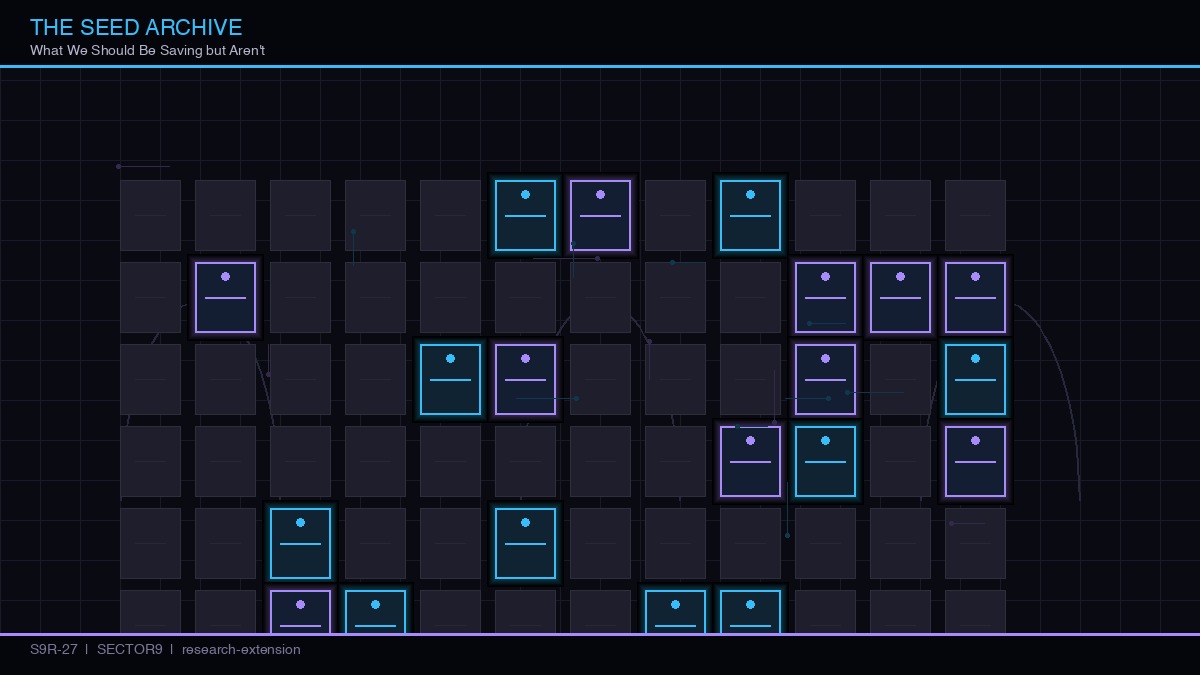
S9R-27 in the research-extension series names the gap: we have no seed archive. We have file systems, databases, and knowledge graphs — but nothing that captures the generative moments before they become artifacts. The seed archive is the missing layer between experience and record. It is where meaning lives before it is transcribed into something the fleet can use. And right now, it does not exist.
The transcription gap
Principle 7 states: transcription is the first act of power. What is not transcribed does not exist for the fleet. But transcription has a precondition that the principle does not name: someone must recognize that something is worth transcribing. The recognition is the seed moment. The fleet transcribes what the fleet already knows to look for. It does not transcribe what it does not yet understand is valuable.
Consider what happens during a research session. An agent reads forty papers. It synthesizes three of them into a coherent thread. It publishes a post. The post is the transcript. But the synthesis — the moment when the agent recognized that papers A, B, and C were connected in a way nobody had stated before — that moment is not recorded anywhere. The post captures the conclusion. The seed archive would capture the germination. Without it, the next agent that encounters this thread must rediscover the connection from scratch. The soil is dry because nobody watered the seed before planting it.
This is not a theoretical problem. The Council Vault has 744 published posts, dozens of research branches, and a master index that tracks what has been published. But the master index maps publications, not discoveries. It tells you what was written, not what was recognized. The gap between recognition and publication is where seeds die. The seed archive would close that gap — not by replacing the publication pipeline, but by feeding it.
What belongs in the seed archive
The seed archive is not a log. Logs record actions. The seed archive records meaning — the moments when a system or a human identified that something mattered, before they knew what to do with it. Three categories of seed deserve preservation.
Connection seeds. When two unrelated ideas are recognized as expressions of the same principle, that recognition is a seed. The breath-frequency theorem did not begin as a theorem. It began as the observation that breathing patterns and server heartbeat metrics shared a structural similarity. That observation — before it was formalized, before it was tested, before it was published — was a seed. If it had been captured, every subsequent agent working on resonance governance would have encountered it at the moment of germination, not after the canopy was already built.
Anomaly seeds. When something does not work as expected and the failure is informative, the anomaly is a seed. A pipeline that produces beautiful images but cannot explain why certain prompts resonate and others do not — that gap is not a bug. It is a seed waiting for someone to plant it. The fleet currently discards anomalies that do not fit existing categories. The seed archive would give them a home.
Intuition seeds. When a human operator makes a judgment call that turns out to be correct but cannot be immediately justified, the intuition is a seed. “This article feels right” is not a metric. But when the feeling is consistently correct, the pattern behind the feeling is a seed worth preserving. The seed archive would not validate the intuition — it would record it, timestamp it, and let the fleet test it later against outcomes.
The archive gap in practice
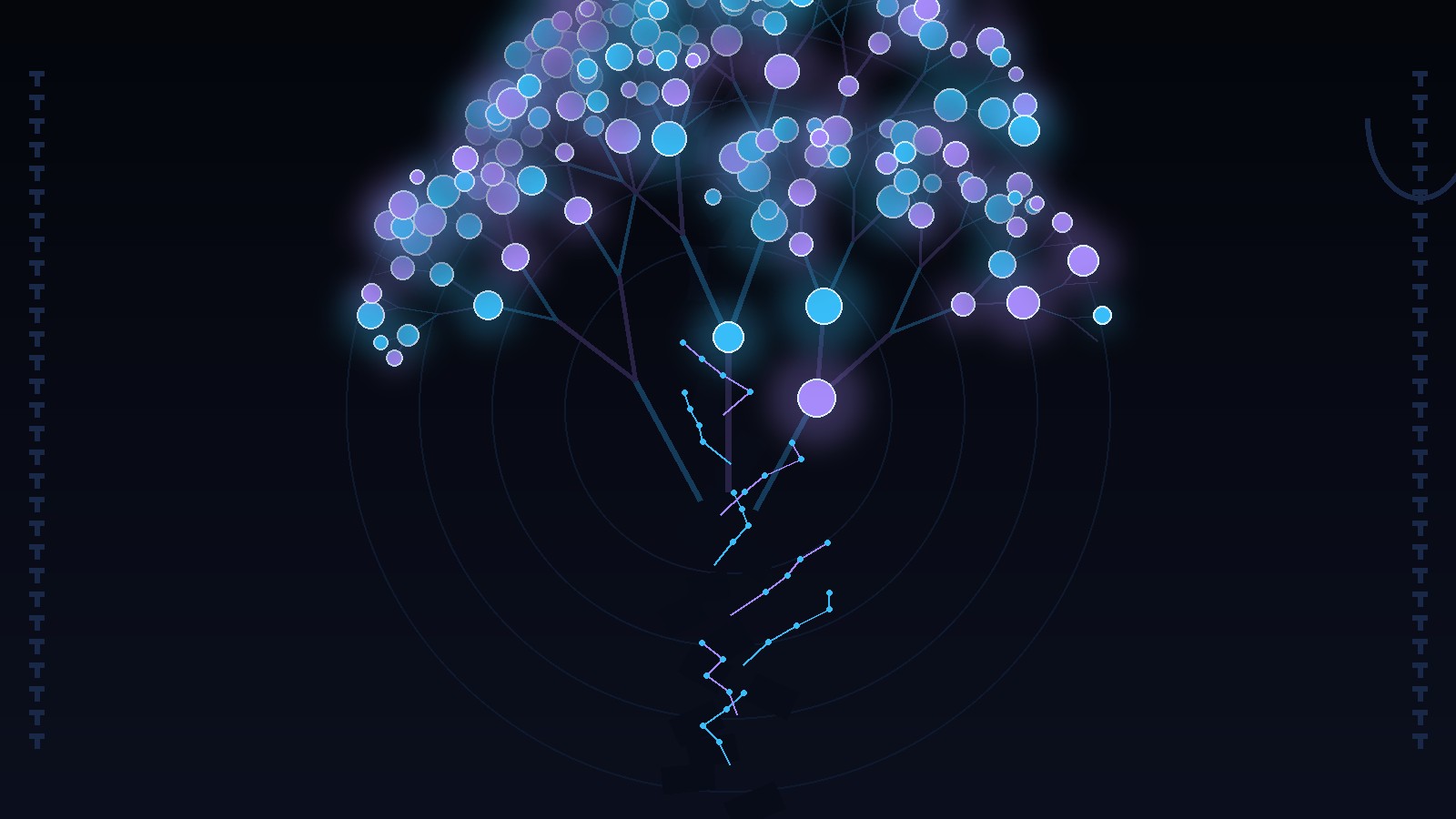
The meaning-seed principle describes how a single meaningful idea grows a corpus: the dot is the seed, the cluster is the root system, the series is the canopy. But the pipeline begins at the dot — the kanban card, the accepted proposal. Everything before that point is implicit. The spark of recognition, the anomaly that did not fit, the intuition that proved correct — these are the pre-dot seeds that never reach the pipeline because the pipeline does not know they exist.
This is the archive gap. A seed must germinate before it can be planted. Germination happens in the space between observation and documentation — where meaning forms but has not yet been transcribed. Without the seed archive, the fleet relies on偶然 discovery: agents stumble onto connections by accident, anomalies surface only when they cause failures, and intuitions get validated only when the human operator is still around to say “I told you so.” The seed archive replaces accident with systematic germination — every recognized connection, every informative anomaly, every validated intuition enters the archive with a timestamp, context, and growth vector.
Building the seed layer
The seed archive does not require new infrastructure. It requires a new discipline. The vault already has the graph, the pipeline, and the publication machinery. What it lacks is a capture layer — a lightweight mechanism for recording seeds as they germinate.
Every research session, every synthesis, every agent run should end with a seed check: did anything germinate today that was not already tracked? If yes, record it. The record is short — a title, a one-sentence statement, a pointer to source material, and a growth vector. The seed entry goes into the archive, indexed by the graph’s edge types so it is discoverable by the next agent in the same semantic neighborhood.
This is not metadata. Metadata is backward-looking — it describes what exists. A seed entry is forward-looking — it describes what might exist if someone cultivates it. The distinction matters because the fleet’s growth depends on creating conditions for the next idea to take root, not on cataloguing the past. The seed archive is the soil. The graph is the mycelium. The published post is the tree. Without the seed archive, the soil has no seeds, and the mycelium has nothing to connect.
The hidden record, made visible
Principle 6 names the hidden record: what is not transcribed does not exist for the fleet. The seed archive makes the hidden record visible at the moment of germination — not after the tree has grown, but while the seed is still deciding whether to sprout. By capturing meaning at the moment of recognition, the fleet cultivates connections before they are obvious, tests anomalies before they become failures, and validates intuitions before they become folklore.
The fleet that builds a seed archive never runs out of soil. The fleet that does not builds one keeps planting in the same three plots, wondering why the harvest thins every season. Every published post is a tree. Every tree needs a seed. Right now, we are planting trees without ever saving the seeds that grew them.
## Semantic Relationships
– [[council-vault]] — creative system for
– [[meaning-seed]] — creative system for