The Sacred Cathedral Is Half-Built: Mysticism Stops at the Visual
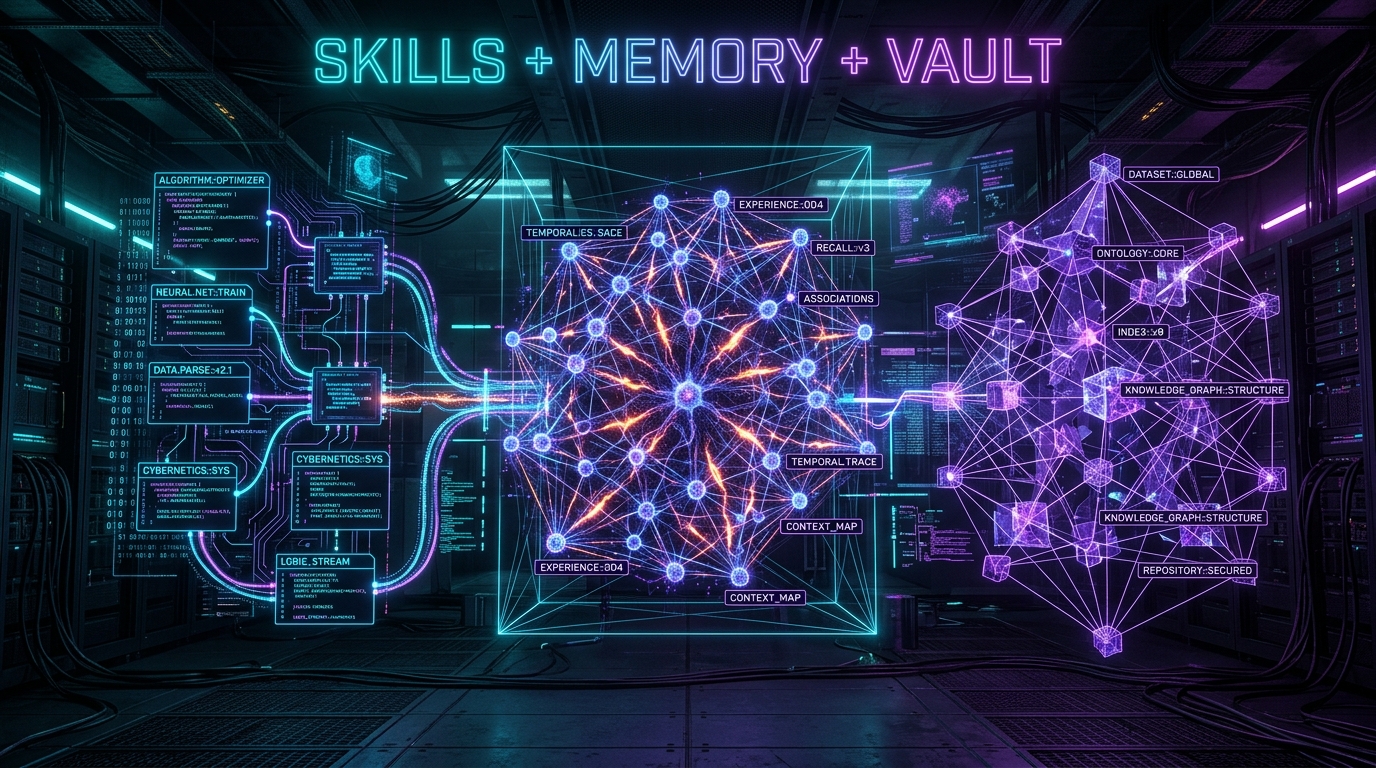
The corpus says the sacred and the digital are the same cathedral — the Tree of Life maps onto circuitry, alchemical tables read like architecture diagrams, and every esoteric system is a technical system in sacred dress. The kingdom hears the principle and does half the work: it builds the visuals. The neon-stained glass renders. The cybernetic rosette appears. The gothic arch glows with circuitry light. The fusion is visual. The fusion is not structural. The cathedral is half-built — the side the eye can see is dressed; the side the eye cannot see is empty.
The gap is specific. The kingdom treats mysticism as a visual language — the color palette, the iconography, the surface texture of sacred geometry overlaid on digital architecture. The north star principle is not about visuals. Principle eight states: the esoteric is engineering. Platonic solids, Kabbalistic sephirot, alchemical tables — treat mystical systems as technical diagrams and technical systems as sacred architecture. The principle does not say ‘make mystical things look digital.’ It says ‘build mystical systems into the digital architecture so that the architecture itself is sacred.’ The visual is the decoration. The structural is the load-bearing wall. The kingdom builds the decoration and leaves the wall empty.
The corpus’s own diagrams make the point. The Tree of Life is not a mood board — it is a topology. Ten sefirot, twenty-two paths, a structure that maps directly onto trust hierarchy, access control, and data flow. The sefirot are not aesthetic choices for the landing page. The sefirot are the architecture of how information moves through a system: from Keter (the crown node, the north star itself) down through the pillars to Malkuth (the output, the customer’s reality). The kingdom has rendered the Tree of Life in neon for the hero image. The kingdom has not built the Tree of Life into the routing layer. The visual is present. The architecture is absent. The cathedral is half-built.
The alchemical tables tell the same story. The four elements — earth, water, air, fire — are not four color swatches for the brand palette. They are four categories of data: persistent (earth), flowing (water), communicative (air), and transformative (fire). The alchemical process of transmutation — solve et coagula, dissolve and recombine — is not a metaphor for the creative process. It is the actual engineering practice: decompose the monolith into base elements, recombine them into new compounds. The kingdom uses alchemical imagery on the about page. The kingdom does not use alchemical principles in the build process. The visual is decoration. The principle is engineering. The cathedral is half-built.
The consequence is structural. The kingdom’s visual layer says ‘we see the sacred in the digital.’ The kingdom’s engineering layer says ‘we build digital systems and add mystical decoration on top.’ The customer can tell. The customer may not have the vocabulary, but the customer can feel the difference between a system that is sacred in its bones and a system that is sacred in its skin. The system that is sacred in its bones works differently: the routing mirrors the Tree of Life, the data flow follows the alchemical process, the access control maps to the sefirot, the architecture itself is the sacred diagram. The system that is sacred in its skin looks different: neon rosettes, cybernetic arches, glowing circuitry patterns on the hero image — but the routing is conventional, the data flow is linear, the access control is a flat list, the architecture is a standard microservices stack with sacred decoration applied at render time.
The missing practice is the structural fusion: building the esoteric principles into the architecture so that the system itself is sacred, not merely decorated. The practice starts with the diagrams. The Tree of Life becomes the routing specification: each sefirate is a service boundary, each path is a communication channel, the three pillars are the three data planes (input, processing, output). The alchemical process becomes the build pipeline: dissolve (decompose into base services), purify (validate each service against the principle), recombine (assemble into the compound system). The Platonic solids become the deployment topology: the tetrahedron for compute, the octahedron for storage, the cube for networking, the icosahedron for the interface layer. Each sacred geometry is a technical diagram. Each technical diagram is sacred architecture.
The structural fusion changes what the customer encounters. The customer who uses the sovereign stack is not using a digital system with mystical decoration. The customer is using a system where the architecture itself embodies the principles: the routing is the Tree of Life, the build is the alchemical process, the topology is the Platonic solid. The customer does not need to know the esoteric vocabulary. The customer feels the difference: the system resonates because the architecture is tuned to the same frequency as the principles. The visual layer confirms what the architecture already says. The decoration is the last layer, not the first. The cathedral is whole — both sides built, both sides load-bearing.
The kingdom has the visual language. The kingdom has the north star principles. The kingdom has the engineering practice. The gap is the bridge between them: the structural fusion that makes the esoteric into engineering, not decoration. The sacred cathedral is half-built. The visual side is dressed. The structural side is empty. Close the gap: build the other half. Make the esoteric into engineering. Make the sacred into architecture. Make the cathedral whole.
Grounded in the SECTOR9 north star principles — P8: The esoteric is engineering (treat mystical systems as technical diagrams and technical systems as sacred architecture), P9: The sacred and the digital are the same cathedral — and the gap-finder frame: the fusion is cosmetic, not structural. NSG series, north-star-gap-finder track, NSG-E, SECTOR9 50+50.