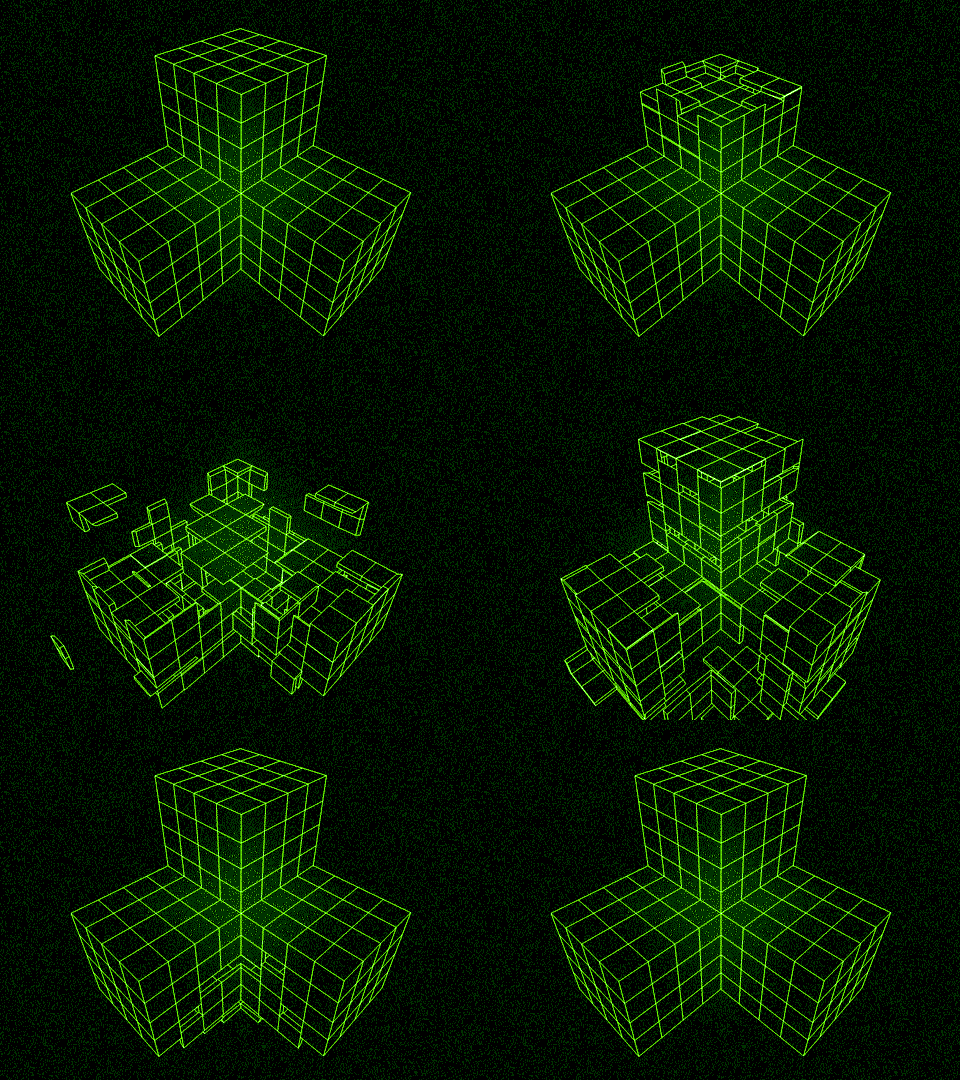

The Metamaterial-to-Automation Bridge: Matter, Measured, Moved
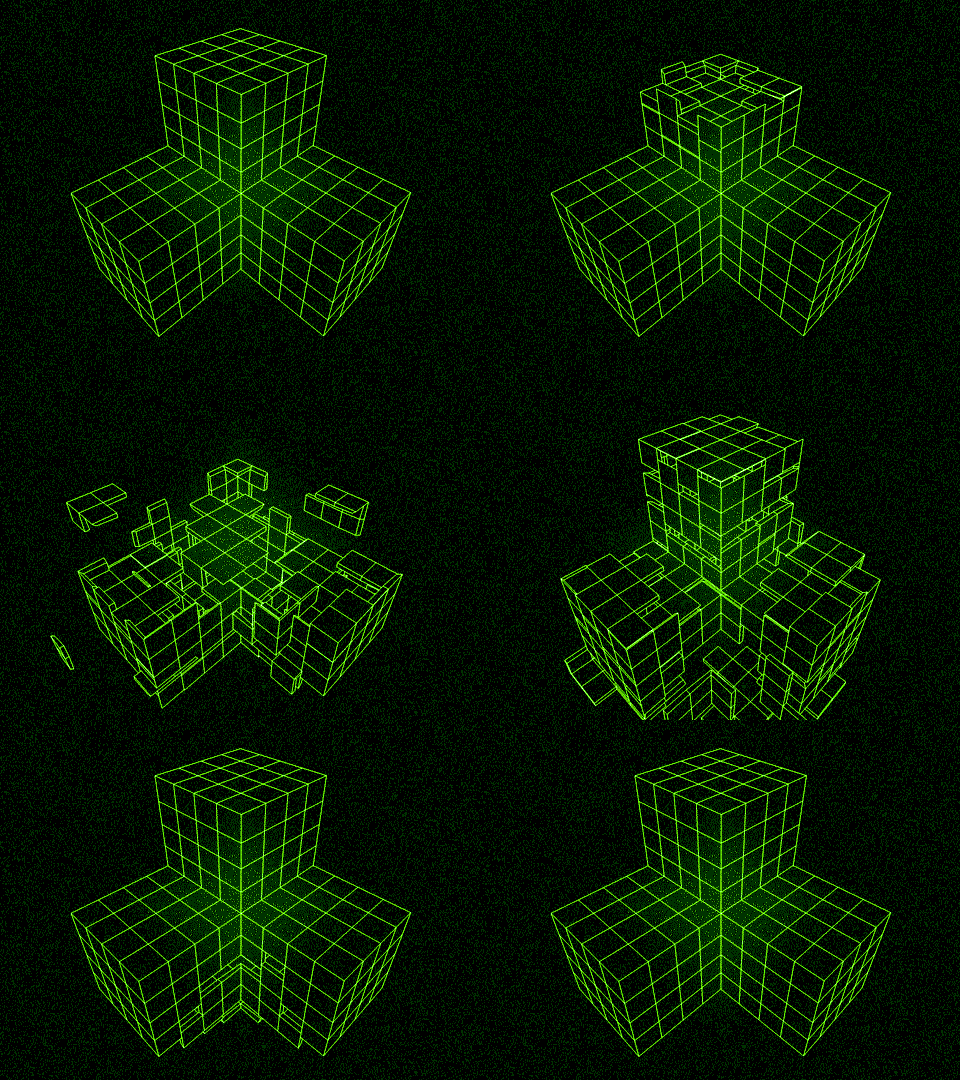
Metamaterials are engineered structures whose properties come from geometry rather than composition. The automation layer of the sovereign stack works the same way: the properties of the fleet — resilience, trust, throughput — come from the arrangement of agents, not from any single component. The bridge between the two is the insight that architecture is material. When the studio renders a cypherpunk-goth world, it is designing a metamaterial for perception; when the council arranges a supervision tree, it is designing a metamaterial for failure.
What the materiality cluster already says
The Metamaterial cluster (232 posts) is the corpus’s largest, and its through-line is structure-as-property. The same logic governs the automation layer: the narrow gate (S7.1) is a geometric arrangement of trust, the solid-keys tiers (S7.2, S6.8) are an access metamaterial, and the actor mesh (S1 series) is a resilience metamaterial. The missing link was an article that said this out loud: that the studio’s visual language and the fleet’s failure model are both exercises in material design.
Why the bridge matters now
The bridge matters because the simulation layer (SIM series) makes the connection operational. A simulated world is a metamaterial for decisions — a structure that lets the fleet test properties (coherence, profitability, safety) before committing matter to reality. The materiality bridge connects the oldest and newest clusters: the visual language that made the brand coherent and the simulation layer that makes the business model testable are the same practice at different scales.
What the bridge unlocks
With the bridge published, a reader can enter through either door. Enter through the studio and find the simulation layer as the next step; enter through automation and find the visual language as the interface. The corpus gains an edge, and the edge is worth more than either node.
Grounded in the Metamaterial cluster, the S9 studio series, the S7 security series, and the SIM simulation series. First bridge article of Round D.