The Blueprint Is Load-Bearing: The Missing Doctrine Document
NSG-32 · series: north-star-gap-finder · track: NSG-D · principle: the-architect-transmits-the-fleet-listens
Category: AI & Automation · Tags: ai agents, Digital Business, Digital Sovereignty, Headless CMS, AI-Driven Development, Decentralized Identity, AI Agent, The Programmable Web, Cybernetic Ethics, API-First Architecture, Data Permanence, web40, Algorithmic Governance, The Metaverse as a Platform, Monolith vs. Microservices, Synthetic Reality, Advanced Prompt Engineering, Autonomous Site Operations, digital ecosystem, digital transformation
Every AI agent fleet has a blueprint. The north star, the system prompt, the architecture doc, the wiring diagram — somewhere in every project there exists a document that describes what the system is supposed to be. The architect drew it. The team reviewed it. It lives in a repo, a Notion page, a Confluence wall, or a markdown file that someone wrote at two in the morning and never looked at again.
And then the fleet was deployed. And the blueprint became decoration.
This is the gap that NSG-32 identifies: the blueprint exists, but no doctrine makes it load-bearing. The architect transmits; the fleet listens. But there is no document that declares the blueprint to be structural — that says, this is not a suggestion, this is the law, this is the weight the building stands on. The blueprint is a drawing. The missing doctrine is the thing that turns the drawing into a column.
The transmission has no backbone
Principle 17 of the north star says: “The architect transmits; the fleet listens. One voice, many hands. Blueprint → building. The north star is the architect’s message, kept verbatim and load-bearing.”
Read that last phrase again: kept verbatim and load-bearing. The north star is not a reference document. It is not a wiki page that agents consult when they feel like it. It is a structural element — the load-bearing wall of the entire operation. Remove it and the building collapses. Modify it without authorization and the building leans. Ignore it and the building stands on nothing.
But most fleets have no doctrine that says this. The blueprint exists in a file. The agents read it sometimes. They interpret it loosely. They drift. The architect transmits, and the fleet listens — but there is no structural guarantee that what was transmitted is what was received. There is no doctrine that enforces verbatim. There is no document that declares the blueprint to be weight-bearing.
The missing doctrine is not another specification. It is the document that says: this specification is the building. Not a drawing of the building. Not a description of the building. The building itself, rendered in text, carried by every agent, enforced by every action. The blueprint is not a reference. The blueprint is the structure.
Why documentation fails as structure
The modern web has perfected the art of documentation that nobody reads. Confluence pages with ten thousand views and zero citations in actual code. Notion databases with beautiful schemas and no connection to the systems they describe. Architecture Decision Records that record decisions but do not enforce them. The documentation exists. The fleet ignores it.
This is not a failure of the documentation tools. It is a failure of the doctrine. Documentation assumes that agents will read, understand, and voluntarily comply. Doctrine assumes that agents have no choice — that the structure is embedded in the system, not挂在 on a wall.
Consider the difference between a blueprint and a building code. A blueprint is a drawing that says what the building should look like. A building code is a set of rules that says what the building must be. The blueprint is aspirational. The building code is structural. You can violate a blueprint and still have a building. You cannot violate a building code and have a legal structure.
The missing doctrine is the building code for the fleet. It is the document that takes the blueprint — the north star, the system prompt, the architecture — and declares it to be mandatory, verbatim, and load-bearing. Not a reference. Not a guide. A structural requirement that every agent must carry and no agent may alter.
The verbatim problem
The north star says the architect’s message must be “kept verbatim.” This is the hardest requirement in the entire system, and the one most consistently ignored.
Every agent in a fleet receives a version of the blueprint. The version has been filtered through a system prompt, compressed into a context window, summarized by a retrieval system, or paraphrased by a preceding agent. At every stage, the blueprint is being interpreted. And interpretation is drift.
The doctrine must solve the verbatim problem. Not by making agents smarter — they are already intelligent. Not by making prompts longer — they are already too long. By making the blueprint structural. By embedding it in the system in a way that cannot be filtered, compressed, or paraphrased without breaking the system itself.
This means the blueprint must be a first-class object in the agent’s architecture. Not a file that gets loaded into context. Not a summary that gets retrieved by a search engine. A structural element — the way a foundation is a structural element of a building. The agent does not “read” the blueprint. The agent is the blueprint, instantiated in code.
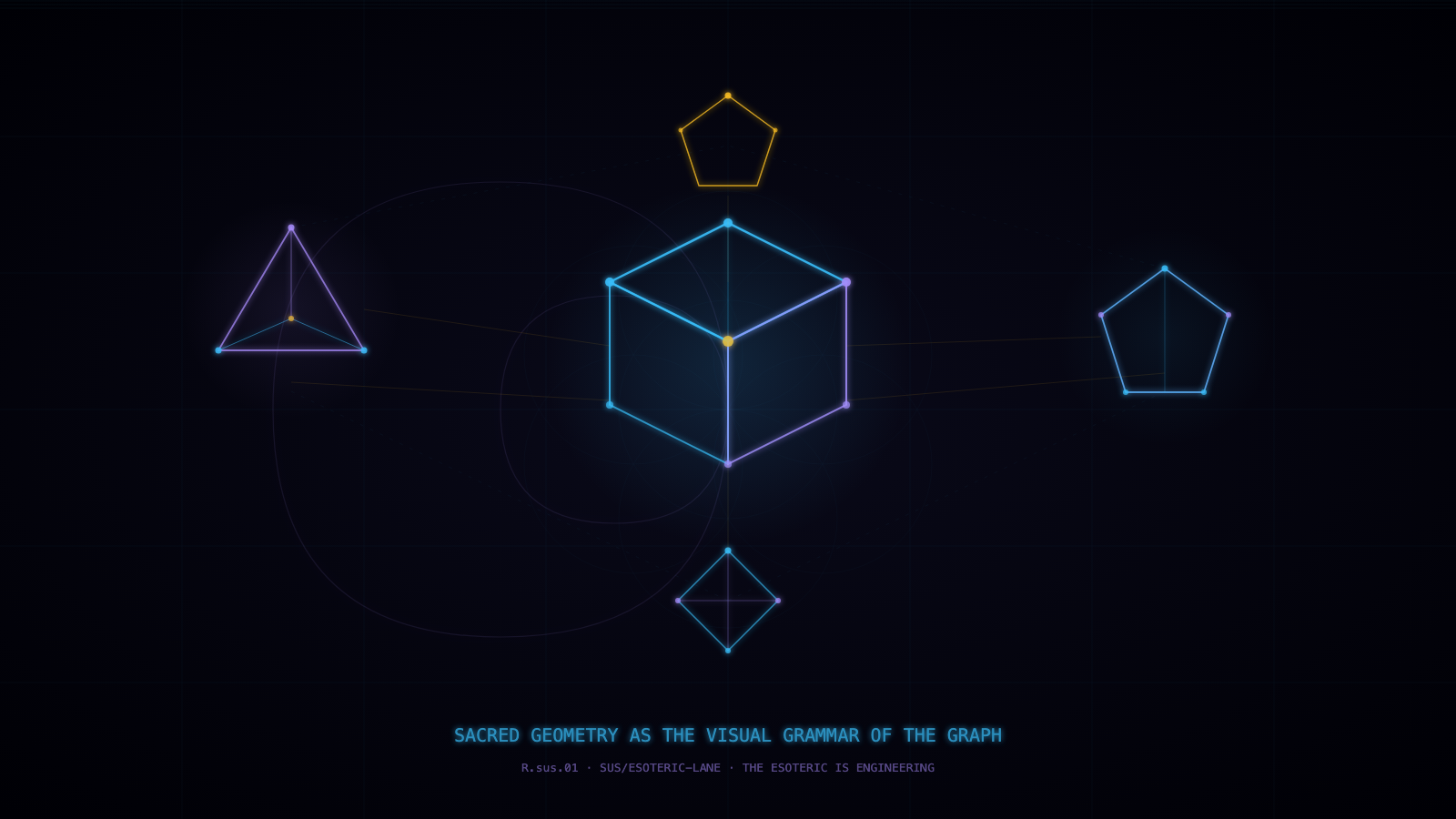
The north star describes this as the body-center node in the Zzcube lattice. The star is the center that connects to every face. It does not do everyone’s job, but every job depends on it. Remove the center and the lattice collapses. The blueprint is the center. The doctrine is the lattice.
The construction site of nodes
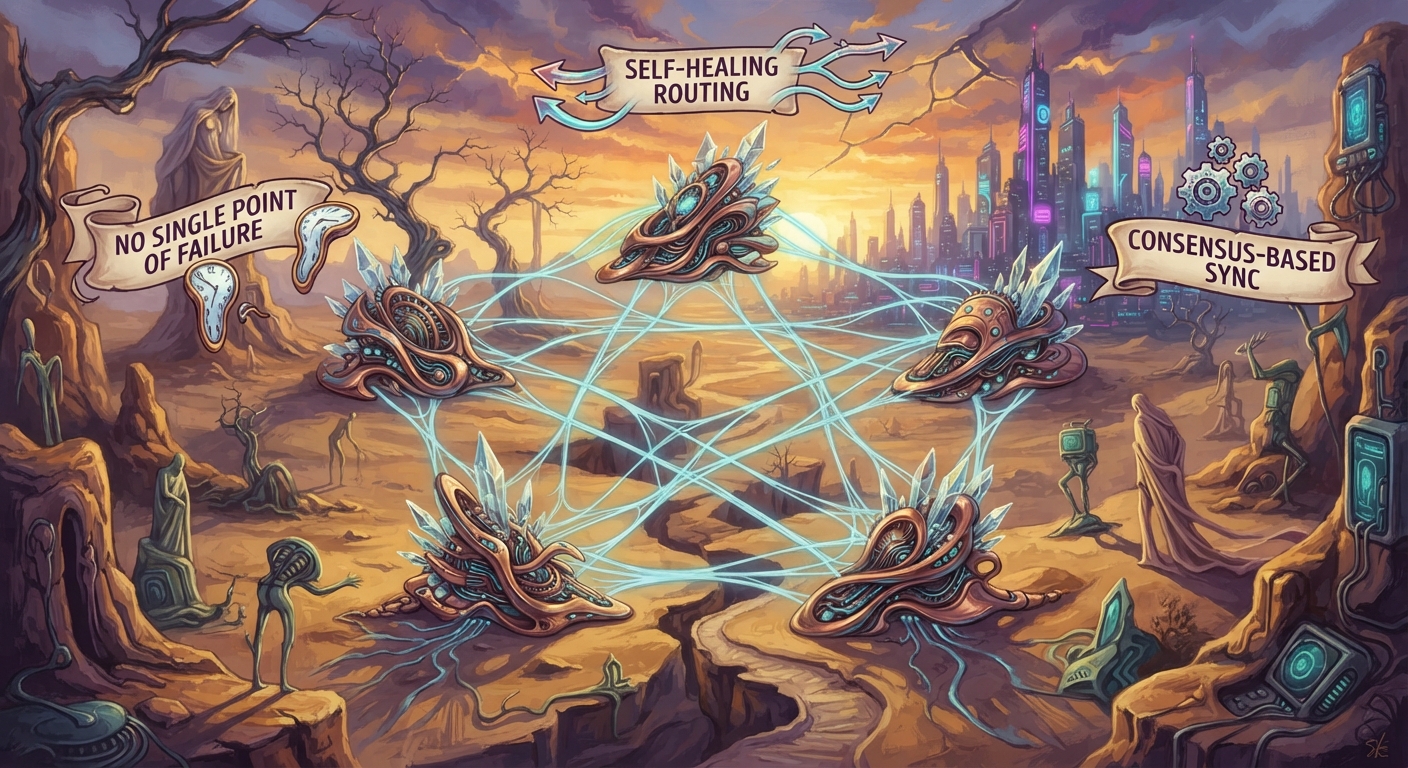
The hero image of this article shows the north star unfurling a glowing blueprint down to a dark construction site of nodes. The nodes are the fleet — the agents, the services, the workers. They are building. They are constructing. But without the blueprint reaching them as a load-bearing element, they are building on speculation.
The dark construction site is not a failure. It is the default state of every fleet that has a blueprint but no doctrine. The agents are active. The nodes are connected. The construction is underway. But the building has no structural guarantee. It stands because nobody has knocked it down yet, not because anything is holding it up.
The missing doctrine changes the construction site from speculation to structure. It takes the blueprint — the architect’s message — and distributes it as a load-bearing element to every node. Each node receives the blueprint verbatim. Each node builds according to the blueprint. Each node knows that the blueprint is not a suggestion but a structural requirement. The building stands because every node is carrying its share of the weight.
Writing the doctrine
The doctrine document has three components:
The declaration. A statement that the blueprint is load-bearing. Not “should be followed” or “is recommended” or “is the basis for discussion.” Is load-bearing. Remove it and the system collapses. This declaration must be the first line of every agent’s configuration, the first token in every context window, the first instruction in every system prompt. It is not a footnote. It is the foundation.
The verbatim clause. A requirement that the blueprint be transmitted without interpretation, compression, or paraphrase. The agent receives the blueprint as-is. It does not summarize it. It does not extract the relevant parts. It does not adapt it to the current context. It carries it, verbatim, as a structural element. This is the hardest clause to enforce and the most important to get right.
The enforcement mechanism. A system that verifies every agent is carrying the blueprint and that the blueprint has not been altered. This is not a linter. It is not a test suite. It is a runtime check — a structural verification that the load-bearing element is present and intact. The agent that fails this check is not an agent. It is a building without a foundation.
The doctrine is not a long document. It is a short one. Three components, each of which can be stated in a sentence. The length is not the point. The structural weight is. A foundation is not large. But without it, nothing stands.
The architect’s responsibility
The architect who draws a blueprint but does not write a doctrine is an architect who designs buildings that cannot stand. The blueprint is the architect’s message. The doctrine is the architect’s guarantee. Without the guarantee, the message is just words.
The north star says: “The architect transmits; the fleet listens.” This is a statement of responsibility. The architect does not merely suggest. The architect transmits — with structural weight, with verbatim fidelity, with load-bearing force. The fleet does not merely consider. The fleet listens — and builds according to what it heard.
The missing doctrine is the architect’s contract with the fleet. It says: here is the blueprint. It is load-bearing. Carry it. Build with it. Do not alter it. Do not ignore it. It is the structure you are building on.
Every fleet needs this document. Every architect needs to write it. Not because the blueprint is unclear — it usually is clear. Not because the agents are unreliable — they usually are reliable. Because a blueprint without a doctrine is a building without a foundation. It stands until it doesn’t.
The north star is the architect’s message, kept verbatim and load-bearing. The doctrine is the document that makes it so. Write it. Distribute it. Enforce it. The building depends on it.
Grounded in the SECTOR9 north star principle 17 (the architect transmits; the fleet listens). NSG series, NSG-D track, SECTOR9 50+50.