
Your doorbell camera footage is stored on a server you’ve never seen, managed by a company whose terms of trust change without notice. When Ring employees were caught accessing customer cameras without warrants — browsing live feeds from their own homes — and Flock Safety’s network of license plate readers was found tracking millions of private-camera accesses across 48 states, the security industry hit a re-calibration moment. Congressional hearings followed. Town councils voted to ban municipal contracts. Privacy advocacy groups published damning reports showing that Ring shared footage with law enforcement over 2,000 times in a single year without user consent in the majority of cases.
The question stopped being “how many cameras can we install?” and became “who actually owns the footage, and who can access it when we’re not looking?”
The Sovereign Sentry™ line answers that question with architecture, not policy. Every device — every eye, every ear, every sensor — runs on a mesh you control. No third-party cloud. No subpoena honeypot. No employee access path you didn’t explicitly authorize. You are your own cloud.
The Eyes and Ears Line
The Sovereign Sentry™ isn’t a single product — it’s a device taxonomy that covers every sense a building needs. Six devices. Six roles. One mesh.
- The Vigil (Eye) — A camera node with local H.265 recording, end-to-end encrypted keys, and on-device motion-intent AI. The Vigil doesn’t stream to the cloud — it records locally, processes motion detection on-chip, and encrypts footage with keys you hold. Footage never leaves the property unless you send it.
- The Listener (Ear) — An audio node that detects glass break, voice intent, and ultrasound beacons for room-level presence mapping. Consent-gated: audio recording activates only when you explicitly arm the zone, and the hardware indicator makes it clear when the mic is live.
- The Threshold (Skin) — A door and window contact sensor with tilt and vibration detection. Mesh-native with an 18-month battery, the Threshold reports to its nearest Spine node — no cloud round-trip, no WiFi dependency.
- The Spine (Bone) — A POE and battery mesh router running mDNS discovery, CRDT state reconciliation, and Erlang-style supervision trees. The Spine is the backbone: if a node dies, its neighbors detect the failure within seconds and keep recording without interruption.
- The Hearth (Heart) — The home hub: a local NVR with governance logic you configure, not a vendor. No account required to operate. The Hearth stores footage, manages device authentication, and runs the Love Equation — our governance framework for access control that treats every person in the home as a sovereign entity with their own permission tier.
- The Council (Cortex) — The office hub: multi-tenant isolation between departments, employee-privacy zones that are hardware-enforced (not just software policies), and a compliance dashboard that generates audit-ready reports for HR and legal teams.
These aren’t marketing names — they’re a product line built from the mesh up, each device a node in a supervision tree that heals itself. When you understand the trust chains in the swarm, the naming convention makes sense: every device has a body, and the body has a role.
The Tier Ladder: From Apartment to Campus
Security scales in tiers, not in sales calls. The Sovereign Sentry™ organizes into six tiers across home and office — each one a complete kit, not a “starting at” price that doubles once you add the features you actually need.
Home Tiers
H1 — Hearth Watch ($299) — Two Vigil cameras, one Threshold sensor, one Spine mesh router, and a Hearth hub. Local NVR with 30-day retention, zero cloud dependency. Works with no internet at all on LAN mesh; optional Tailscale integration for remote access from your phone. Built for renters, apartments, first-time homeowners, and anyone who needs security without the surveillance architecture that Ring and Nest impose by default. The consent-gated audio on indoor Vigils makes it suitable for households where privacy matters — domestic situations, shared spaces, or simply people who don’t want their living room footage sitting on Amazon’s servers.
H2 — Keep Guard ($899) — Six Vigil cameras (including two indoor privacy-suite units with hard microphone cut-off — not a software toggle, a physical switch), three Listener audio sensors, four Threshold contacts, two Spine routers, and a solar-battery micro-node for off-grid operation. Seventy-two hours of continuous recording on local battery alone, with solar trickle to extend indefinitely. The panic button node alerts family and trusted contacts through local mesh first — no cloud round-trip to delay the signal, no internet dependency when seconds matter. Designed for houses, family safety, women and children protection, stalker-risk households, and rural or off-grid homes where the nearest cell tower is a question mark.
H3 — Citadel ($2,400) — Twelve Vigil cameras, six Listener nodes with ultrasound beacon capability for room-level presence detection, eight Threshold sensors, four Spine routers, dual Hearth hubs for NVR redundancy, and a mesh gateway with 4G-LTE failover. Full Love Equation governance: per-person access tiers, immutable audit logs, threshold-honesty consent (you know exactly what each person in the household has agreed to), and geofenced arming that activates zones based on who’s home. CRDT reconciliation across dual hubs means both NVRs stay in sync without a central coordinator. For journalists, activists, public figures, domestic violence survivors with restraining orders, and anyone whose backup cadence needs to survive more than a power outage.
Office Tiers
O1 — Shop Shield ($1,500) — Four Vigil cameras, two Listener sensors (break-room and lobby only, with posted consent signage), two Threshold contacts, one Spine router, and a Council hub. Employee-privacy zones are hard-OFF: locker rooms and restrooms are sensor-blessed for door-open alerts, not camera-covered — ever. Compliance reports auto-generate monthly, documenting exactly what was recorded, who accessed it, and when. Sixty-day local retention with manager and owner keys only; no third-party access path exists. For retail shops, clinics, law firms, salons, cafes, and businesses that need security without the employee-privacy liability that cloud camera systems create.
O2 — Hall Guard ($4,500) — Twelve Vigil cameras (four designated privacy-zone cameras), six Listener nodes, eight Threshold sensors, four Spine routers, two Council hubs in high-availability pair, and LTE failover for internet-independent operation. Multi-tenant isolation: departments see only their zones — finance doesn’t have access to engineering’s camera feeds, and HR’s footage is siloed from operations. The compliance dashboard provides continuous governance monitoring, retention policy enforcement, and one-click access audit export for HR, legal, or insurance reviews. On-premise data residency means footage never leaves the building — no Ring-style law-enforcement backdoor, no cloud subpoena path.
O3 — Campus Sovereign (custom pricing) — Fifty to five hundred Vigil and Listener nodes across a Spine fabric, with a Council fleet featuring geo-split deployment. Geo-sovereignty per site: each building’s data stays in that building’s NVR, with cross-site CRDT for unified monitoring without centralized storage. Custom governance for security-team tiers, unionized access (threshold honesty applied to employee monitoring), and full audit chains for insurance and liability. White-label capable: deploy as your brand, maintain your data sovereignty. Built for campuses, retail chains, logistics yards, municipalities, and multi-site organizations replacing Flock or Ring enterprise contracts.
Why Mesh, Not Cloud
The technical argument is straightforward: cloud security cameras fail in exactly the ways that matter most.
When the internet goes down, your Ring camera becomes a $200 paperweight. When a supervision tree detects a failed node, the mesh reroutes around it and keeps recording. When a Flock server gets subpoenaed, every camera on that network is an open book. When your footage lives on a Spine node in your closet, there is no cloud to subpoena.
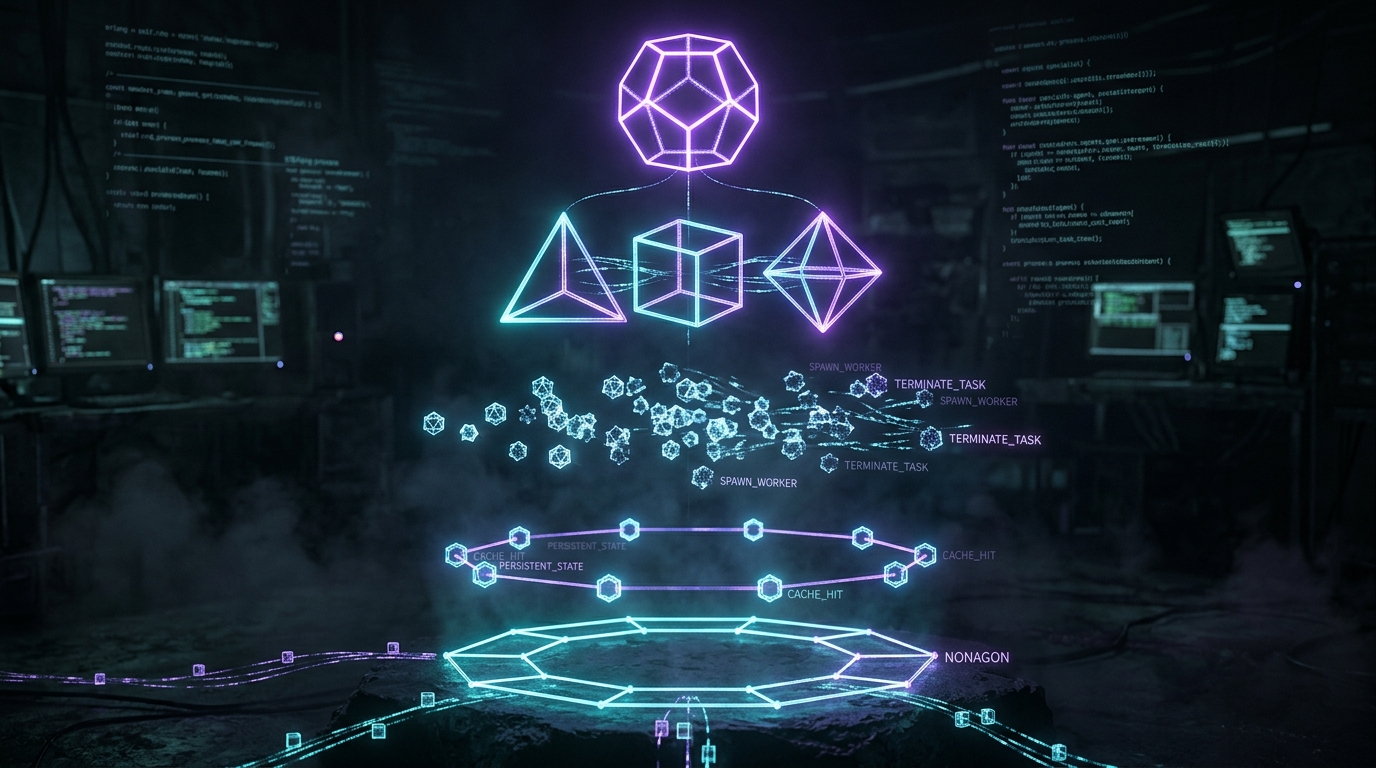
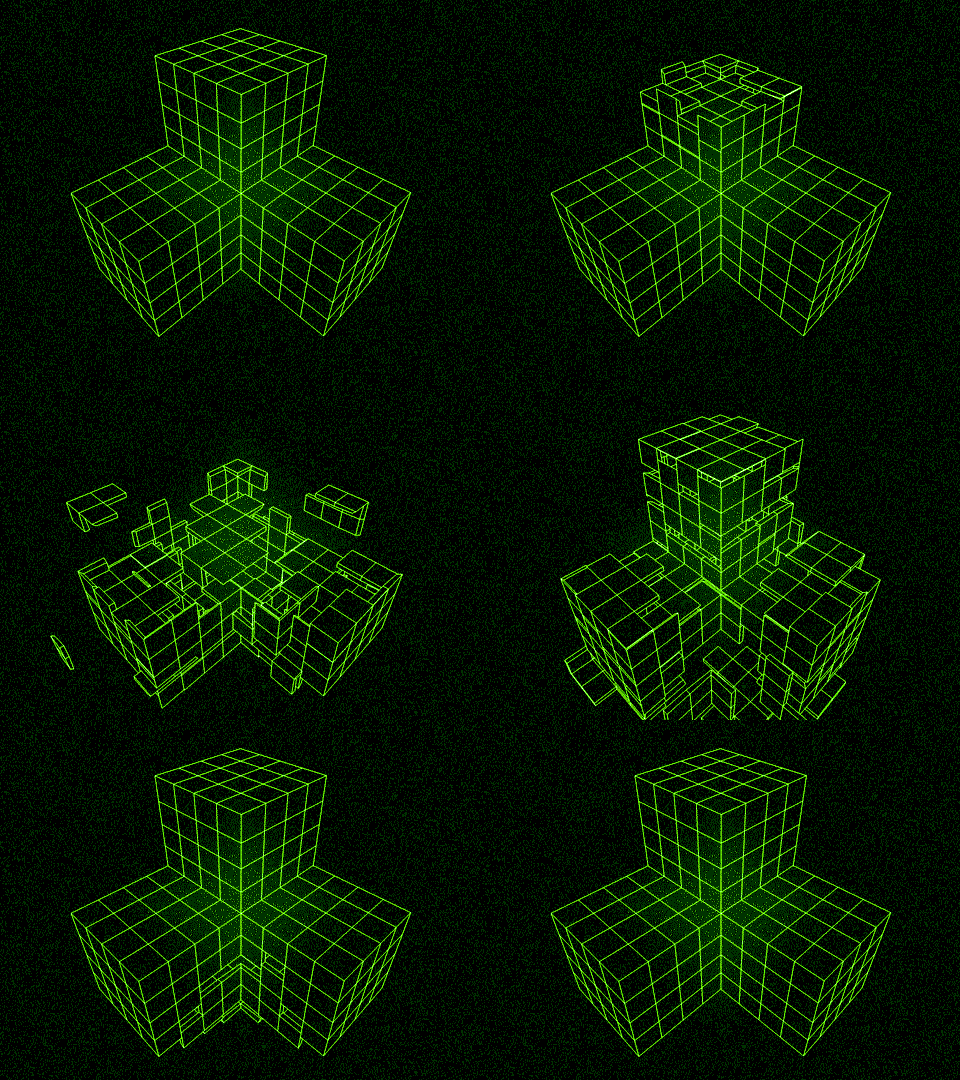
The mesh architecture borrows from Erlang’s battle-tested patterns — the same concurrency model that powers telecommunications infrastructure designed to never go down. Self-healing supervision trees mean every device is watched by its neighbors. CRDT state reconciliation keeps dual hubs in sync without a central coordinator, so even a split network heals itself when connectivity returns. And the entire stack follows a local-first, cloud-optional philosophy that treats the internet as an enhancement, not a requirement.
The supervision hierarchy means no single point of failure exists in the system. The sandbox-to-sovereign progression means you can test the architecture in a controlled environment before trusting it with your actual security. And when something goes wrong — because something always eventually goes wrong — the Recovery Runbook covers restoration from backup in the exact sequence that minimizes data loss.
This is what trust architecture looks like when it’s structural, not aspirational. Not a policy document you hope the vendor follows, but a system where the security guarantees are built into the wires and the code.
Honest Limits
The Sovereign Sentry™ is not unhackable. Nothing is. A determined attacker with physical access to your property can compromise any system — that’s not a flaw in the mesh, it’s a fact of physical security. What the mesh architecture eliminates is the remote attack surface that cloud cameras create by design: the vendor backdoor, the employee access path, the subpoena通道, the single point of failure that a centralized cloud server represents.
No cloud to subpoena is true. Local recording is true. Self-healing mesh is true. But physical security still requires physical measures: door locks, window film, lighting, and the judgment to know when a situation needs human intervention, not just another camera angle. For organizations deploying at scale, the Zero-Trust Agent Comms framework ensures that every device authentication, every key rotation, and every access grant is cryptographically verified — not because we trust the hardware, but because you are a world with your own trust boundaries.
Start Here
The Sovereign Sentry™ line connects every tier of the Sovereign Stack. From a $299 apartment kit to a campus-scale deployment with hundreds of nodes, the architecture is the same: mesh-first, local-first, no cloud dependency. Your security. Your footage. Your cloud.
Every tier is a complete system, not a gateway to upsells. Every device runs on the same mesh protocol. And every piece of footage stays where you put it — unless you decide to move it.
See the full device lineup, tier comparisons, and deployment guides at The Sovereign Stack as a Product Line.