
Keep Guard: Family-Safe Mesh That Works Off-Grid
There’s a class of household that doesn’t fit the Ring doorbell model. Rural homes with no broadband. Families where a stalker has the ex-partner’s Wi-Fi password. Mothers with young children who want cameras inside the house but refuse to stream nursery footage to Amazon’s cloud. Women living alone who need a security system that works when the power goes out, the internet goes down, and the nearest neighbor is a quarter mile away.
The Sovereign Stack as a Product Line solves this with a kit designed around one constraint: the system must work when everything external fails. No cloud. No broadband. No subscription. No third party who can hand your footage to law enforcement with a rubber-stamp warrant. H2 Keep Guard is the family tier — $899, eight devices, one mesh, zero dependency on anything you don’t own.
What’s in the Box
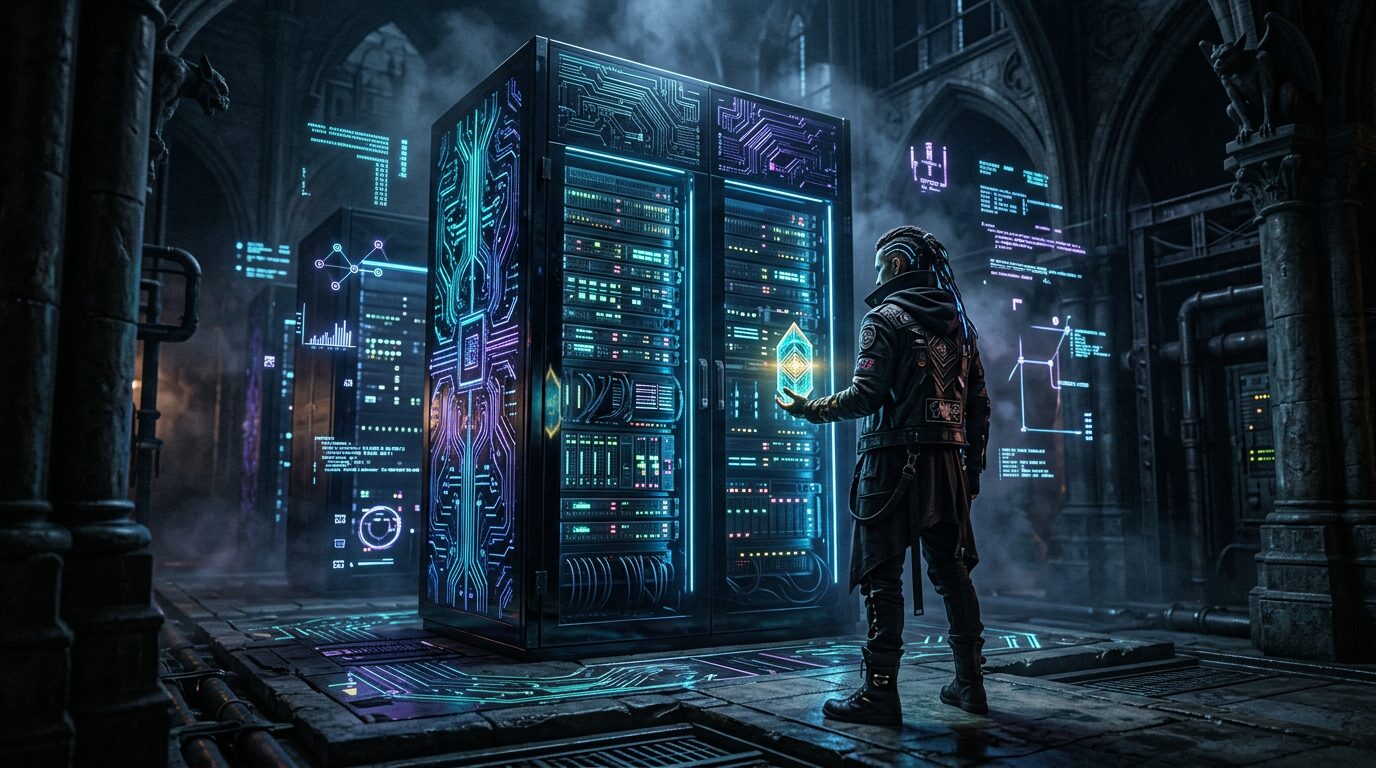
The H2 kit ships with six Vigil cameras, three Listener audio nodes, four Threshold door-and-window sensors, two Spine mesh routers, a Hearth hub with local NVR, and a solar-battery micro-node. That’s the full input layer for a family home — cameras covering the perimeter and key interior rooms, audio nodes listening for glass breaks and voice distress, sensors on every entry point, and a mesh that routes all of it locally without touching the internet.
Two of the six Vigils are indoor privacy-suite cameras with a hard microphone-off switch. This is not a software mute. It’s a physical disconnect — the mic circuit is broken at the hardware level. The camera records video. It does not record audio. Inside the house, you control which rooms have ears and which rooms are silent. The nursery gets a Vigil with the mic physically disconnected. The front porch gets a full Vigil with audio. The decision is yours, enforced by hardware, not policy.
The Listeners do what cameras can’t. They pick up glass-break patterns, voice distress signals, and ultrasound beacons — all processed on the mesh, never uploaded. Consent-gated by design: each Listener has a visible indicator showing when it’s active, and the mesh governance model requires household-level consent before any audio node enters listening mode. The trust chain runs through the hardware, not through a terms-of-service update.
The Mesh: Survives What Your Wi-Fi Can’t
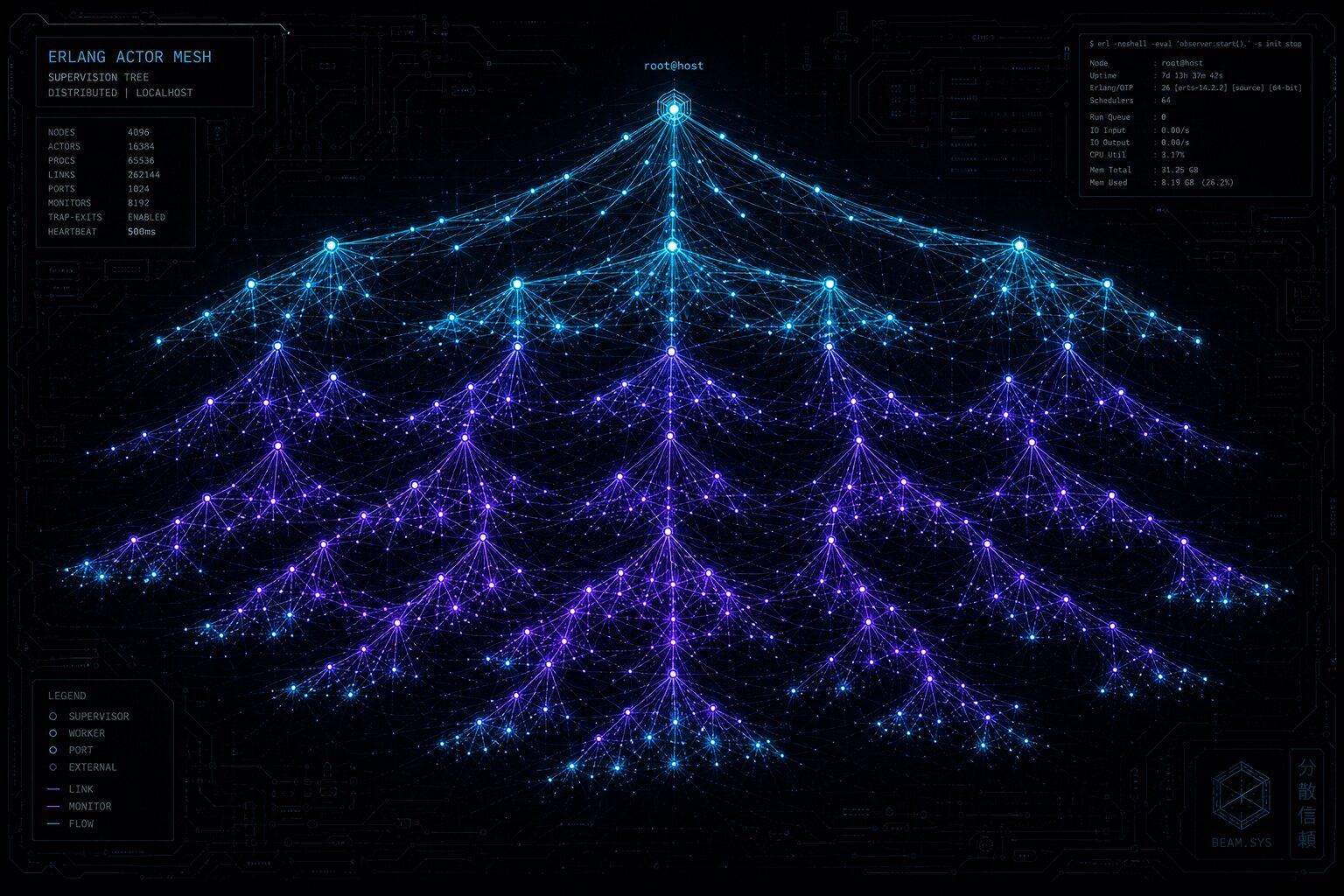
The two Spine routers form the backbone. They use mDNS for auto-discovery — when a new node joins the network, it announces itself. No IP configuration. No port forwarding. No UPnP. The mesh routes traffic between nodes using CRDT reconciliation, the same conflict-free replicated data type that keeps distributed databases consistent without a central coordinator.
If one Spine dies — power surge, hardware failure, a kid unplugging it — the other keeps the mesh alive. If both Spines die, the Threshold sensors and Vigil cameras with onboard storage continue recording locally. When the Spines come back, CRDT merges the state. No footage lost. No manual intervention. This is the restore-first principle applied to home security: assume failure, design for recovery, verify that the system comes back whole.
The mesh runs over Tailscale — zero-config private networking. No ports exposed to the internet. No firewall rules to misconfigure. The cameras and sensors talk to each other over encrypted tunnels that form automatically when devices join the same Tailscale network. The mesh under the mesh is invisible to everyone except the devices that compose it.
72 Hours Off the Grid
The solar-battery micro-node is what makes H2 a rural and off-grid system. A small solar panel on the roof trickles charge to a lithium iron phosphate battery bank. When the power goes out — storm, grid failure, intentional cut — the battery takes over. Seventy-two hours of continuous recording on local storage. The mesh keeps routing. The cameras keep capturing. The Listeners keep listening.
This is the scenario that cloud-dependent systems can’t handle. Ring cameras go dark when the Wi-Fi drops. Nest cameras record to local storage but require cloud sync for remote access. Arlo cameras have a eight-second recording gap on battery power. H2 Keep Guard records continuously, on the mesh, without any external connection. The footage is on your Hearth hub, encrypted with your keys, accessible from your phone over Tailscale — even when the nearest cell tower is down.
Place is a character in this architecture. The system is designed for specific geographies — rural properties, off-grid homes, areas with unreliable infrastructure — rather than assuming a stable urban network. The mesh doesn’t care about your internet connection. It cares about your property.
The Panic Button: Local-First Alerting
Every H2 kit includes a panic button node. Press it, and the mesh sends an alert to a predefined set of family members and trusted contacts. Local first — the alert travels over the mesh and Tailscale, not through a cloud relay service. If the internet is up, the alert can also reach external contacts via SMS or push notification. If the internet is down, the alert stays on the mesh, reaching every node in the household and any nearby Tailscale-connected devices.
For families dealing with stalker-risk situations, this is the critical feature. A cloud-dependent panic button requires internet connectivity to function. A stalker who cuts the power and the broadband has neutralized the alert system. H2’s panic button works on battery power, over the mesh, without any external connection. The alert reaches the people who matter through the infrastructure you control.
This is zero-trust architecture applied to family safety — no single point of failure, no external dependency, no third party who can be compelled to disable the system. The mesh trusts no one. It verifies every node, encrypts every message, and routes every alert through paths it controls.
Who This Is For
H2 Keep Guard is for households that need security but can’t trust the cloud. Families in rural areas with unreliable broadband. Women living alone who want cameras but refuse to stream to third-party servers. Parents who want nursery monitoring without cloud exposure. Households where a stalker has compromised the digital environment and the security system needs to work on its own terms.
The $899 kit covers a typical family home: six cameras for perimeter and key rooms, three audio nodes for glass-break and distress detection, four door-and-window sensors, two mesh routers for redundancy, and a solar-battery backup for off-grid resilience. No monthly fee. No subscription. No cloud account. The footage stays on your hub, encrypted with your keys, accessible only through your mesh.
The sovereign stack as a product line means H2 isn’t a standalone product — it’s a tier in a progression. Start with H2 for your home. Add H3 Citadel when you need estate-level coverage. Extend to O1 Shop Shield for your business. The mesh grows by presence, not by subscription. And the governance model — the Love Equation — ensures that every decision the mesh makes evaluates against a mathematical alignment guarantee, not a marketing promise.
Your home. Your mesh. Your keys. Your rules.