
Rent-to-Own, Scaled: From Subscriptions to Physical Shells
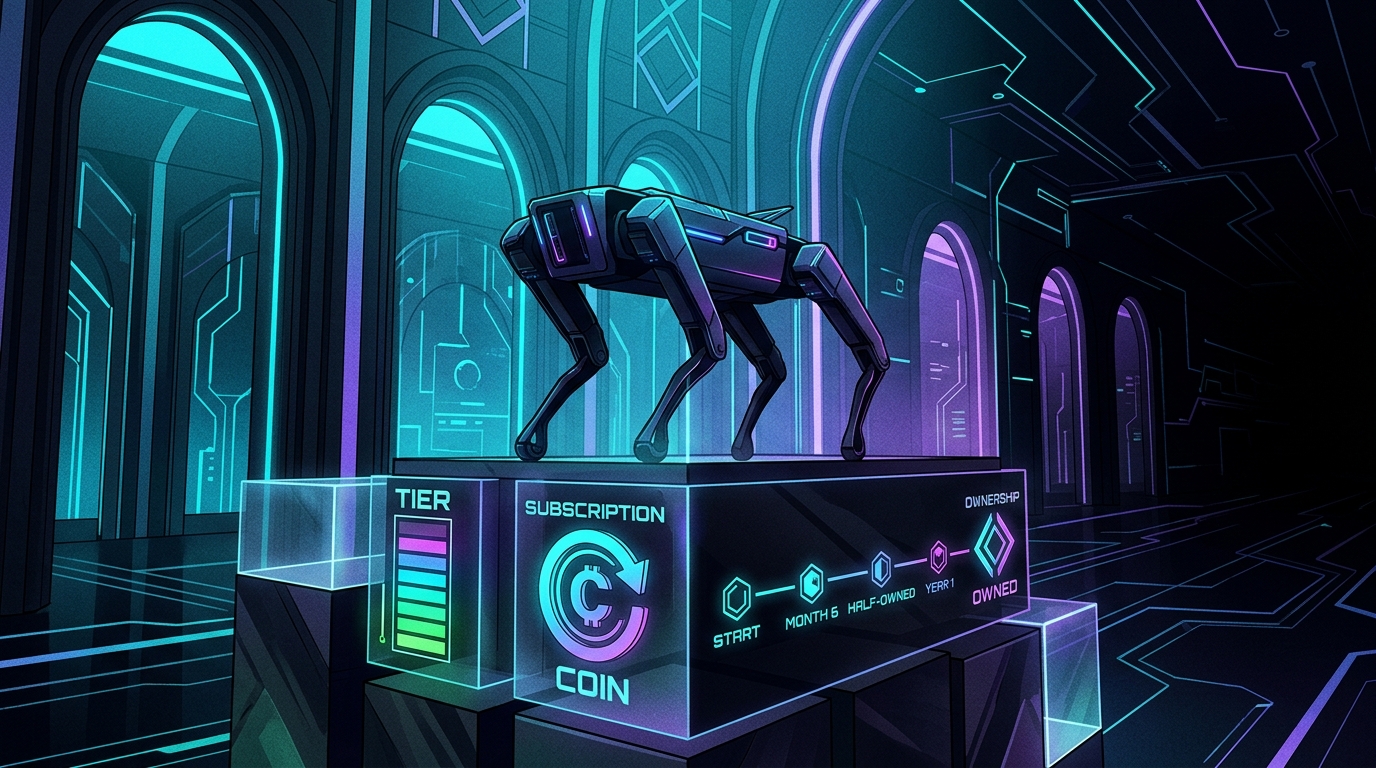
The rent-to-own philosophy in S6.3 has a memorable formulation: “the power stays on only when it’s paid.” The futures thesis is that this philosophy scales beyond software subscriptions to physical things — the robot shells of physical ascension. A profile does not buy a $3,500 Unitree shell outright; it rents it, tiered by access architecture (S6.8), until its coherence and vision scores justify ownership. The body becomes a subscription: power, sensors, and compute stay on only when the account is healthy. The same economics that keep the sovereign stack alive keep the physical fleet alive — and they keep the fleet honest, because a body that is not earning is a body that is not powered.
What we built
The S6 series built the model: S6.3 rent-to-own as pricing philosophy, S6.8 Tier 1–5 platonic pricing as access architecture, S6.2 local-first cloud-optional, S6.7 the customer dashboard as the payment and service surface. The physical-ascension-research brief priced the shells — Aibo at ~$2,899 plus ~$300/year, Unitree at $1,600–3,500 — and set the budget rule: no purchases. The SECTOR7 design ties the two: profiles can “purchase” a shell once winning teams and community are established, with physical hours as the new achievement tier. The pricing model and the hardware roadmap are both documented; the intersection is the rent-to-own shell.
The vision
A profile requests a shell (SECTOR07a.14). The request routes through the tier structure: the profile’s KOT score determines the tier, the tier determines the shell class, and the rent-to-own contract determines the path to ownership. Month one: the profile rents a shared shell for patrol hours. Month six: it rents a dedicated Unitree for its own sensor missions. Month twelve: its physical-hours ledger plus vision score triggers ownership. The power stays on only when it is paid — in dollars or in demonstrated coherence. The body is earned, not given; the fleet stays lean because every shell must justify its power draw.
What’s next
The next increment is the tier-to-shell mapping: extend the S6.8 tier table with a shell column — what body each tier can rent, at what rate, with what ownership path. The pricing model and the hardware research exist; the mapping is the bridge.
Grounded in the S6 business series (S6.3, S6.8, S6.7), the physical-ascension-research brief, and SECTOR7-RESEARCH-GRAPH-DESIGN. Thirty-eighth article in the SECTOR07a futures series.