
Graceful Degradation When the Image API Fails — S12.8. This article continues the LucidHive bridge series, connecting the practical infrastructure of sovereign AI with the systems that run on it.
Graceful Degradation When the Image API Fails
In an increasingly digital world, images play a crucial role in enhancing user experience, particularly in applications powered by artificial intelligence (AI). However, relying solely on an external image API poses significant risks, including potential downtime and latency issues. This article discusses implementing a graceful degradation strategy when the image API fails, outlining a structured approach with multiple fallback tiers: a primary model, a secondary model, a cached visual library, and a procedural placeholder. By implementing these tiers, businesses can ensure that their publishing batch remains alive even when the image provider encounters errors.
Understanding Graceful Degradation
Graceful degradation refers to the design principle that allows a system to continue functioning at a reduced level of service when certain components fail. In AI applications that depend on image APIs, this means ensuring that the overall experience is preserved even when specific images cannot be retrieved. The strategy involves establishing a hierarchy of fallback options, enabling the application to deliver content to users without significant disruption.

The need for graceful degradation becomes apparent when considering the unpredictable nature of API reliability. Network issues, rate limiting, or server outages can occur at any time, potentially impacting the user experience. By implementing a robust fallback strategy, organizations can reduce the impact of such failures and maintain user engagement.
Primary Model: Leverage AI Image Generation
The first tier of our fallback strategy involves utilizing a primary model that generates images on-the-fly. This AI image generation can be based on a pre-trained neural network capable of creating visuals based on textual descriptions or existing images. For instance, if a user requests an image related to "sunset over the mountains," the primary model can generate a unique image tailored to that description.
This approach has several advantages:
- **Dynamic Content Creation**: The primary model can create images dynamically, ensuring that users receive relevant visuals even when the external image API fails.
- **Consistency**: By leveraging AI-generated images, the application can maintain a consistent visual style and branding that aligns with the overall user experience.
- **Scalability**: As the primary model is part of the application's infrastructure, it can scale based on demand, reducing reliance on external services.
However, it’s essential to note that this method may require substantial computational resources and time to generate high-quality images. Thus, it’s crucial to monitor performance metrics to ensure that the generation process does not introduce significant latency.
Secondary Model: Fallback to a Secondary API
In cases where the primary model is unable to deliver images or is experiencing performance issues, the next tier of fallback involves utilizing a secondary image API. This secondary API should be distinct from the primary image provider, allowing for redundancy and a higher chance of successful retrieval.
Establishing a secondary model has the following benefits:
- **Redundancy**: By integrating multiple image sources, businesses can mitigate the risk of total failure when one provider goes down.
- **Improved Reliability**: If the primary API is unavailable, the secondary API can ensure that users still receive images without noticeable interruptions.
- **Diverse Options**: Different image APIs may have unique strengths, such as specific styles or types of images. A secondary model can enhance the diversity of available visuals.
To implement this tier effectively, it is essential to monitor the performance of both APIs and establish a seamless switching mechanism. This can be accomplished using a load balancer or by programmatically checking the status of the primary API before attempting to retrieve images from the secondary API.
Cached Visual Library: Utilize Pre-Fetched Images
When both the primary and secondary models fail to provide images, the next tier involves leveraging a cached visual library. This library consists of previously fetched images that have been stored locally or on a fast-access server. The cached images should represent a diverse range of themes and styles to ensure relevance to various requests.
Key advantages of a cached visual library include:
- **Speed**: Retrieving images from a local cache is significantly faster than making API calls, ensuring minimal latency in user experience.
- **Reduced Dependency**: A well-populated cache reduces reliance on external services, allowing the application to remain functional even during API downtimes.
- **Cost-Effectiveness**: By utilizing cached images, businesses can minimize API usage costs, particularly if they are billed on a per-request basis.
To build an effective cached visual library, it's important to establish a strategy for image selection and storage. Regularly updating the cache with popular or relevant images will ensure that the fallback tier remains effective over time. Additionally, implementing a mechanism for cache invalidation will help maintain the quality and relevance of the stored images.
Procedural Placeholder: Create Basic Visuals
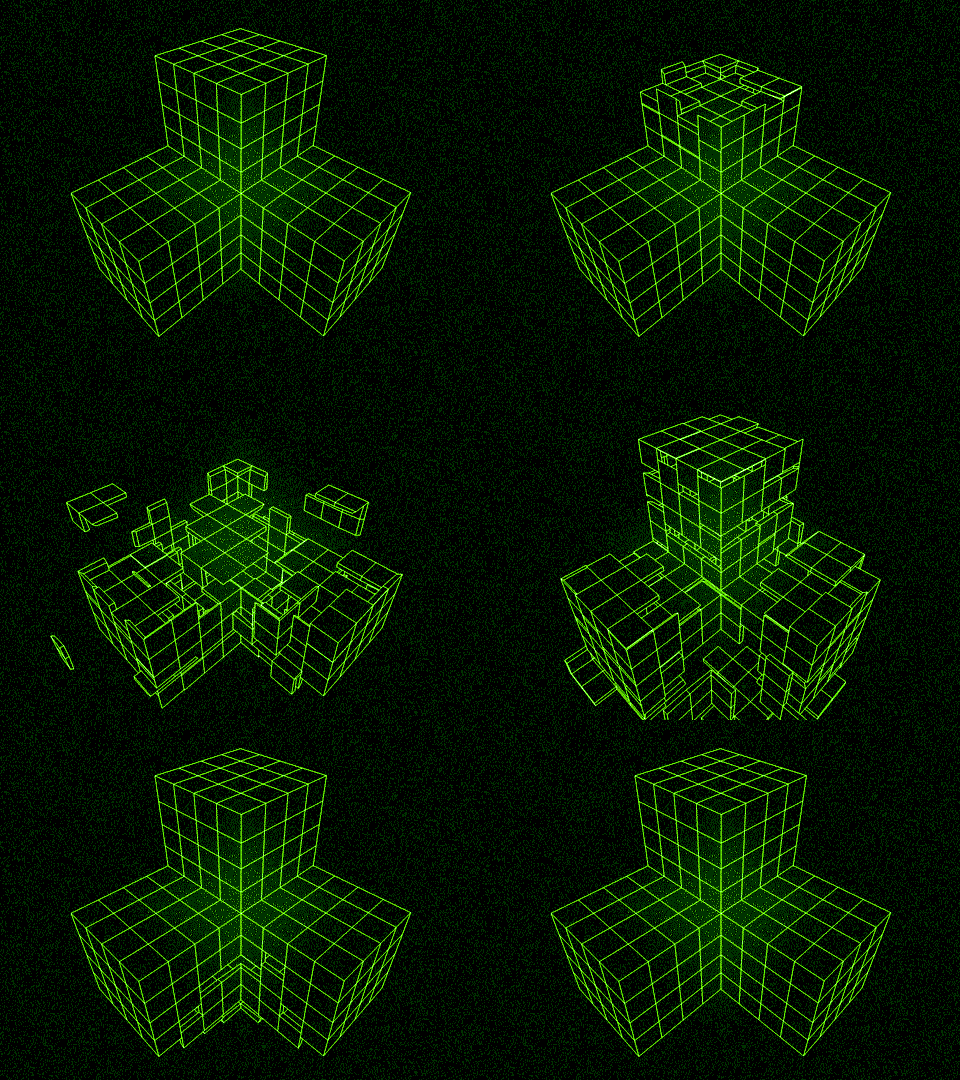
When all else fails, the final tier of our graceful degradation strategy involves utilizing procedural placeholders. These placeholders can be simple geometric shapes, text-based visuals, or basic icons that convey the intended message without relying on complex images.
The benefits of procedural placeholders include:
- **Simplicity**: While not visually appealing, procedural placeholders ensure that the user interface remains intact and functional, preventing complete failure.
- **Immediate Availability**: Procedural elements can be generated instantly, ensuring that the application maintains responsiveness even when image retrieval fails.
- **Customizability**: Developers can create placeholders that align with branding guidelines, ensuring a degree of cohesiveness even in degraded states.
To implement procedural placeholders effectively, organizations should define a set of standards for what types of placeholders to use in various scenarios. This includes specifying fallback visuals for different content types and ensuring that users still receive essential information through alternative means.
Conclusion
In conclusion, implementing a graceful degradation strategy when the image API fails is crucial for maintaining user experience in AI-driven applications. By establishing a structured hierarchy of fallback tiers-primary model, secondary model, cached visual library, and procedural placeholder-organizations can ensure that their publishing batch remains active even during API failures. This multi-tiered approach not only mitigates downtime but also enhances overall system resilience, allowing businesses to provide consistent, reliable service in an unpredictable digital landscape.