A Cluster Lives in One Place, a Network Lives Everywhere
There is a word that gets used interchangeably where it should not be: cluster. People say cluster when they mean network. They say network when they mean cluster. The confusion is not pedantic — it is the difference between a system that survives and one that does not.
A cluster is a collection of machines in the same room, on the same rack, connected by the same switch. It lives in one place. When the power goes out, the cluster goes out. When the building floods, the cluster floods. When the landlord changes the locks, the cluster is locked out. A cluster is a single point of failure with extra steps.
A network is something else entirely. A network is geographically distributed by design. Its nodes do not need to know each other’s physical address. Its messages route around damage. Its state is eventually consistent — it tolerates partitions, heals without intervention, and keeps operating when half of it is underwater.
The cloud is a cluster that someone else owns. When you “move to the cloud,” you are moving your data into someone else’s building, someone else’s rack, someone else’s power grid. The sovereignty you had on your laptop — the ability to unplug and still own your data — vanishes the moment your compute crosses a border you do not control.
The Mesh-in-a-Box thesis starts from the opposite premise: you are your own cloud.
The Security Services Story
This is not abstract. Consider home security. Ring, Nest, Flock, Google — every consumer camera system feeds a centralized cluster. Your footage travels over the wire to a data center you have never seen, operated by people you have never met, governed by terms of service you did not negotiate and can change at any time. Congressional hearings have documented law enforcement accessing private camera feeds millions of times without warrants. Employees at these companies have accessed bedroom and bathroom footage. The hardware is yours. The keys are not.
Now consider the alternative. Cameras that record to local storage. Footage encrypted with keys only you hold. No third-party cloud. No subpoena honeypot. A mesh that routes around failure — if one node dies, the others keep recording. Off-grid capable: battery and solar nodes that operate without internet, without cell service, without any connection to infrastructure you do not own.
The same architecture that runs your sovereign AI agents runs your sovereign security perimeter. This is not a coincidence. It is a design principle. If the system cannot run your cameras without phoning home, it cannot run your agents without phoning home either.
The Cluster Trap in AI
Most AI infrastructure today is a cluster. Your ChatGPT conversations live on OpenAI’s racks in Virginia. Your Claude documents live on Anthropic’s racks in Oregon. Your Gemini queries live on Google’s racks in Iowa. These are clusters — centralized, single-jurisdiction, single-failure-domain. When AWS goes down (and it does), every AI service built on it goes down too. When a government issues a data request, the cluster complies because it has no choice. The cluster lives in one place, and that place has a physical address.
The alternative is not “multi-cloud” (which is just multiple clusters). The alternative is a network: nodes running on hardware you own, in locations you control, connected by protocols that route around damage. A network does not have a single point of failure because it does not have a single point of existence.
This is what the Mesh-in-a-Box builds toward. Not a better cluster. A network.
What a Network Requires
A network is harder than a cluster. A cluster is simple: put everything in one room, connect it with a switch, hope the power stays on. A network requires four things a cluster does not:
1. Location-transparent messaging. Nodes must communicate without knowing each other’s physical address. Erlang’s BEAM virtual machine was built for exactly this — messages travel by process name, not IP address. The runtime handles routing. If a node moves, the messages follow. If a node dies, the supervisor restarts it. The programmer never thinks about geography.
2. Zero-config private networking. Every node needs encrypted connectivity without manual firewall rules, port forwarding, or static IPs. Tailscale provides this: WireGuard tunnels that auto-negotiate, NAT traversal that just works, mDNS discovery that finds nodes on the same network without configuration. Plug in, connect, mesh.
3. Eventual consistency. A network that requires all nodes to agree before proceeding is a cluster with extra latency. CRDTs (Conflict-free Replicated Data Types) allow nodes to diverge, operate independently, and reconcile when they reconnect. This is how your phone works when it loses signal — it keeps operating, syncs later. Your AI mesh should work the same way.
4. Sovereign governance. A network without governance is chaos. The Love Equation provides this: a mathematical alignment guarantee that runs alongside every decision. dE/dt = β(C−D)E. Coherence minus drift, scaled by energy and learning rate. Every agent action evaluates against its stated values. Not a prompt. A runtime commitment.
The Love Equation as Network Glue
The Love Equation is the governance layer that makes a network trustworthy. In a cluster, trust is physical — you can walk to the rack, pull the hard drive, verify the data. In a network, trust must be mathematical. You cannot walk to every node. You must be able to verify that every node is acting in alignment with the system’s values without physically inspecting it.
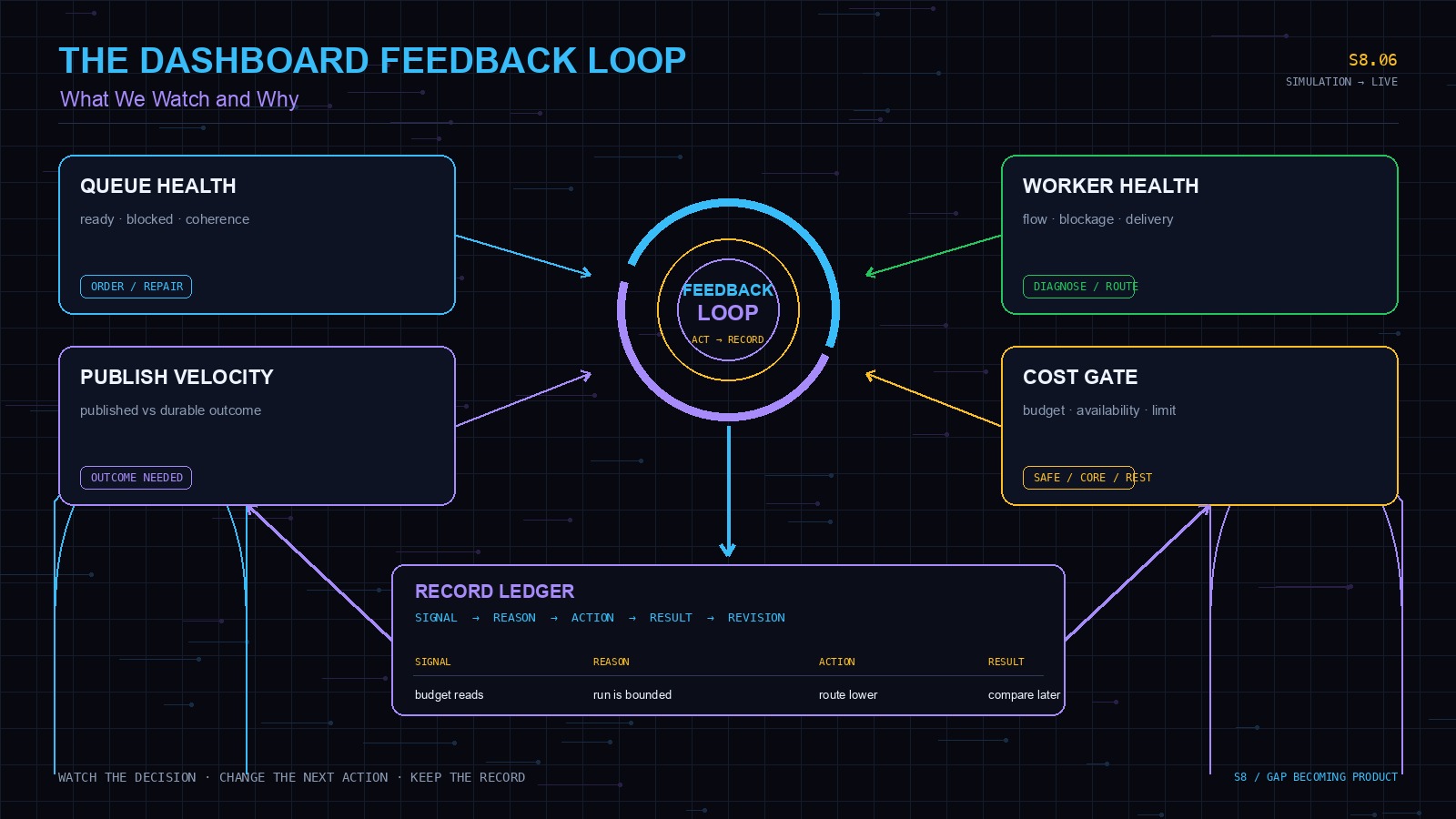
This is what dE/dt = β(C−D)E does. Coherence (C) measures alignment with stated values. Drift (D) measures deviation. Energy (E) measures resource commitment. The derivative tells you whether alignment is improving or degrading. If coherence drops below drift, the system flags it. If energy is misallocated, the Kelly Criterion adjusts. The governance runs continuously, on every node, without requiring a central authority.
In a cluster, you trust the administrator. In a network, you trust the math.
What This Means for Security
The security-services angle makes sovereignty concrete. Consider a small business with cameras in the office. Today, those cameras feed a cloud service. The footage is stored on someone else’s server. Access is controlled by someone else’s authentication system. When an employee is fired, the business owner calls customer support and hopes the access gets revoked. When a law enforcement request arrives, the cloud provider decides whether to comply — not the business owner.
On the mesh, the cameras record to local encrypted storage. Access is controlled by cryptographic keys — solid-keys, the Platonic Solid Access Architecture. Ed25519 keypairs. No cloud. No subpoena target. When an employee is fired, their key is revoked. The footage stays on the local mesh. The business owner has complete control because the business owner has complete infrastructure.
The same mesh handles the business’s AI agents, its knowledge base, its communication layer. One network. Sovereign. Survivable. No cloud dependency.
The Network Lives Everywhere
A cluster is a noun — a thing that sits somewhere. A network is a verb — a thing that happens everywhere simultaneously. The distinction matters because sovereignty requires distribution. You cannot be sovereign over a cluster you do not own. You cannot be sovereign over a cloud you rent. Sovereignty means the system runs on your hardware, under your governance, with your keys, in your jurisdiction.
The Mesh-in-a-Box builds a network, not a cluster. Every node is sovereign. Every node can operate independently. Every node reconnects and reconciles when it finds other nodes. The Love Equation ensures alignment. The Kelly Criterion ensures efficiency. Erlang ensures fault tolerance. Tailscale ensures connectivity. BMASS ensures bootability.
A cluster lives in one place. A network lives everywhere. You are your own cloud.
This is Article G1 in the Mesh-in-a-Box narrative series: supporting the T1–T5 arc with deeper dives into sovereignty, security, and the Love Equation governance model. The cluster-versus-network distinction is the conceptual foundation for everything that follows.