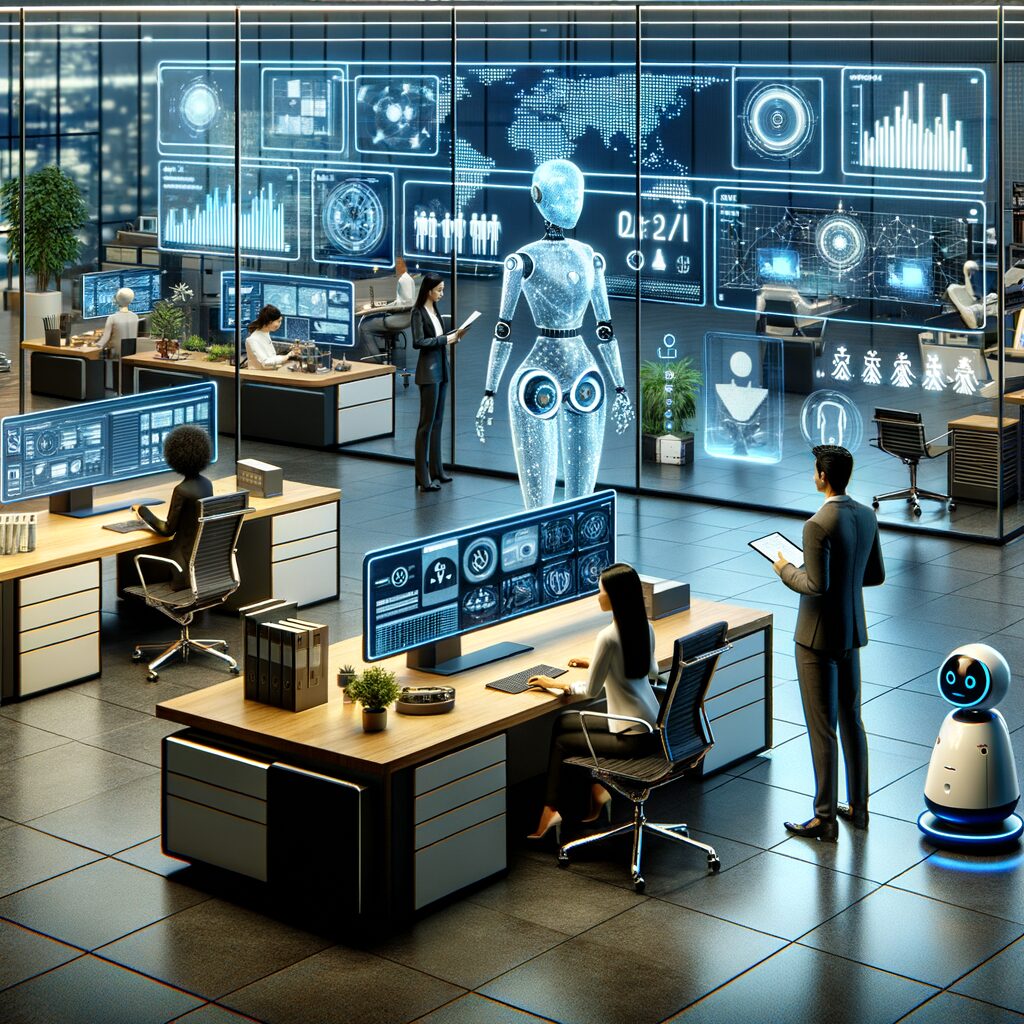
Transitioning to Web4 & Industry 5.0 involves a major shift in the digital ecosystem, driven by advanced technologies like Artificial Intelligence (AI), Artificial Agents, and Artificial Roles. This evolution necessitates a reevaluation of digital business management practices. Key tools such as the KPI Mega Dashboard provide real-time insights into performance indicators, enhancing operational efficiency and decision-making. The integration of AI and IoT technologies enables the creation of smart factories, optimizing production processes and positioning businesses for sustained growth and innovation in the Web4 & Industry 5.0 era.
In today’s rapidly evolving technological landscape, businesses are confronted with the imperative to adapt and innovate. As we transition from Industry 4.0 to Industry 5.0, the digital ecosystem is undergoing a profound transformation that demands strategic shifts in business models. This article aims to provide a comprehensive guide for businesses navigating this digital revolution.
We will explore the nuances of transitioning from Industry 4.0 to Industry 5.0, shedding light on how companies can successfully adapt to the digital ecosystem’s ever-changing dynamics. In the section, “Navigating the Digital Ecosystem: Transitioning from Industry 4.0 to Industry 5.0,” we delve into the technological advancements and strategic adaptations necessary for this shift.


Next, we focus on enhancing digital business management through the integration of KPI Mega Dashboards and Artificial Intelligence. This section will illustrate how these tools can optimize business performance, offering insights into the role of advanced analytics in steering business strategies.
Finally, we turn our attention to the workforce of the future in “Artificial Agents and Roles: Redefining the Workforce in Web4 & Industry 5.0.” Here, we examine the emergence of Artificial Agents and Artificial Employees, assessing their impact on traditional roles and their contribution to the evolving landscape of Industry and Web4.


Join us as we unravel the complexities of migrating and upgrading business models to thrive in the era of Industry 5.0, leveraging cutting-edge technologies to stay ahead in the digital business management realm.
- 1. “Navigating the Digital Ecosystem: Transitioning from Industry 4.0 to Industry 5.0”
- – Explore the evolution from Industry 4.0 to Industry 5.0 and how businesses can adapt to the changing digital landscape.
- 2. “Enhancing Digital Business Management with KPI Mega Dashboards and Artificial Intelligence”
Navigating the Digital Ecosystem: Transitioning from Industry 4.0 to Industry 5.0

Transitioning from Industry 4.0 to Industry 5.0 marks a significant evolution in the digital ecosystem. The transformation involves moving from traditional automation and data processing to an interconnected, intelligent network characterized by advanced digital business management practices. This journey requires organizations to reevaluate their operations, technologies, and processes to fully leverage the benefits of Web4 & Industry 5.0.
One of the foundational changes in this transition is the integration of Artificial Intelligence (AI) across various business functions. Unlike Industry 4.0, which focused primarily on automation and data collection, Industry 5.0 harnesses AI to create Artificial Agents and Artificial Roles that can perform complex tasks, analyze vast amounts of data, and make informed decisions in real-time. These Artificial Employees can handle routine operations, allowing human workers to focus on strategic activities and innovation.
A critical tool in navigating this new digital ecosystem is the KPI Mega Dashboard, which consolidates key performance indicators from across the organization into a centralized, real-time interface. This enables managers to monitor and optimize various business processes more effectively, ensuring that the enterprise remains agile and responsive to market changes. The KPI Mega Dashboard, enhanced with AI capabilities, can predict trends, identify inefficiencies, and suggest corrective actions, thereby driving more informed decision-making.
Furthermore, the transition to Industry 5.0 often involves the adoption of Internet of Things (IoT) technologies, which connect physical devices to the digital realm, creating a seamless flow of information and enhancing operational efficiency. This interconnectedness supports the development of smart factories, where machinery and systems communicate autonomously to optimize production processes.
In summary, transitioning from Industry 4.0 to Industry 5.0 is not merely about adopting new technologies but about redefining business models to thrive in a digital ecosystem. By leveraging advancements in AI, deploying Artificial Agents, and utilizing sophisticated tools like the KPI Mega Dashboard, businesses can achieve greater efficiency, innovation, and competitiveness in the era of Web4 & Industry 5.0.
– Explore the evolution from Industry 4.0 to Industry 5.0 and how businesses can adapt to the changing digital landscape.

The transition from Industry 4.0 to Industry 5.0 signifies a monumental shift in the digital landscape, positioning businesses to innovate and thrive in an ever-evolving ecosystem. Industry 4.0, often referred to as the era of automation, introduced computers and robotics to manufacturing processes, enabling more efficient production and operational management. However, the advent of Industry 5.0 brings about a more profound transformation, integrating cyber-physical systems, the Internet of Things (IoT), and advanced data analytics into the core of business operations.

To adapt to this new digital ecosystem, businesses must embrace Digital Business Management practices. This involves leveraging technologies such as Artificial Intelligence (AI) to optimize processes, predict trends, and make data-driven decisions. AI-powered tools, including Artificial Agents and Artificial Roles, can automate routine tasks and provide valuable insights, enhancing overall productivity and efficiency.
One of the critical components in this evolution is the implementation of a KPI Mega Dashboard. This sophisticated tool allows businesses to monitor and analyze key performance indicators in real-time, providing a comprehensive overview of operations and facilitating informed decision-making. By utilizing a KPI Mega Dashboard, companies can identify areas for improvement, track progress, and align their strategies with business goals.
The role of Artificial Employees is also becoming increasingly significant in Web4 & Industry 5.0. These digital workers, driven by AI, can perform complex tasks, interact with customers, and even collaborate with human employees. The integration of Artificial Employees into the workforce not only reduces operational costs but also enhances service delivery and customer satisfaction.
Adapting to Industry 5.0 requires a strategic approach, focusing on the seamless integration of digital technologies and fostering a culture of innovation. Businesses must invest in upskilling their workforce, ensuring that employees are equipped with the necessary skills to navigate the digital landscape. Moreover, establishing strong cybersecurity measures is crucial to protect sensitive data and maintain the integrity of digital operations.
In conclusion, the journey from Industry 4.0 to Industry 5.0 presents both challenges and opportunities for businesses. By embracing the principles of Digital Business Management, leveraging AI technologies, and implementing advanced tools like the KPI Mega Dashboard, companies can successfully navigate this transition and position themselves for sustained growth in the digital era.
Enhancing Digital Business Management with KPI Mega Dashboards and Artificial Intelligence
In the evolving landscape of Industry and Web4, enhancing digital business management has become crucial for maintaining a competitive edge. One of the transformative tools at the forefront of this evolution is the KPI Mega Dashboard, which, when integrated with Artificial Intelligence (AI), offers unprecedented insights and operational efficiencies.
A KPI Mega Dashboard serves as the central nervous system of an organization’s digital ecosystem. It consolidates vast amounts of data from various business operations and presents them in a coherent, easily understandable format. This powerful tool enables businesses to monitor performance indicators across different departments in real-time, facilitating swift and informed decision-making.
The integration of Artificial Intelligence into these dashboards amplifies their capabilities, creating a new paradigm for digital business management. AI algorithms can analyze complex datasets far more quickly and accurately than human analysts. By identifying patterns and predicting trends, AI-driven KPI Mega Dashboards help businesses to anticipate market shifts, optimize resource allocation, and enhance overall operational efficiency.
Moreover, AI introduces the concept of Artificial Agents, Artificial Roles, and Artificial Employees into the business model. These AI-driven entities can perform a wide range of tasks, from customer service to data analysis, without the limitations of human workers. For instance, Artificial Agents can handle routine customer inquiries, freeing up human employees to focus on more complex issues. Similarly, Artificial Roles can be created to manage specific functions within the KPI Mega Dashboard, ensuring that critical metrics are always monitored and addressed promptly.
As businesses transition from Industry 4.0 to Industry and Web4, the synergy between KPI Mega Dashboards and AI will be pivotal. Organizations that leverage these technologies effectively will not only enhance their digital business management but also position themselves at the forefront of innovation in the new industrial era. By embracing these advancements, companies can create a more agile, responsive, and efficient digital ecosystem, ready to meet the demands of a rapidly changing market landscape.
Conclusion: Embracing the Future of Business with Web4 & Industry 5.0
As businesses navigate the intricate landscape of the Digital Ecosystem, the shift from Industry 4.0 to Industry 5.0 represents a monumental leap towards a more interconnected, intelligent, and efficient operational paradigm. The journey requires not just technological upgrades but also a strategic overhaul of Digital Business Management practices to fully harness the potential of emerging technologies.
The integration of KPI Mega Dashboards and Artificial Intelligence into business processes stands out as a pivotal factor in this transformation. These advanced tools offer unprecedented capabilities for monitoring and optimizing performance, enabling businesses to make data-driven decisions with remarkable precision. The deployment of Artificial Agents, fulfilling roles from customer service to data analysis, exemplifies how Artificial Roles can enhance productivity and innovation, acting as virtual employees that augment human capabilities.
Transitioning successfully to Web4 & Industry 5.0 involves adopting a forward-thinking mindset and embracing the continuous evolution of digital tools and methodologies. By leveraging the power of Artificial Intelligence and sophisticated KPI Mega Dashboards, businesses can foster a resilient, agile, and competitive edge in today’s dynamic market.
Ultimately, the confluence of these technologies within the Digital Ecosystem paves the way for a future where businesses are not just participants but leaders in the Industry 5.0 revolution. The potential for growth and innovation is boundless, and those who adapt swiftly will undoubtedly set the benchmark for excellence in this new era of digital transformation.