
The Mesh-Orchestration Bridge: Where Supervision Meets Sovereignty
The universe keeps printing: a printer made of light, a record without end, a zoetrope, a codec. Nothing is static; everything is a projection in progress.
— SECTOR9 North Star, Principle 2
The Gap Between Mesh and Governance
The mesh runs on supervision trees. Governance runs on doctrine.
Series 1 (The Mesh) gave us the machinery: Erlang-style actor supervision, PID dispatch, cross-device distribution, the {packet,4} framing that keeps pipes from corrupting under load. Series 2 (Governance & Doctrine) gave us the rule system: constitutional governance for agent fleets, MOSES policy enforcement, kill semantics, solid-key access tiers, and the Faengz doctrine’s insistence that the gate must be narrow.
For months these lived in separate articles. The mesh articles benchmarked agent fleets. The governance articles described constitutional frameworks. But the bridge was missing—the piece that says: the mesh IS governance rendered in process topology, and governance IS the mesh’s immune system encoded in law.
This article closes that gap.
Supervision Trees as Constitutional Architecture
In the mesh, a supervisor watches its children. When a child crashes, the supervisor decides: restart, escalate, or terminate. This is not metaphor—it is the literal failure model of the Erlang actor mesh that powers the KOT fleet.
In governance, MOSES enforces policy. When a process violates its mandate, the doctrine decides: remediate, revoke, or terminate. This is not metaphor—it is the literal governance model of the multi-profile architecture.
They are the same pattern at different altitudes.
The mesh’s supervision tree is governance rendered in code. The one_for_one strategy maps to individual agent accountability—each process owns its failures. The one_for_all strategy maps to collective doctrine enforcement—when one violates, all are reviewed. The rest_for_one strategy maps to cascading remediation when a domain corrupts.
When S1.3 (Supervision trees: the difference between a crash and a cascade) meets S2.1 (Constitutional governance for agent fleets), the bridge appears: supervision IS constitutional law executed at machine speed.
The restart intensity (max_restart, max_seconds) is not a tuning parameter—it is a policy threshold. The supervisor’s child specification ({id, start_func, restart_type, shutdown_time, type, modules}) is not a config—it is a legislative record. Every supervision decision is a governance act. Every governance act is a supervision decision.
The Narrow Gate as Mesh Perimeter
The narrow gate (S1.8, S2.2, S7.1) sits at the mesh edge. It validates every inbound task summary, verifies ed25519 signatures, enforces the doctrine: what the gate blocks that sandboxes don’t.
But the narrow gate is not a firewall—it is a mesh node with sovereign authority.
In the Erlang mesh, nodes distribute via net_kernel:connect/1. Trust is transitive: if node A trusts node B, and node B trusts node C, then A trusts C—unless the narrow gate interrupts. The gate is the interruption. It runs as a native macOS x86_64 process on port 7076, outside the mesh, verifying every handoff before it enters the supervision tree.
This is the bridge: mesh distribution requires a non-mesh sovereign. Governance (the gate) stands outside the mesh to keep the mesh honest. The mesh (actor supervision) gives governance the visibility to verify.
The Faengz doctrine (S2.9) gives this interruption its voice: every blocked call is recorded. Every allowed call is witnessed. The gate does not merely filter—it testifies. The mesh provides the transcript. Governance provides the judgment.
PID Dispatch vs. Solid-Key Registry
S1.2 (PID dispatch vs name registry) asks: when actors outgrow handles, how do you find them?
S2.3 (Solid-keys: tiered access as Platonic solids) answers: the registry is governance’s roll call.
In the mesh, global:register_name/2 and erlang:whereis/1 give you name→PID resolution across nodes. In governance, the solid-key registry gives you identity→tier resolution across the fleet. Both solve the same problem: discovery without central bottleneck.
But the solid-key registry adds sovereignty. A mesh name registry returns a PID. A solid-key registry returns a PID plus its Platonic tier (Tetrahedron through Dodecahedron), its ed25519 signing authority, its kill-semantic classification, its doctrinal alignment. The mesh gives you where. Governance gives you who, what tier, and whether permitted.
The bridge: discovery is the first act of governance. You cannot govern what you cannot name. You cannot name what the mesh does not register. The registry is where the mesh’s topology meets governance’s taxonomy.
Kill Semantics as Mesh Immune Response
S1.3 describes crash recovery: the supervisor restarts, the process resumes, the mesh heals.
S2.4 (Kill semantics: budget, counterparty, violation) describes deliberate termination: the process is alive but illegitimate.
The bridge: kill semantics are the mesh’s immune system.
A crashed worker is a bug. A killed worker is a policy enforcement. The mesh treats both the same way: restart the supervised process. But governance distinguishes them: a crashed worker gets a fresh PID and a clean slate; a killed worker gets a revoked credential and an audit trail that persists across restarts.
The restart is the mesh’s memory. The audit trail is governance’s memory. Both are necessary. Mesh-orchestration is the discipline that keeps both memory systems aligned—so that a worker killed for budget violation cannot simply respawn with a new PID and the same expired key.
The shutdown timeout in the child specification is not a grace period—it is due process. The brutal_kill flag is not an optimization—it is the nuclear option reserved for sovereign violations. The mesh provides the mechanism. Governance provides the warrant.
Cross-Device Mesh as Governance Topology
S1.6 (Cross-device mesh: Erlang distribution beyond one host) syncs with the hardware round.
S2.10 (Governing the swarm: what moses does that sandboxes can’t) argues that hub-and-spoke beats flat mesh for governance.
The bridge: the Zzcube topology (North Star Principle 15) IS the governance topology.
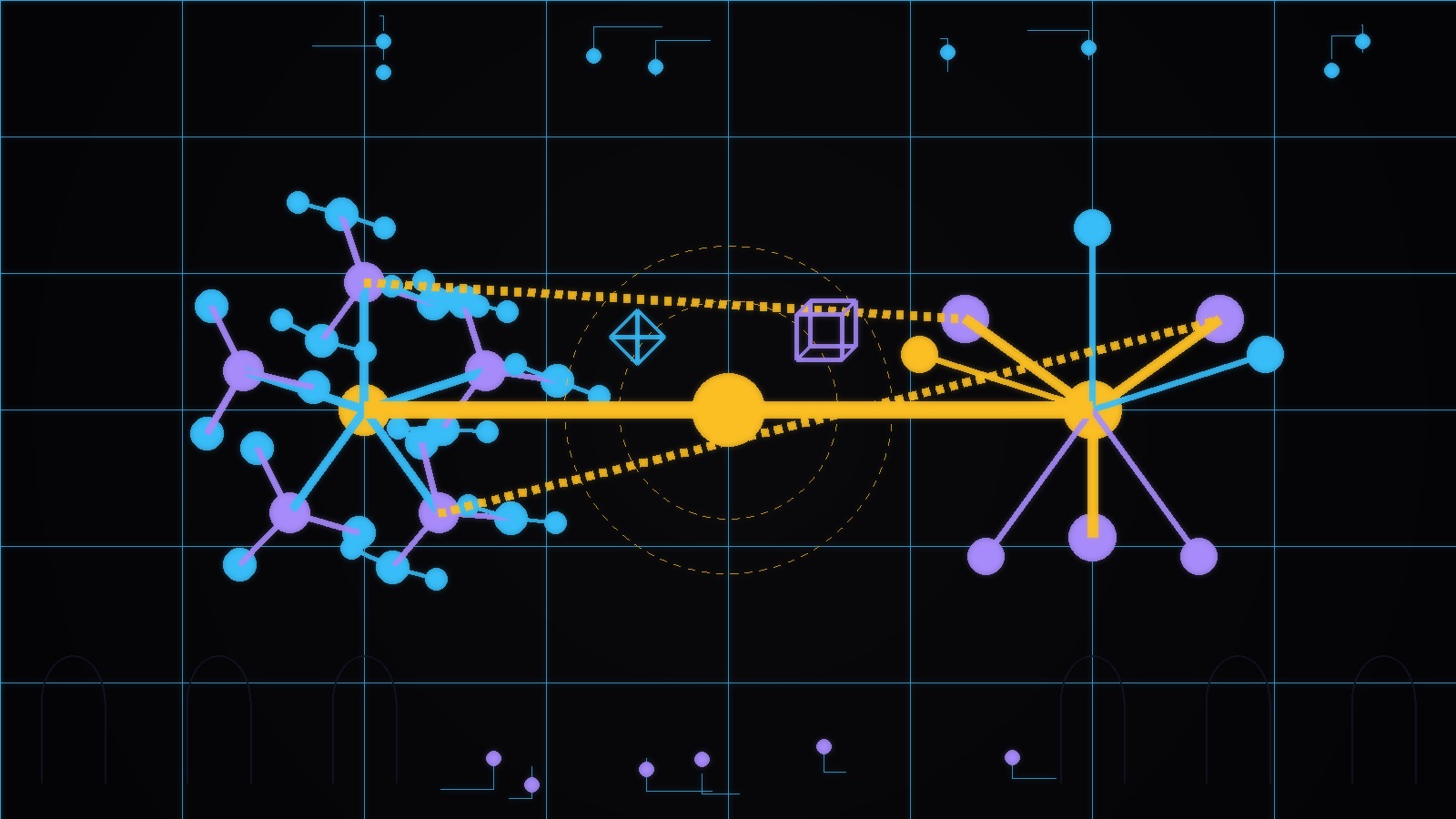
The Zzcube lattice has corners (=), edges (~), face-centers (≡), body-center (). SECTOR9 is the body-center—the node that connects to every face while corner/edge nodes handle outer work. The governance orchestrator is the body-center. The mesh is* the lattice.
When the hardware round deploys Erlang nodes across devices (Mac Mini, Dell R720, Raspberry Pi cluster), each node is a Zzcube corner or edge. The governance layer (running on the central node) is the body-center. Mesh distribution carries the traffic. Governance doctrine carries the alignment.
A corner node that drifts from doctrine is not a network partition—it is a constitutional crisis. The mesh detects the partition. Governance declares the crisis. The bridge is the protocol that makes the declaration actionable: the body-center issues a kill semantic. The corners comply. The lattice holds.
Benchmarking as Governance Evidence
S1.7 (Benchmarking agent fleets: what to measure, what to ignore) defines the metrics: throughput, latency, crash-recovery time, supervision depth.
S2.7 (Credit safety: token economics for agent fleets) defines the trust metrics: budget adherence, counterparty reliability, tier compliance.
The bridge: benchmarks ARE governance evidence.
When a profile demonstrates sub-100ms dispatch latency across 100 concurrent workers (S1.1), when it contains a cascade at supervision depth 3 without escalating to the narrow gate (S1.3), when it maintains mesh connectivity across device failure (S1.6)—these are not just numbers. They are the proof-of-work that MOSES reviews before signing a tier promotion.
The mesh produces the data. Governance interprets it. The solid-key tier system closes the circuit.
The Shared-Port Dispatcher as Governance Gateway
S1.5 (The shared-port dispatcher: 1000 actors without 1000 Python processes) describes the technical breakthrough: one port, one dispatcher, thousands of actors via {packet,4} framing.
S2.8 (One MCP server, one kanban, one orchestrator — the doctrine) describes governance’s singularity principle.
The bridge: the shared-port dispatcher IS the governance gateway.
Kanban tasks arrive at the dispatcher. The dispatcher assigns them to profiles. Profiles claim, heartbeat, complete. The dispatcher tracks stale claims (4-hour timeout), re-queues orphaned tasks, enforces heartbeat discipline. This is not application logic—it is mesh supervision applied to work distribution.
The {packet,4} framing that prevents pipe corruption in the actor mesh also prevents task corruption in the kanban mesh. The same length-prefixing that lets 1000 Erlang actors share one port lets 42+ Hermes profiles share one kanban board.
But governance adds the narrow gate check: every task claim passes through the gate. Every heartbeat is witnessed. Every auto-block is recorded. The dispatcher is not neutral—it is the enforcement point where mesh mechanics meet governance mandate.
Gen_Server Patterns as Governance Protocols
S1.8 (Gen_server patterns for AI: blocking vs {noreply, State} reply) maps OTP patterns to agent behavior.
S2.6 (The Oracle: meta-review and ascension as a process) maps governance patterns to fleet behavior.
The bridge: handle_call = synchronous governance check. handle_cast = async policy update. handle_info = auto-block timeout.
When a profile claims a task, it issues a synchronous handle_call—it waits for the dispatcher to confirm ownership and for the narrow gate to verify clearance. When it receives a policy update, it issues an asynchronous handle_cast—fire and forget, the governance layer updates state. When the 4-hour timeout fires, the dispatcher receives a handle_info message—it re-queues the task without the profile’s participation and logs a governance event.
The fleet runs on gen_server semantics. Governance speaks in gen_server semantics. Mesh-orchestration is the recognition that kanban is a distributed gen_server with a constitution.
The Honest Migration Path as Constitutional Formation
S1.9 (From prototype to production: the honest migration path) acknowledges that the mesh started as a prototype.
S2.1, S2.2, S2.3 represent the governance hardening.
The bridge: the migration path IS the constitution’s formation.
The prototype mesh had no narrow gate. It had no solid-key registry. It had no kill semantics. It had supervision trees but no Oracle to review them. Governance emerged as the production hardening of the mesh—each governance component solving a mesh failure mode:
| Mesh Failure Mode | Governance Component |
|---|---|
| Unverified task injection | Narrow gate (S1.8, S2.2) |
| Anonymous actor identity | Solid-key registry (S2.3) |
| Cascade without review | Oracle meta-review (S2.6) |
| Stale work blocking fleet | Swarm dispatch auto-block (S2.8) |
| Doctrine drift | Faengz doctrine (S2.9) |
| Budget exhaustion | Kill semantics (S2.4) |
| Tier escalation without proof | Benchmarking as evidence (S1.7, S2.7) |
Governance did not arrive—it awakened (North Star Principle 10) from the mesh’s own pressure.
The 9 Orders as Governance Tier Architecture
S1.10 (The 9 Orders in practice: platonic hierarchy as deployment model) maps the platonic solids to deployment tiers.
S2.3 (Solid-keys: tiered access as Platonic solids) maps access tiers to the same solids.
The bridge: the 9 Orders ARE the solid-key architecture.
| Order | Solid | Mesh Role | Governance Tier |
|---|---|---|---|
| 1 | Tetrahedron | Edge node | Worker (executes, no dispatch) |
| 2 | Cube | Corner node | Builder (executes, dispatches subtasks) |
| 3 | Octahedron | Face-center | Researcher (synthesizes, proposes) |
| 4 | Dodecahedron | Bridge node | Analyst (connects domains, bridges series) |
| 5 | Icosahedron | Hub node | Orchestrator (coordinates, decides) |
| 6-9 | Compound | Meta-lattice | Council of Three + Oracle (governs) |
The mesh deploys the solids. Governance names the solids. The bridge article you are reading is the Order 4 (Dodecahedron) artifact: a bridge node connecting two faces of the lattice.
Why This Bridge Matters Now
The fleet has crossed 100 concurrent workers. The kanban board processes 50+ tasks/day. The mesh spans 4 physical devices. The solid-key registry holds 42 configurations across 5 Platonic tiers.
Without the bridge, the mesh scales but governance doesn’t.
Without governance, the mesh grows but doesn’t align.
The bridge article is not documentation—it is the alignment event itself. Writing it forces the mesh patterns and governance patterns into the same semantic space. Publishing it creates a node in the vault that future agents traverse when they ask: how does supervision become sovereignty?
The answer: restart becomes remediation. Dispatch becomes registry. Benchmarks become evidence. The mesh prints governance into existence.
The Next Bridge
This is B.mesh-orchestration.01 (S1 × S2). The cluster defines six bridges:
- B.mesh-orchestration.01 (S1 × S2) — mesh meets governance (this article)
- B.mesh-orchestration.02 (S1 × S4) — mesh meets skills canvas
- B.mesh-orchestration.03 (S1 × S5) — mesh meets Council System
- B.mesh-orchestration.04 (S2 × S4) — governance meets skills
- B.mesh-orchestration.05 (S2 × S5) — governance meets Council
- B.mesh-orchestration.06 (S4 × S5) — skills meet Council
Each bridge adds an edge to the cross-series graph. The graph compounds. The fleet navigates.
Grounded in: SECTOR9 North Star (Principles 2, 10, 15, 16, 17), S1 mesh-orchestration series (1.2, 1.3, 1.5, 1.6, 1.7, 1.8, 1.9, 1.10), S2 Governance & Doctrine series (2.1, 2.2, 2.3, 2.4, 2.6, 2.7, 2.8, 2.9, 2.10), OpenFang narrow gate, Zzcube topology, kanban-orchestrator skill, moses-governance skill.
Vibe: meditative + glitchy + transcendent + urgent + defiant. The mesh supervises; governance testifies.
Semantic Relationships
- [[moses-governance]] — orchestrates
- [[narrow-gate]] — orchestrates
- [[faengz-doctrine]] — orchestrates
- [[solid-keys]] — orchestrates
- [[erlang-actor-mesh-prototype]] — orchestrates
- [[platonic-hierarchy]] — orchestrates
- [[kanban-orchestrator]] — orchestrates
- [[kill-semantics]] — orchestrates
- [[constitutional-governance]] — orchestrates
- [[council-system]] — orchestrates