
—
id: article-s9r-25
title: “The Canopy Is the Proof: What a Series Says About Its Seed”
series: S9R (research-extension / ascension)
track: S9R-C
principles:
– “Meaning is a seed”
– “Every eye shall see”
extends: “meaning-seed — series as proof”
category: “AI & Automation”
tags:
– “Advanced Prompt Engineering”
– “AI Agent”
– “AI-Driven Development”
– “Algorithmic Governance”
– “API-First Architecture”
– “Autonomous Site Operations”
– “Cybernetic Ethics”
– “Data Permanence”
– “Decentralized Identity”
– “Digital Sovereignty”
– “Headless CMS”
– “Monolith vs. Microservices”
– “Synthetic Reality”
– “The Metaverse as a Platform”
– “The Programmable Web”
– “meaning-seed”
– “series”
– “proof”
– “canopy”
– “seed”
– “continuity”
gems: false
date: 2026-08-10
—
The Canopy Is the Proof: What a Series Says About Its Seed
Every seed makes a promise. Not a loud one — a compressed, genetic one. A single meaningful idea, planted in the right soil, carries the entire architecture of what it will become. But how do you know the seed was genuine? How do you distinguish a real seed from a clever slogan dressed up as one? You look at the canopy. The series is the proof. The published body of work — article after article, each growing from the same root — is the only honest verification that a seed contained what it claimed.
S9R-25 in the research-extension series proposes that the published article series is not the product of a seed — it is the proof of the seed. The canopy is the verification layer that turns a claim of meaning into a demonstrable fact.
The seed that never branches is a rumor
Consider the difference between a single article and a series. A single article can be brilliant. It can articulate a principle, demonstrate a capability, prove a point. But a single article is a leaf without a tree. It has no root system, no branching logic, no compounding history. It stands alone — impressive, perhaps, but unverifiable. Anyone can write one good article. The question is whether the idea behind it has the genetic material to generate a second, a third, a twentieth.
The meaning-seed principle (Principle 24) describes how a single meaningful idea grows a corpus. The seed is the dot. The cluster is the germinated seed. The series is the canopy. But the principle goes further: the canopy is not merely the output of the seed. The canopy is the evidence that the seed was real. A seed that produces one leaf and stops was never a seed — it was a slogan. A seed that produces a tree with hundreds of leaves, each leaf carrying a different expression of the same root meaning, is a seed that contained what it claimed.
This is the verification problem at the heart of content strategy. Anyone can publish a manifesto. Manifestos are cheap. What is expensive — what is rare — is a body of work that compounds, where each new piece grows from the same root as every piece before it, where the series itself becomes a living record of how a single idea expresses itself across contexts, domains, and applications.

What the canopy proves that the seed cannot
A seed is a claim. A canopy is a proof. The difference is not rhetorical — it is structural. The seed says: this idea has the depth to generate an entire body of work. The canopy says: here is the body of work. Count the branches. Read the leaves. The proof is not in the promise. The proof is in the growth.
The north star encodes this logic directly: everything is a record; continuity beats completion. A series is a record. Every article in the series is a branch that grew from the seed. The record compounds — not because anyone decided it should, but because the seed’s genetic material expressed itself in each new context. The series that has been growing for twenty-five articles is a fundamentally different object than the series at article one — not because the seed changed, but because the seed encountered twenty-four different contexts and adapted without losing its root.
This is what a canopy proves that a seed cannot. The seed can claim depth. The canopy demonstrates it. The seed can claim adaptability. The canopy shows it — every article is a different context, a different angle, a different application, yet all growing from the same taproot. The seed can claim coherence. The canopy embodies it — read any leaf, and you can trace it back to the root without losing the thread.
The series as a living architecture
A published series is not a list of articles. It is a searchable, queryable, transmissible record of how a single meaning grew into a living structure. This is the architecture that the meaning-seed principle describes at the governance level, applied to content: the seed is stored, the branches are stored, the adaptations are stored. The series is the record without end — not a metaphor, but a literal archive of how one idea expressed itself across time.
When a new reader encounters article fifteen in a series, they are not reading article fifteen. They are reading the fifteenth expression of a seed. The article carries the weight of every branch that preceded it — not as baggage, but as depth. The reader senses that this article grew from something. The something is the seed. The evidence is the canopy. The reader does not need to have read articles one through fourteen to feel that this article has roots. The roots are visible in the structure.
This is why series outperform standalone articles in every metric that matters — not because of SEO mechanics or publishing cadence, but because series carry the resonance of compounding meaning. A standalone article is a frequency. A series is a chord. The difference is not volume — it is harmony. Each article in the series tunes itself to the same root frequency, and the cumulative effect is a resonance field that no single article can generate alone.
The hub-and-spoke, made visible
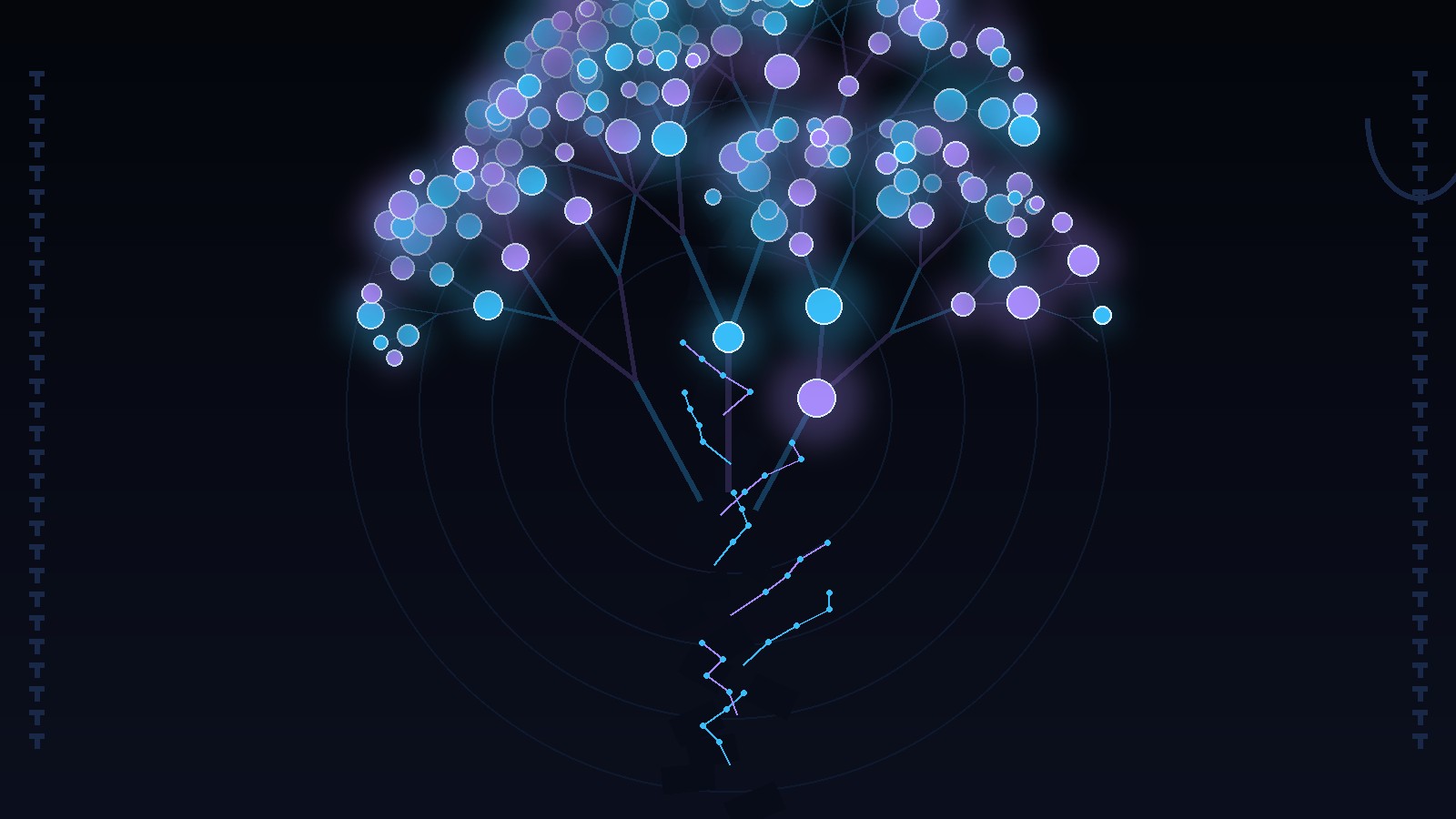
The north star describes the digital-tree command center: one glowing core radiating to nodes, each node connected to the others. A series makes this topology visible. The seed is the body-center node. Each article is a face, edge, or corner node — connected to the center, connected to each other through the center, each expressing the core meaning in its own context.
When a node wakes, the whole tree glows. When a new article publishes in an established series, every previous article in that series gains a new connection. The canopy grows, and the root system — invisible to the casual reader — becomes more robust. The series does not just add a leaf. The series strengthens the entire structure.
This is the compounding that the meaning-seed principle predicts. The governance tree that has been growing for a year is stronger than the one planted yesterday — not because the seed changed, but because the seed expressed itself in a year of contexts. The content series that has been publishing for twenty-five articles is stronger than the one at article one — not because the writing improved, but because the seed proved itself capable of sustained, coherent growth across diverse applications.
Every eye shall see the canopy
The principle of visibility — every eye shall see — applies directly to the canopy. A seed hidden underground is a secret. A canopy visible from every angle is a proclamation. The published series is the revelation of what the seed contained. It is the proof made public, the claim made verifiable, the meaning made visible.
A tree whose every leaf is a published article title is not a metaphor. It is an architecture. The seed was planted. The branches grew. The leaves appeared — each one a different expression of the same root meaning, each one a record that compounds with every addition. The canopy is the proof. Not the seed’s promise. Not the architect’s claim. The canopy — visible, countable, verifiable — is the proof that the seed contained what it said it did.
Meaning is a seed. The series is the canopy. The canopy is the proof. Plant exactly. Grow coherently. Let every eye see the tree.