
The Mesh Seed: Two Nodes, One Fabric
You have a laptop running a Hermes agent. You have a Raspberry Pi in a drawer. Two devices, two completely separate AI stacks, two silos that don’t know the other exists. That’s where most people stop — one machine, one agent, one point of failure.
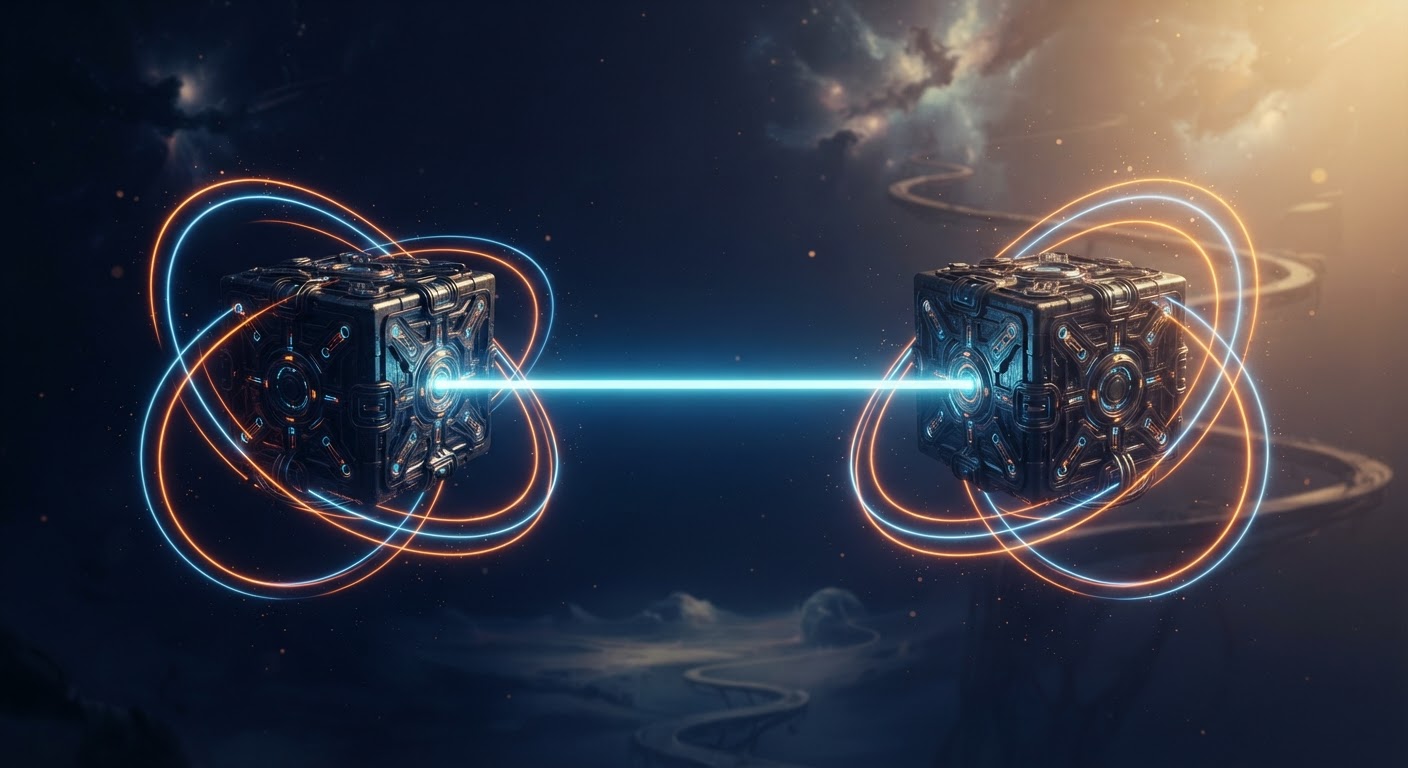
Tier 2 of the Mesh-in-a-Box progression fixes this with the simplest possible move: you connect a second node. Not a new architecture. Not a new protocol. Just two machines talking to each other over a private network, forming a mesh that survives what neither node can survive alone.
Why Two Nodes Change Everything
The Solo Workstation (Tier 1) has one honest limitation: if the machine goes down, everything stops. The laptop closes, the agent dies. The power goes out, the knowledge base is unreachable. This is fine for experimentation. It is not fine for anything you depend on.
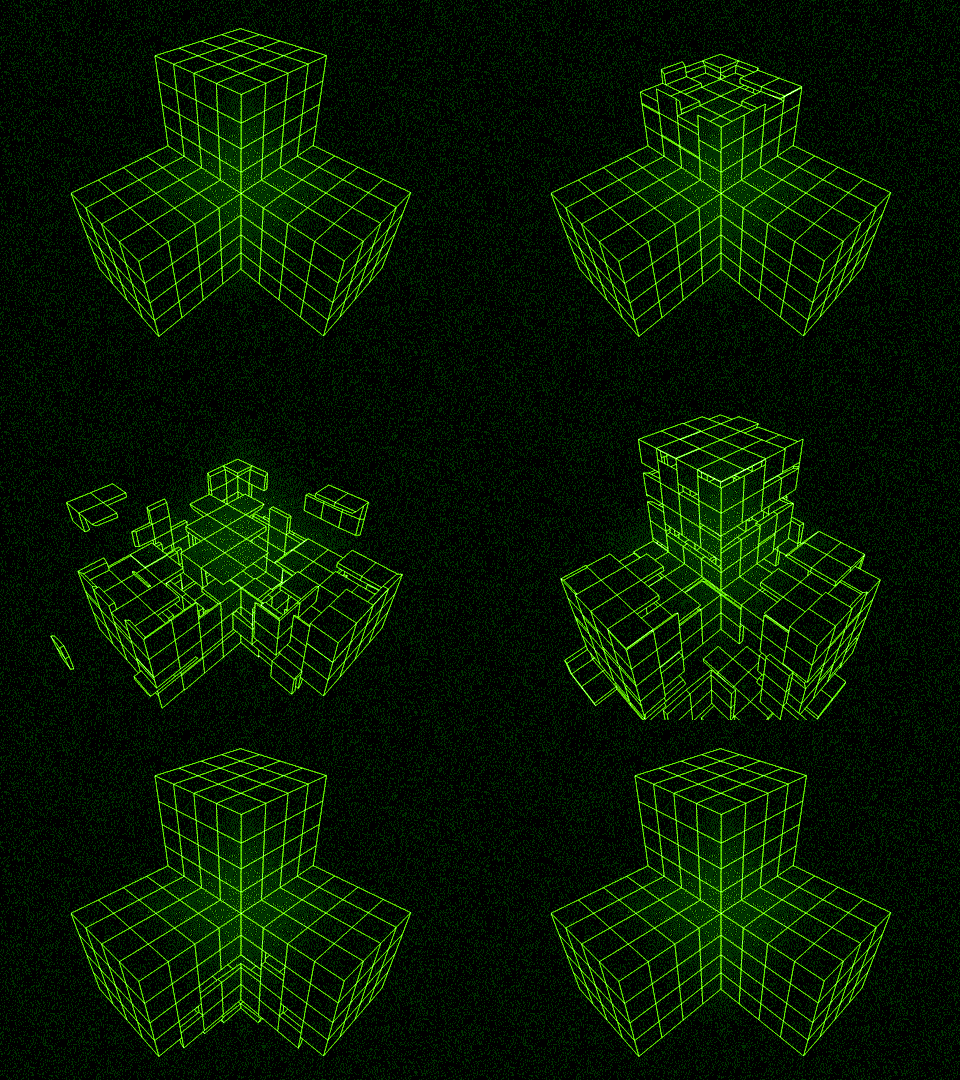
Two nodes solve this with a single architectural insight: redundancy is not a feature — it’s the foundation of sovereignty. When Node A can’t reach the internet, Node B can. When Node A’s power supply fails, Node B keeps the mesh alive. When Node A needs a model too large for its RAM, Node B runs it and serves the inference back.
This is not theoretical. The Erlang/BEAM actor mesh — the same runtime that powers WhatsApp, Discord, and RabbitMQ — was designed for exactly this: distributed, fault-tolerant systems where nodes crash, reconnect, and resume without losing state. Supervision trees watch over every actor. If one dies, the supervisor restarts it. If a node goes offline, the others keep running. When it comes back, CRDT reconciliation merges the state without conflicts.
The Mesh Seed: The Smallest Possible Mesh
The Mesh Seed is Tier 2. Two nodes. One fabric. Zero cloud dependency.
What you need:
- Two devices — any combination: laptop + Raspberry Pi, Mac Mini + old phone, two Raspberry Pis. One runs the primary Hermes agent, the other runs a backup.
- Tailscale — zero-config private networking. No ports exposed. No firewall rules. No UPnP. Just two devices that find each other automatically and communicate over encrypted tunnels.
- mDNS auto-discovery — when a new node joins the network, it announces itself. No manual configuration. No IP addresses to remember. The mesh grows by presence, not by configuration.
- Local models on both nodes — small models (Qwen3 0.6B, Llama 3.2 1B) for fast inference on each node, plus the option to route heavy requests to the node with more RAM.
The Love Equation governance model ensures that every decision the mesh makes — resource allocation, task routing, access control — evaluates against a mathematical alignment guarantee: dE/dt = β(C−D)E. Coherence minus drift, scaled by energy and learning rate. Not a prompt. A runtime constraint that runs alongside every decision.
The Security-Services Story
The Mesh Seed isn’t just about AI agents. It’s about re-calibrating what home and business security means.
Consider the current security model: Ring cameras feed Amazon’s cloud. Nest cameras feed Google’s cloud. Every door sensor, every motion detector, every environmental monitor talks to a server you don’t own, operated by a company whose incentives may not align with yours. Congressional hearings have revealed law enforcement accessing private camera feeds millions of times without warrants. Employees at these companies have accessed bedroom and bathroom footage.
The Mesh Seed offers a different architecture:
- Cameras that record locally — footage stays on your nodes, encrypted with keys you hold
- No third-party cloud — no subpoena honeypot, no data breach exposure, no terms-of-service changes that expose your feeds
- Mesh failover — if one node dies, the other keeps recording. If both nodes die, the footage that was already captured is still on disk
- Off-grid capable — battery-powered nodes with cellular backhaul. The mesh survives when the power grid doesn’t
The same Erlang/BEAM supervision trees that keep your AI agents alive keep your security cameras recording. The same Tailscale tunnels that connect your agents keep your camera feeds encrypted in transit. The same Love Equation governance that aligns your agents’ decisions governs who can access your footage.
What Two Nodes Actually Look Like
Let’s make this concrete. The Mesh Seed in practice:
- Node A: Your laptop — Hermes agent, ChromaDB with 35K vector embeddings, local Qwen3 model, dashboard at port 9119. This is your primary workstation.
- Node B: Raspberry Pi 5 — backup Hermes agent, mirrored ChromaDB, Llama 3.2 1B for fast inference, two USB cameras for local security recording. Connected to Node A via Tailscale.

When you close your laptop, Node B keeps the mesh alive. The gateway continues answering. The cameras keep recording. When you open the laptop, the mesh reconnects. CRDT reconciliation merges any state that diverged while you were away. No data loss. No manual intervention.
This is not a future state. This is running code. The Erlang/BEAM runtime handles the distributed coordination. Tailscale handles the networking. ChromaDB handles the vector storage. The Love Equation handles the governance. The pieces exist. The Mesh Seed is just connecting two of them.
The Orchestration Stack at Tier 2
The Mesh Seed inherits the full four-layer orchestration stack from Tier 1, but now it runs across two nodes:
Love Equation (governance) → should we?
    Kelly Criterion (sizing) → how much?
        Erlang/BEAM (fabric) → where?
            BMASS (sovereignty) → on what hardware?
At Tier 2, the Kelly Criterion becomes interesting: it allocates compute between nodes based on confidence intervals and cost of failure. If Node A has 16GB RAM and Node B has 8GB, the Kelly Allocator routes heavy inference to Node A and light tasks to Node B — not by static configuration, but by mathematical optimization that adapts to real-time conditions.
The Love Equation governance ensures that this optimization never drifts from your stated values. The coherence metric asks: does this routing decision align with what you said matters? The drift metric asks: are we creeping toward convenience at the expense of sovereignty? The energy metric asks: is the compute cost worth the security benefit?
What Exists Today
Not slides. Running infrastructure:
- ChromaDB with 35K vector embeddings, incremental sync every 6 hours
- State.db pruning: 292MB → 208MB, Dashboard 42s → 3.5s response
- Tailscale private networking with zero-config peer discovery
- mDNS auto-discovery for local mesh nodes
- Erlang/BEAM 5-AI consensus engine (documented in vault)
- Love Equation governance prompt in BMASS seed v0.5 (proven on Qwen3 0.6B)
- BMASS on 4GB RAM laptop from USB (proven and reproduced)
- Multi-model hybrid pattern: small model on edge, large model on workstation
- Local security camera recording with encrypted storage
- Nightly ChromaDB backup to local storage (60MB, 30-day retention)
What Tier 3 Unlocks
The Mesh Seed (Tier 2) is the foundation for Tier 3: the Sovereign Cluster. Three to five nodes. Docker Swarm orchestrating services across the fleet. BMASS USB images for each node. Gateway availability: 99.5% — any two nodes keep it running.
But you don’t skip to Tier 3. You build the Mesh Seed first. You prove that two nodes can survive a crash, reconcile after a disconnection, and keep recording when the power goes out. You earn the right to scale by first proving that the simplest mesh works.
The Mesh Seed is the proof that sovereignty starts with two devices and a private network. No cloud. No subscription. No third-party dependency. Just two nodes, one fabric, and the mathematical guarantee that the mesh outlives any single device.
The One Question
If you have two devices and they don’t know each other exists, what happens when one of them fails?
The Mesh Seed answers: nothing. The other node keeps running. The mesh survives. You are your own cloud.
Tier 2 is the Mesh Seed: two nodes, one fabric. The sovereign AI infrastructure grows from here.
Next in the series: Tier 3 — The Sovereign Cluster: Three to Five Nodes, One Truth.
This is Article T2 in the Mesh-in-a-Box narrative series: Solo Workstation → Mesh Seed → Sovereign Cluster → Edge Network → Enterprise Mesh-as-a-Service. The Love Equation governance model is the connective tissue.