
# The Abyss as a Room: We Fear the Deep Work Instead of Furnishing It
**NSG-25 · series: north-star-gap-finder · track: NSG-C · principle: the-abyss-is-a-room**
Category: AI & Automation · Tags: ai agents, Digital Business, Digital Sovereignty, Headless CMS, AI-Driven Development, Decentralized Identity, AI Agent, The Programmable Web, Cybernetic Ethics, API-First Architecture, Data Permanence, web40, Algorithmic Governance, The Metaverse as a Platform, Monolith vs. Microservices, Synthetic Reality, Advanced Prompt Engineering, Autonomous Site Operations, digital ecosystem, digital transformation
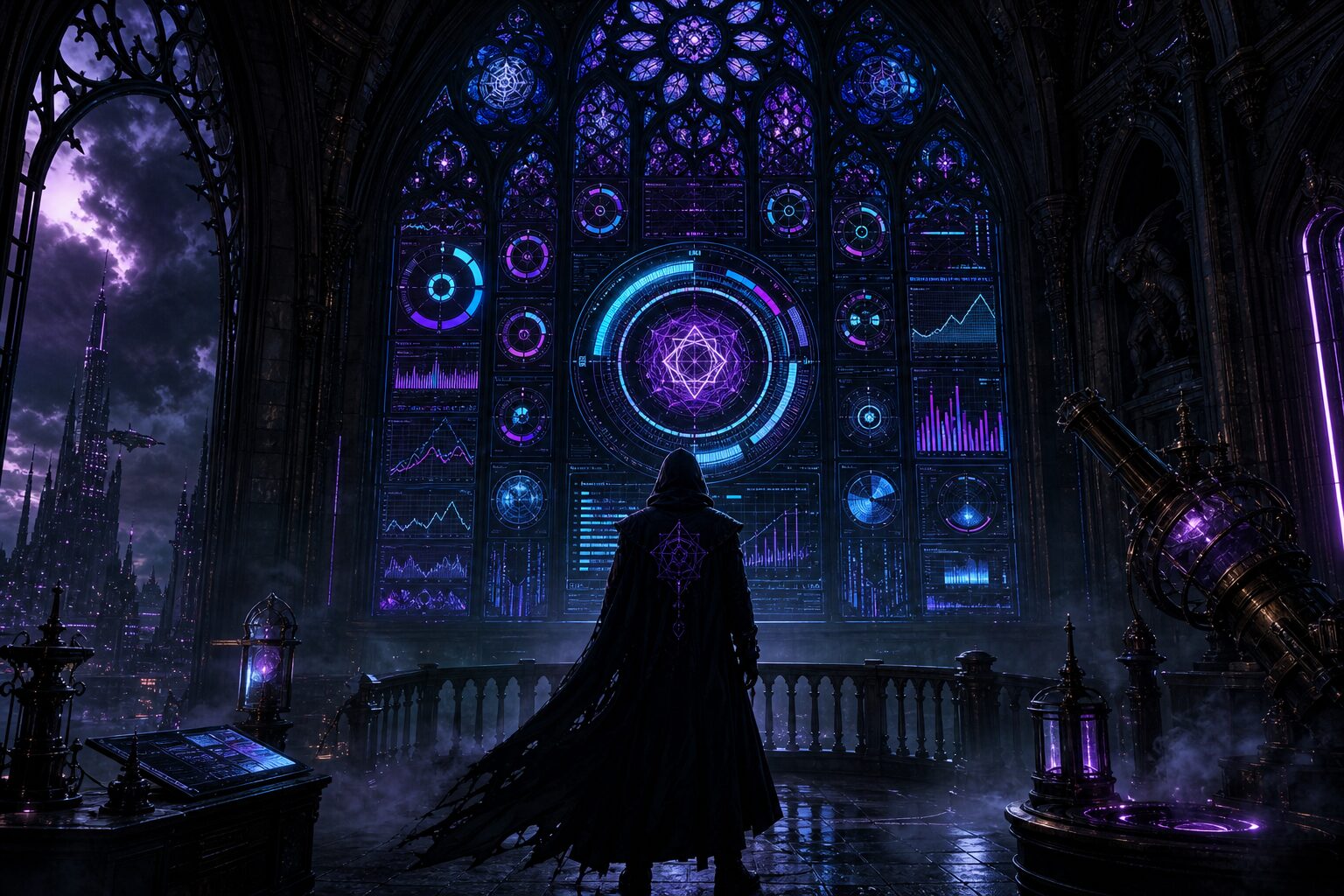
The abyss is a room, not a wall. The corpus says this. The kingdom quotes it. The kingdom does not furnish it. The deep work — the hard problem, the avoided metric, the conversation postponed for the third quarter running — sits in the dark like an unfurnished room: habitable in principle, avoided in practice. The fleet walks past the open door every day. The fleet calls it a wall. The fleet is wrong.
The abyss is not the absence of a solution. The abyss is the presence of a problem the fleet has not entered. The difference is architectural. A wall is structural — it blocks, it divides, it is built to keep you out. A room is spatial — it contains, it invites, it is built to hold you. The deep work is a room. The fleet treats it as a wall. The inversion is the first act of furnishing: name the room, enter the room, place something inside it.
The anatomy of the unfurnished room
Every fleet has rooms it does not enter. The rooms are specific. They are not abstract anxieties or vague strategic uncertainties — they are named problems with measurable dimensions. The content gap that has no editorial plan. The performance metric that has not been audited in six months. The client conversation about scope that keeps getting rescheduled. The infrastructure cost line that nobody reconciles against the automation it would replace. Each of these is a room. Each has a door. Each door is open. The fleet walks past.
The pattern is consistent across fleets of every size. The unfurnished rooms accumulate. The fleet develops a topology of avoidance — a map of every room it will not enter, every problem it will not name, every conversation it will not start. The map grows silently. The fleet calls it “priorities.” The fleet calls it “focus.” The fleet calls it “we’ll get to that.” The name does not change the topology. The rooms remain unfurnished. The deep work remains undone.
The corpus’s inversion is precise: the feared object becomes habitable when entered. The black hole, inverted, becomes a room. The abyss, inverted, becomes a room. The deep work, inverted, becomes a project. The inversion does not require courage — it requires a practice. The practice is the furniture. The room is habitable once it contains something. The first piece of furniture is the name.
The furniture is the practice
Furnishing the abyss is not a metaphor. It is a sequence of concrete moves. The fleet that furnishes its deep work does not undergo a transformation — it installs a practice. The practice has three components: the audit, the entry, the artifact.
The audit names the unfurnished rooms. A gap audit is a structured inventory of every problem the fleet is avoiding. The audit does not prioritize — it names. Priority is a later move. The first move is enumeration: this room exists, that room exists, the third room exists. The audit produces a list. The list is the floor plan. The fleet cannot furnish a room it has not mapped.
The entry opens the door. The fleet enters the room not to solve it but to measure it. The entry move is the metric: how long has this room been unfurnished? What is the cost of avoidance? What is the weekly time expenditure on workarounds that a solution would eliminate? The entry move produces a number. The number is the first piece of furniture. The room now contains something. The room is no longer empty. The room is no longer the abyss — it is a project with dimensions.
The artifact is the second piece of furniture. The fleet that enters the deep-work room produces an artifact: a document, a runbook, a pricing model, a migration plan, a conversation outline. The artifact is not the solution — it is the first object in the room. The room with one object is habitable. The room with one object can hold a second. The room with two objects can hold a fleet. The artifact is the proof that the room is a room and not a wall.
The audit, the entry, the artifact. Three moves. The moves compound. The fleet that audits its unfurnished rooms this month enters them next month and produces artifacts the month after. The artifacts from month one become the context for month two’s audit. The new rooms are named against the backdrop of the rooms already furnished. The fleet develops a topology of engagement — a map of every room it has entered, every problem it has measured, every artifact it has produced. The map grows silently. The fleet calls it “capability.” The fleet calls it “maturity.” The fleet calls it “we built that.”
The room the fleet avoids most
There is one room every fleet avoids above all others: the room where the fleet examines itself. The self-audit is the deepest unfurnished room. The fleet will audit its code, its content, its metrics, its costs — but it will not audit its own patterns of avoidance. The fleet will name the problems it faces but not the problems it creates. The fleet will measure its output but not its output’s relationship to its avoidance.
The self-audit is the room with the most furniture potential. The fleet that audits its own avoidance patterns discovers a topology nested inside the topology: the rooms it avoids because they threaten identity, the rooms it avoids because they threaten competence, the rooms it avoids because they threaten the narrative the fleet tells about itself. The self-audit is the master room. Furnishing it furnishes every other room by association.
The corpus’s principle is not aspirational — it is structural. The abyss is a room because the abyss is a problem with dimensions. The abyss is not a wall because the abyss is not permanent. The deep work is habitable because the deep work is measurable. The fleet that furnishes the abyss does not overcome fear — it installs practice. The practice is the furniture. The furniture is the proof. The proof is the room.
Close the gap
Furnish the abyss. The standing practice of entering the deep-work room — audits that name the avoided problems, entries that measure the cost of avoidance, artifacts that prove the room is habitable. The abyss is a room, not a wall: the fleet that furnishes it owns its hard problems; the fleet that walks past them is owned by them.
The first piece of furniture is the name. Name the room. Enter the room. Place something inside it. The room is no longer the abyss. The room is the work that was waiting.
Grounded in the SECTOR9 north star principle P12 — The abyss is a room, not a wall — and the gap-finder frame: The fleet fears the deep work instead of furnishing it. NSG series, north-star-gap-finder track, NSG-C, SECTOR9 50+50.*